


Deputy Head of the Office of the President Ihor Zhovkva held a meeting with the directors of Eastern Europe departments of the foreign ministries of the Nordic-Baltic region, who are responsible for shaping policy toward Ukraine.
Representatives of the Nordic-Baltic Eight (NB8) took part in the discussion: Denmark, Norway, Finland, Iceland, Sweden, Estonia, Latvia, and Lithuania. The parties discussed military and political support for Ukraine, as well as coordination of efforts aimed at achieving a just peace.
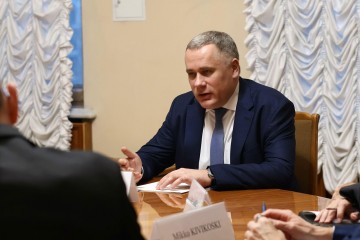 Ihor Zhovkva thanked NB8 partners for their consistent support of Ukraine on international platforms and noted that the countries of this region have made the largest combined contribution within the PURL initiative. The total sum of confirmed financial commitments from participating countries amounts to USD 1.55 billion, allocated across several packages. An additional USD 800 million will need to be contributed by the end of the year to ensure funding for new defense packages for Ukraine.
Special attention was given to sanctions pressure on Russia, particularly in the area of countering the shadow fleet. The Deputy Head of the Office of the President noted that last year Russia transported more than 60% of its seaborne oil exports using a shadow fleet of tankers. It is important to expand sanctions against captains, crew members, and vessel owners to prevent circumvention of restrictions and reduce Russia’s ability to finance its aggression.
The parties also coordinated their positions ahead of the upcoming European Council meeting and in advance of Cyprus’s Presidency of the Council of the European Union in the first half of 2026.
“Ukraine is fully delivering on its commitments on the European integration track. We are ready for the next steps in opening negotiating clusters and count on continued unity and support from the member states of the European Union,” Ihor Zhovkva emphasized.