

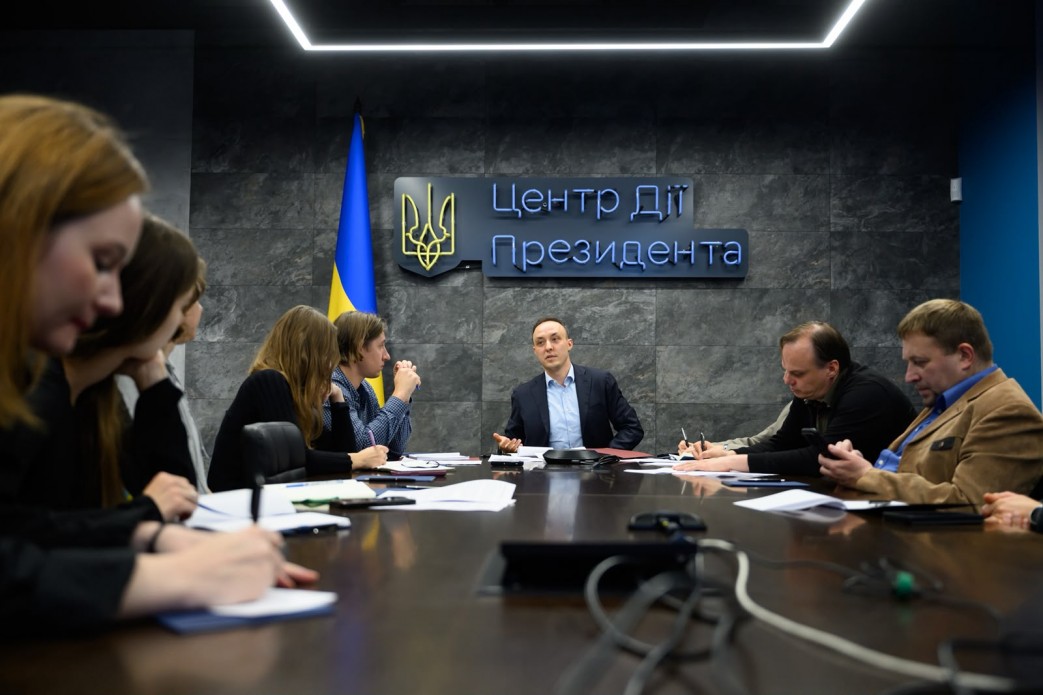
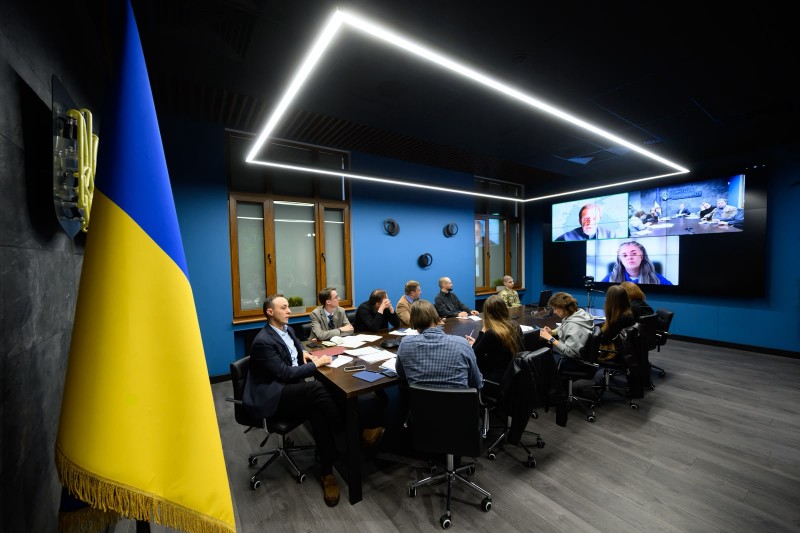
Advisor – Commissioner of the President of Ukraine for Sanctions Policy Vladyslav Vlasiuk held a meeting with representatives of civil society organizations engaged in analytical research and advocacy for sanctions against Russia.
The meeting, held both online and in person, included representatives of the Economic Security Council of Ukraine (ESCU), Razom We Stand, DiXi Group, StateWatch, B4U, the Independent Anti-Corruption Commission (NAKO), the Strategy XXI Center for Global Studies, the Institute of Legislative Ideas (IZI), the Analytical Center for the Study and Countering of Hybrid Threats, Dallas Analytics, the International Renaissance Foundation, the Institute of Black Sea Strategic Studies, and The Kyiv Independent.
 The participants discussed sanctions against companies that continue to enable Russia to obtain components needed to produce weapons and continue its aerial terror against Ukraine.
Roman Steblivskyi, Director of Policy and Advocacy at the Economic Security Council of Ukraine, spoke about how foreign companies supplying components needed by Russia’s defense-industrial complex are identified.
“We are now preparing a standard questionnaire for companies on the risks they face, and we will help identify their vulnerabilities and provide recommendations. We already have several successful cases of working with private companies where we managed to disrupt supply chains,” he said.
The participants also discussed further pressure on Russia’s shadow fleet, energy sector, and financial sector. One problem is that European countries have begun detaining fewer tankers belonging to Russia’s shadow fleet. According to the shadow fleet monitoring group at the Institute of Black Sea Strategic Studies, last year 11% of tanker voyages in the Baltic Sea involved vessels sailing without a flag or under a false flag. In the first nine months of 2026, that figure was only 1% – eight tankers out of 791 voyages. Many countries stopped allowing sanctioned tankers to sail under their flags, and Russia reflagged those vessels under its own flag. As a result, the number of tankers carrying Russian oil through the Baltic Sea under the Russian flag is now increasing significantly month by month.
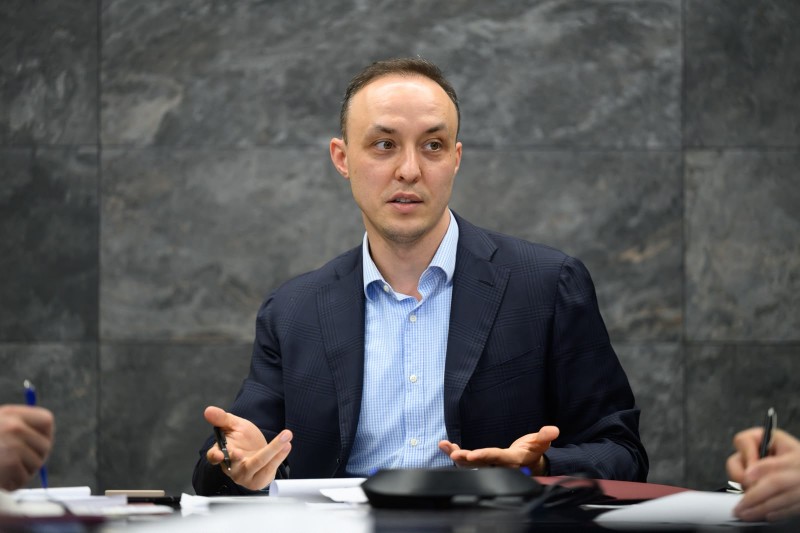 Dmytro Shulha, Director of the Europe and the World Program at the International Renaissance Foundation, noted that within the European Commission’s REPowerEU proposal to end dependence on Russian fossil fuels by 2030, a regulation phasing out Russian gas has been adopted, while no such regulation has yet been introduced for oil.
“Not even a proposal has been put forward. Initially, the European Commission planned for gas and oil to be covered by the same regulation. In the end, only gas remained. And the issue of oil is still unresolved,” he noted.
The discussion also addressed efforts to counter Russia’s A7 financial platform, which is becoming one of the key tools for circumventing Western sanctions and building an alternative system of cross-border settlements outside the SWIFT system.
Work to advocate further strengthening of European Union sanctions against Russia also remains important, as does implementing the opportunities provided by the Lindsey Graham law.
“We are grateful for your support, cooperation, and assistance in advocating sanctions measures. We constantly use civil society analysis in our work,” Vladyslav Vlasiuk noted.
The parties agreed on the next joint steps and emphasized the importance of continuing to develop cooperation between the state and civil society to make sanctions policy against Russia more effective.