

In February, the foreign policy work of President of Ukraine Volodymyr Zelenskyy focused on strengthening support for Ukraine – primarily in defense and energy – increasing sanctions pressure on Russia, and advancing negotiations to return Ukrainians and achieve a dignified peace.
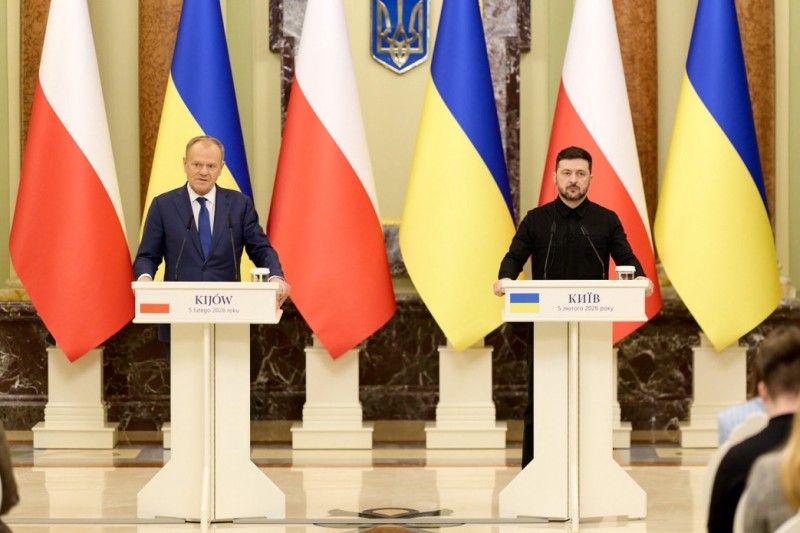
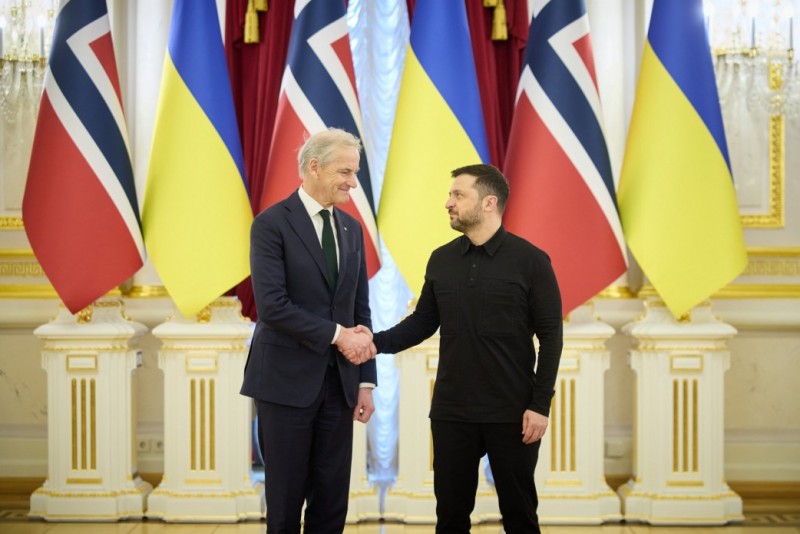
 Over the course of the month, the Head of State held 17 international meetings in Kyiv: with President of the European Council António Costa and President of the European Commission Ursula von der Leyen; Prime Minister of Poland Donald Tusk; Prime Minister of Norway Jonas Gahr Støre; Prime Minister of Croatia Andrej Plenković; Prime Minister of Moldova Alexandru Munteanu; NATO Secretary General Mark Rutte; Secretary General of the Council of Europe Alain Berset; OSCE Chairman-in-Office, Vice President of Switzerland Ignazio Cassis, and OSCE Secretary General Feridun Sinirlioğlu; Marshal of the Sejm of Poland Włodzimierz Czarzasty; First Deputy Prime Minister and Minister of Defense of the Netherlands Dilan Yeşilgöz-Zegerius and Minister of Foreign Affairs of the Netherlands Tom Berendsen; Minister of Foreign Affairs of Estonia Margus Tsahkna; Minister of the Armed Forces and Veterans Affairs of France Catherine Vautrin; Minister of Foreign Affairs of Ghana Samuel Okudzeto Ablakwa; U.S. Senators Richard Blumenthal and Sheldon Whitehouse; Members of the European Parliament from the United for Ukraine parliamentary group; United Nations High Commissioner for Refugees Barham Salih; and Mayor of Paris Anne Hidalgo.
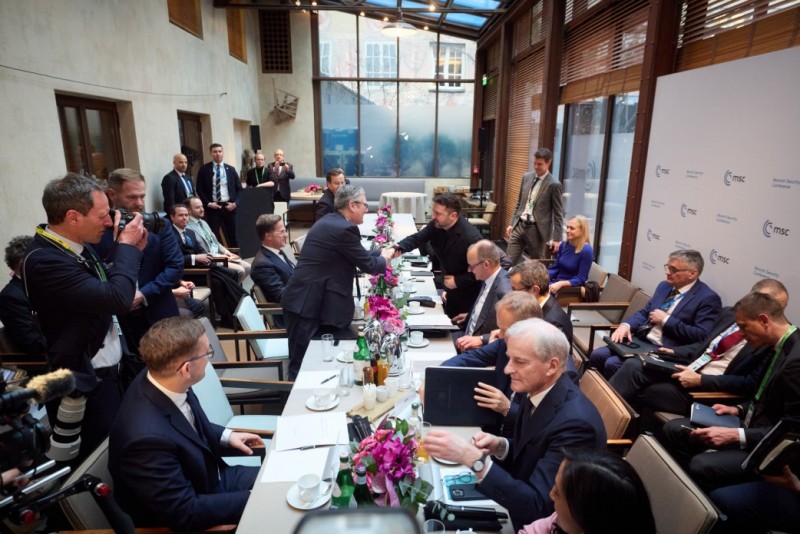 Another 14 meetings took place on the sidelines of the Munich Security Conference on February 13–14: with partners in the Berlin format; Federal Chancellor of Germany Friedrich Merz; President of Finland Alexander Stubb; President of Azerbaijan Ilham Aliyev; President of Czechia Petr Pavel; Prime Minister of Denmark Mette Frederiksen; Prime Minister of Norway Jonas Gahr Støre; Prime Minister of the Netherlands Dick Schoof; Prime Minister of North Macedonia Hristijan Mickoski; U.S. Secretary of State Marco Rubio; NATO Secretary General Mark Rutte; U.S. senators; heads of international investment companies; and exiled Crown Prince of Iran Reza Pahlavi.
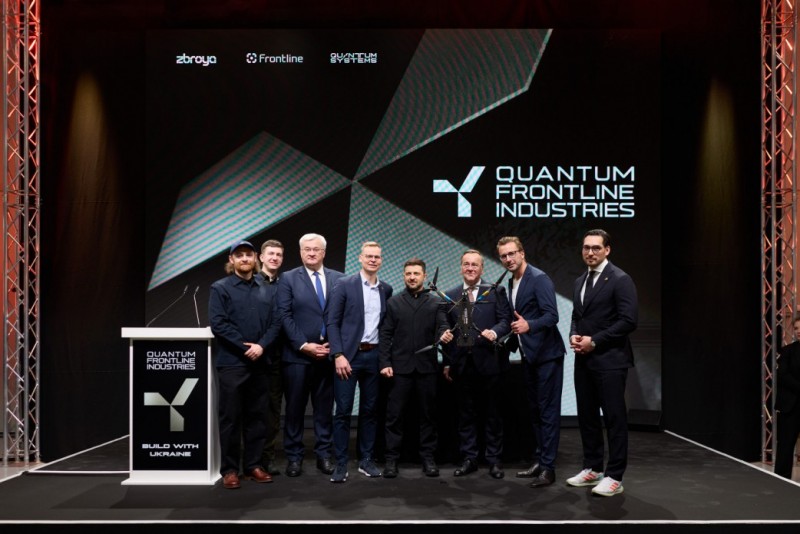
In Germany, the Head of State also visited the first German-Ukrainian joint venture producing drones for the Ukrainian army and received the first UAV manufactured there. Ukraine plans to open ten such joint ventures for the production of Ukrainian drones by the end of the year.
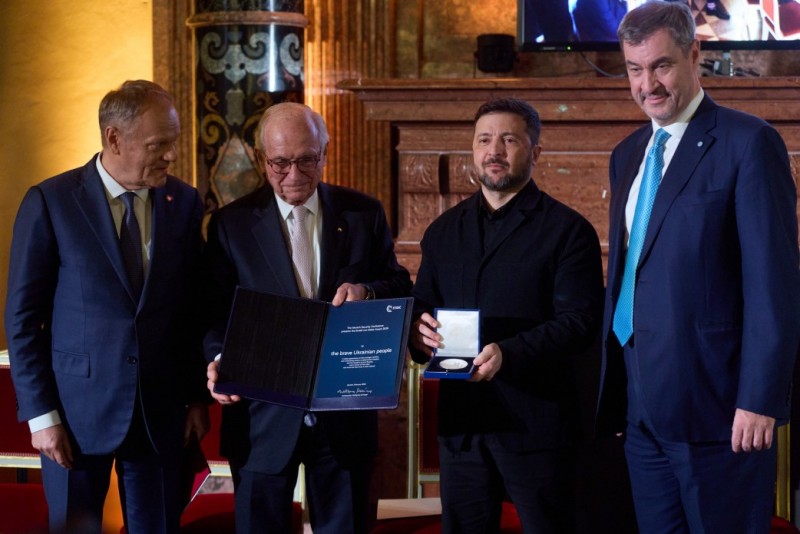
 In addition, the President received the Ewald von Kleist Award, which this year was awarded to the Ukrainian people. It is an annual distinction presented by the organizers of the Munich Security Conference since 2009.
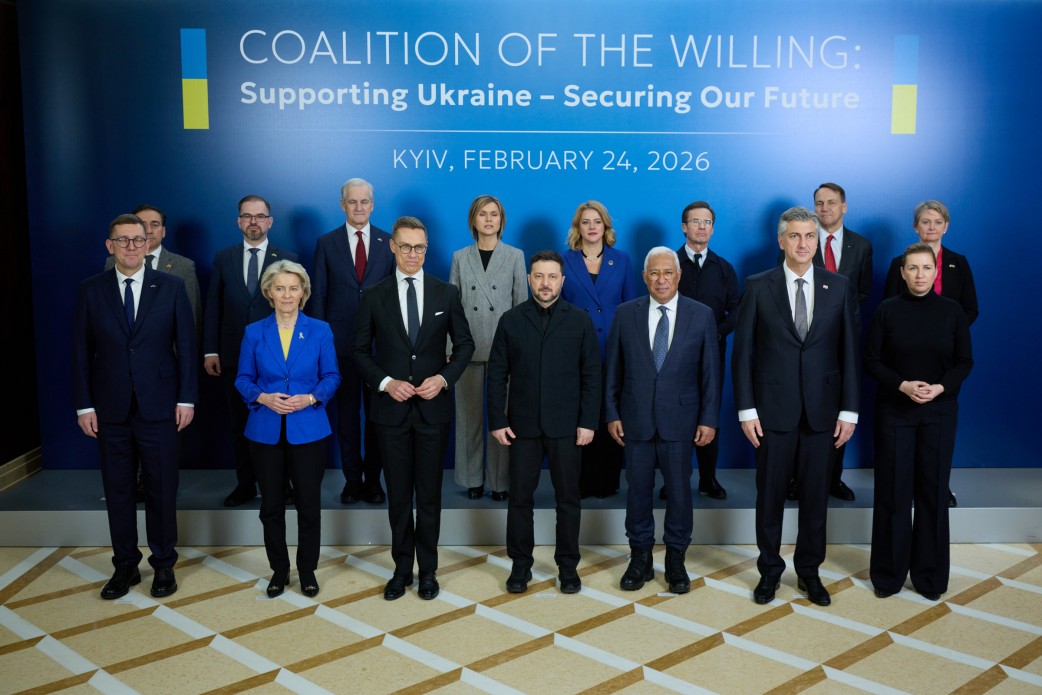
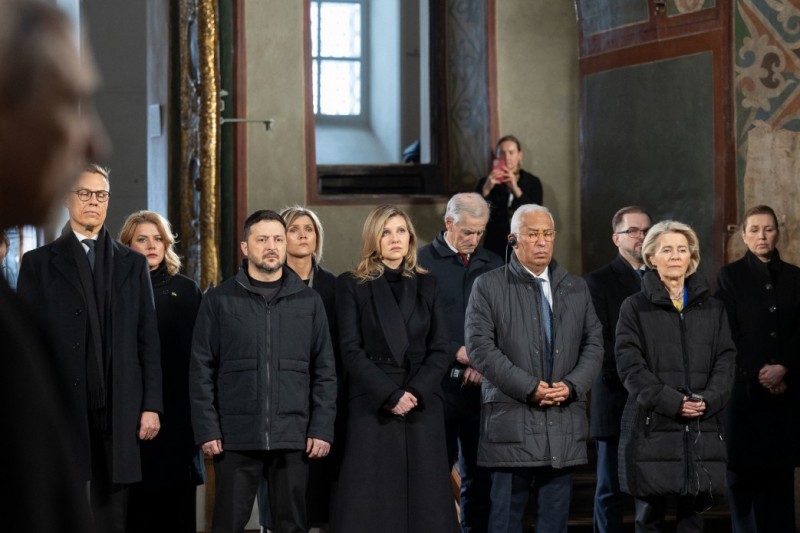
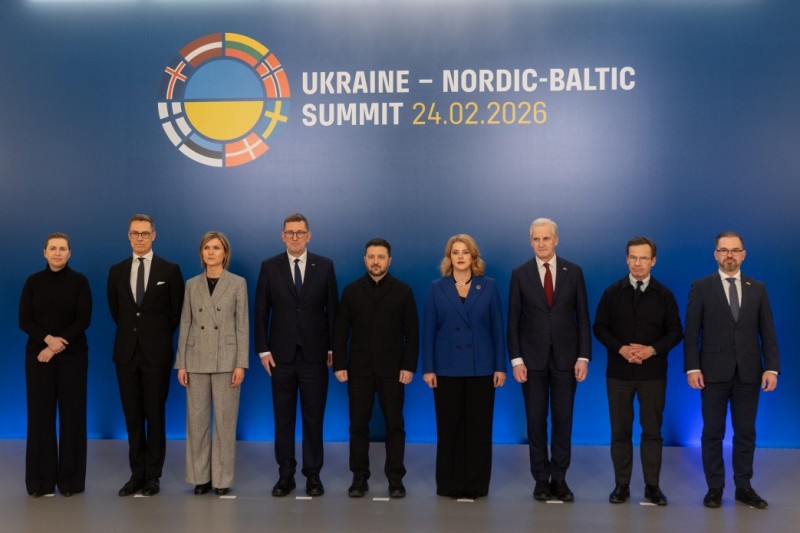
On the fourth anniversary of the start of the full-scale Russian war, President of Finland Alexander Stubb; President of the European Council António Costa; President of the European Commission Ursula von der Leyen; Prime Minister of Denmark Mette Frederiksen; Prime Minister of Estonia Kristen Michal; Prime Minister of Iceland Kristrún Frostadóttir; Prime Minister of Latvia Evika Siliņa; Prime Minister of Norway Jonas Gahr Støre; Prime Minister of Croatia Andrej Plenković; Prime Minister of Sweden Ulf Kristersson; and Minister of National Defense of Lithuania Robertas Kaunas arrived in Kyiv.
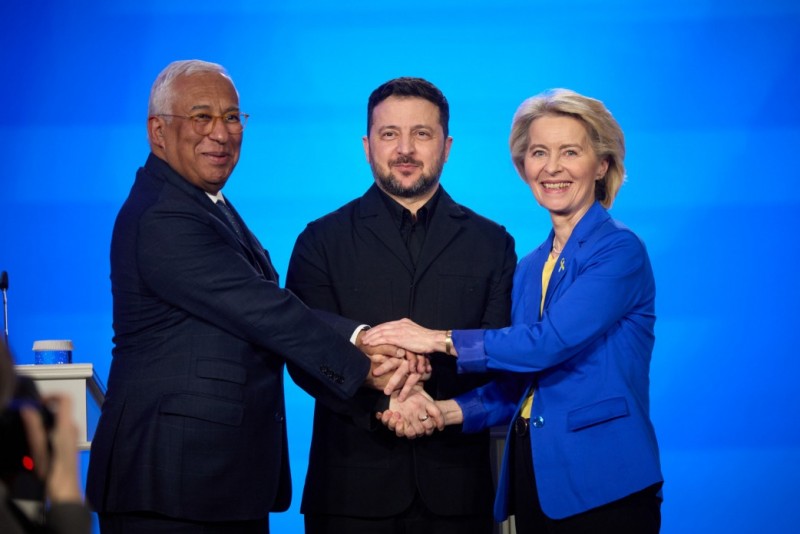
 During the meeting in Kyiv, Volodymyr Zelenskyy and Ursula von der Leyen agreed on the participation of the European Commission in implementing Ukraine’s updated energy strategy – restoring the energy sector and rebuilding the system. The President of the European Commission also announced a new energy plan, “Repair, Rebuild, Restart,” which will include a €920 million package to stabilize Ukraine’s energy system.
In February, the Head of State held 11 phone calls: with President of the United States Donald Trump; President of France Emmanuel Macron; President of the European Commission Ursula von der Leyen; President of Israel Isaac Herzog; Prime Minister of Sweden Ulf Kristersson; the new Prime Minister of the Netherlands Rob Jetten; President of the Senate of Cambodia Hun Sen; Prime Minister of Slovakia Robert Fico; and two calls each with NATO Secretary General Mark Rutte and envoys of the U.S. President Steven Witkoff and Jared Kushner.
 Participation in international events and meetings: February 14 – the Munich Security Conference; February 24 – a meeting of the Coalition of the Willing with the participation of 36 countries in offline and online formats, the Ukraine – Nordic-Baltic Summit, and an address to the European Parliament; February 26 – the first meeting of the International Advisory Group that will attract investment to Ukraine and develop priority sectors of the economy.
Last month, two rounds of meetings of the Ukrainian, American, and Russian delegations took place: February 4–5 in Abu Dhabi and February 17–18 in Geneva. The most important result was the return home of 157 Ukrainians, most of whom had been in captivity since 2022.
In February, it was also possible to return a number of Ukrainian children abducted by Russia. Thus, the total number of returned children within the Bring Kids Back UA initiative reached 2,000.
 In light of the events in the Middle East and the Gulf region, the Head of State noted that it is fair to give the Iranian people a chance to rid themselves of the terrorist regime, as well as to guarantee security to all peoples who have suffered from terror originating from Iran.
“It is important to preserve as many lives as possible. It is important to prevent the war from expanding. It is important that the United States is acting decisively. Whenever there is American resolve, global criminals weaken. This understanding must also come to the Russians, Volodymyr Zelenskyy noted.
On February 12, following the Ramstein-format meeting, partners confirmed that the budget for supporting Ukraine this year will amount to $38 billion.
Defense and energy packages:
Sweden – military aid package worth over $1.4 billion, $100 million in energy support, $100 million for the PURL initiative.
The United Kingdom – $200 million for PURL, $680 million to finance air defense, about $27 million to support Ukraine’s energy system.
Norway – $1.26 billion for drones, $940 million for air defense and technical support for F-16 fighter jets, $130 million for PURL.
Denmark – an additional €510 million to replenish the Ukraine Fund in 2026, €47 million in humanitarian and energy aid, €32.6 million to strengthen and modernize training infrastructure for the Armed Forces of Ukraine through the Come Back Alive Foundation.
Finland – defense package worth €43.2 million, €20 million in humanitarian aid.
 Lithuania – 30 missiles for MANPADS, a Joint Statement of Intent adopted on co-production of defense products on the territory of Lithuania. Funding for the first projects will amount to at least €100 million under the SAFE instrument.
Estonia – €11 million for PURL.
Latvia – €10 million for PURL.
Iceland – $6.5 million to support Ukraine’s energy sector and $8 million contribution to PURL.
Canada – 2 billion Canadian dollars in military aid, 400 armored vehicles, and 20 million Canadian dollars to the Ukraine Energy Support Fund.
The Netherlands – $107 million for the PURL initiative.
Japan – $41 million for Ukraine’s priority reconstruction needs.
 Croatia – €1.5 million to the Ukraine Energy Support Fund, €500,000 in energy equipment, and €1.5 million in robotic demining machines.
Switzerland – energy aid package worth over $35 million.
Israel – 117 mobile power stations for the Kyiv region.
Czechia – 55 electric generators.
Italy – 10 high-capacity mobile power generators.
Sanctions measures: synchronization of sanctions with the United Kingdom against former oligarch Dmytro Firtash; extension of sanctions against one of the closest associates of former oligarch Viktor Medvedchuk, Taras Kozak; as well as sanctions packages targeting the self-proclaimed president of Belarus Alexander Lukashenko, Russian athlete-propagandists, captains of Russia’s tanker fleet, the Russian defense-industrial complex, Russian pseudo-historians, and postal services. Work is also ongoing with European partners to amend legislation to enable the systematic detention of tankers from Russia’s fleet.