

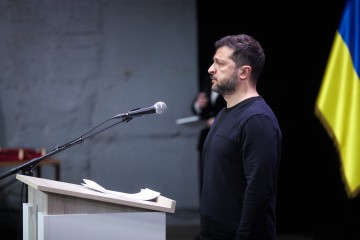

In 2025, President Volodymyr Zelenskyy conducted approximately 60 visits abroad, hosted nearly 100 heads of foreign states and governments in Ukraine, held 20 international video calls, over 230 telephone conversations with leaders of states, governments, international organizations, and spiritual leaders, and participated in almost 150 events within Ukraine.

One of the main priorities of the President’s diplomatic activity was working closely with the U.S. team to develop a 20-point peace plan and documents on Ukraine’s security guarantees and prosperity.
At the end of the year, the result of this substantive, productive, and constructive work by the Ukrainian and American teams was a leaders-level meeting between Ukraine and the United States on December 29 in Florida, at the Mar-a-Lago residence.
Volodymyr Zelenskyy and Donald Trump discussed all aspects of the peace framework and achieved significant results. Some of the documents have already been fully agreed upon, while others are in their final stages. In addition, the leaders agreed on the sequence of further steps. The President of the United States noted that the teams are approaching the conclusion of the war and will continue to work in a working-group format.
“We agree that security guarantees are the key milestone in achieving lasting peace, and our teams will continue working on all aspects,” emphasized the Head of State.
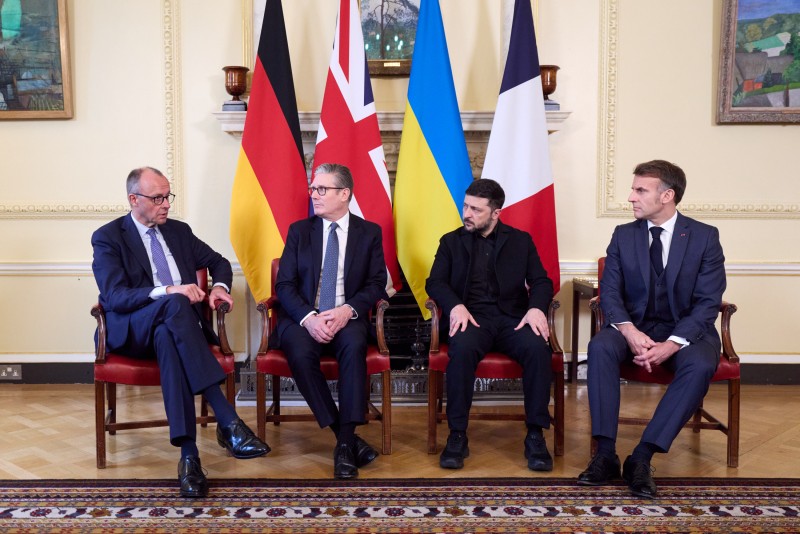
This year, Volodymyr Zelenskyy also focused on securing financial support for Ukraine in the coming years, strengthening military assistance, particularly in air defense, scaling up drone production, developing joint defense manufacturing, attracting additional contributions and countries to the PURL initiative, and implementing the SAFE instrument.
Thanks to the successful work of the President and his team, 24 countries joined the PURL initiative, which NATO, together with the United States, launched in August this year to enable direct participation of partner states in supporting Ukraine. Of these who joined, 22 are NATO members, and two are Alliance partners: Australia and New Zealand. The total declared funding for the PURL initiative amounts to USD 4.3 billion. Eight packages have already been formed, with the ninth and tenth currently being prepared.

Additionally, at the end of December, the Italian government approved a decree allocating aid packages for Ukraine for 2026. During the 32nd Ramstein meeting in December, partners announced new commitments to support Ukrainian aviation, air defense, UAVs, electronic warfare systems, and artillery shells. Within the framework of the Czech Initiative alone, over 600,000 rounds were financed for 2026, amounting to EUR 1.45 billion.
In 2025, the Head of State actively worked with partners to open export offices for the sale and joint production of Ukrainian weapons.
“It is here in Berlin that we are preparing one of the first offices that will focus on arms exports and joint production projects with your country, with Germany. It is Germany that is one of our largest trading partners in Europe, and I am confident this will remain the case in the future,” the President said during his address to the participants of the German-Ukrainian Economic Forum.
Thanks to the work of the Head of State and his team, this year, Ukraine received additional air defense systems, including Patriot, NASAMS, and SAMP/T systems, radars for air defense systems, air-to-air missiles, and guided aerial bombs.
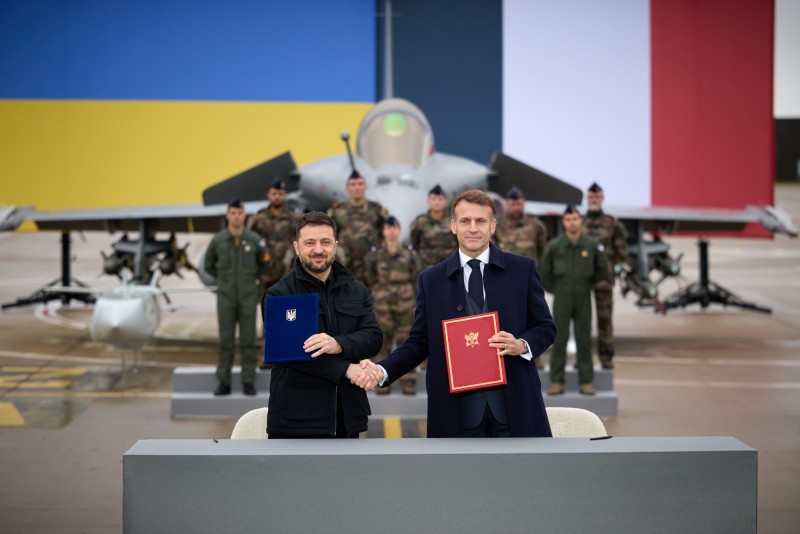
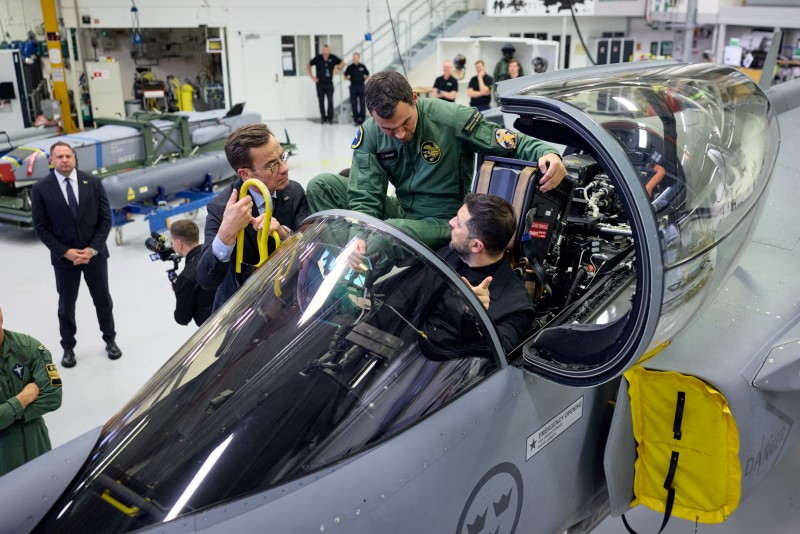
One of the main results of strengthening air defense is a new and unprecedented agreement for Ukrainian combat aviation. In October, the President of Ukraine and the Prime Minister of Sweden signed the first document opening the path for Ukraine to receive Gripen aircraft – the Letter of Intent Between Ukraine and the Kingdom of Sweden Concerning Cooperation in the Field of Air Capabilities. Our state expects to receive up to 150 such fighter jets, with the first deliveries expected next year. In November, Volodymyr Zelenskyy and Emmanuel Macron signed the Declaration of Intent on Cooperation. This agreement will allow Ukraine to acquire 100 Rafale F4 aircraft by 2035.
A key achievement in December, and simultaneously one of the most important results of the year, was the decision of the European Council on December 19 to provide Ukraine with financial support of EUR 90 billion for 2026–2027. Ukraine will repay these funds only once it receives reparations from Russia. The Head of State also highlighted that Russian assets remain immobilized.

“Russia’s assets must be used to defend against Russian aggression and to build what was destroyed, exactly, destroyed by Russian attacks. It’s moral. It’s fair. And it’s legal – confirmed by the expertise of many, many professionals,” said Volodymyr Zelenskyy during the European Council meeting in Brussels.
The President paid particular attention to increasing pressure on Russia. This year, Volodymyr Zelenskyy signed 61 decrees implementing the National Security and Defense Council’s decisions to impose sanctions on 2,021 individuals and 1,745 legal entities.
In 2025, Ukraine’s partners also took strong sanctioning measures, always taking Ukraine’s proposals into account. The United States imposed strict sanctions on Russia’s two largest oil companies – Rosneft and Lukoil. The U.S. sanctions have crippled the segments of the industry that account for about 55% of Russia’s oil production. This has significantly reduced Russia’s revenues and its ability to finance its war machine.
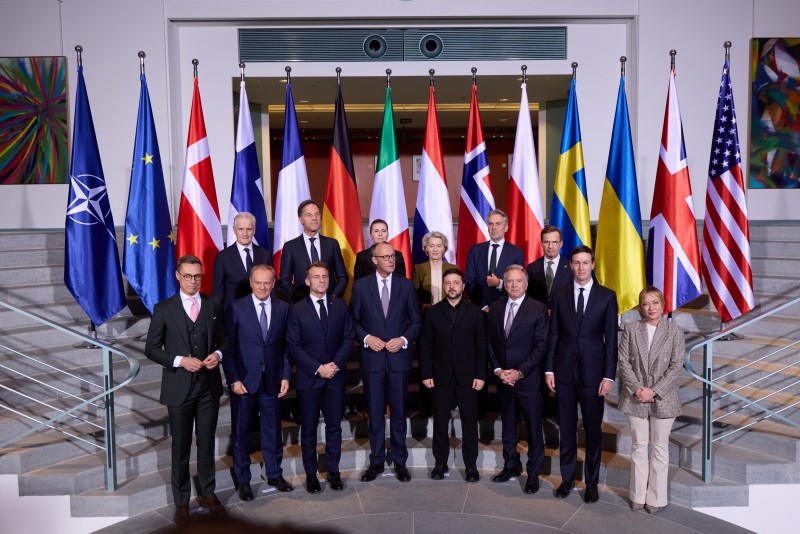
A broad coalition of international partners – including the European Union, the United Kingdom, the United States, Japan, Canada, and others – implemented and reinforced sanctions against the Russian Federation’s shadow fleet. This year, the European Union alone introduced four sanction packages, with preparations underway for a new, already 20th package.
In 2025, Ukraine synchronized 14 sanction packages from its partners: two each from the United States and the United Kingdom, eight from the European Union, and one each from Canada and Japan.
Overall, throughout the year, the Head of State made 59 visits to 25 countries: Germany, Italy, Poland, Switzerland, the United Arab Emirates, Türkiye, the United States, the United Kingdom, Belgium, Saudi Arabia, Finland, Norway, France, South Africa, the Czech Republic, Albania, Lithuania, Austria, Canada, the Netherlands, Denmark, Sweden, Greece, Spain, and Ireland.
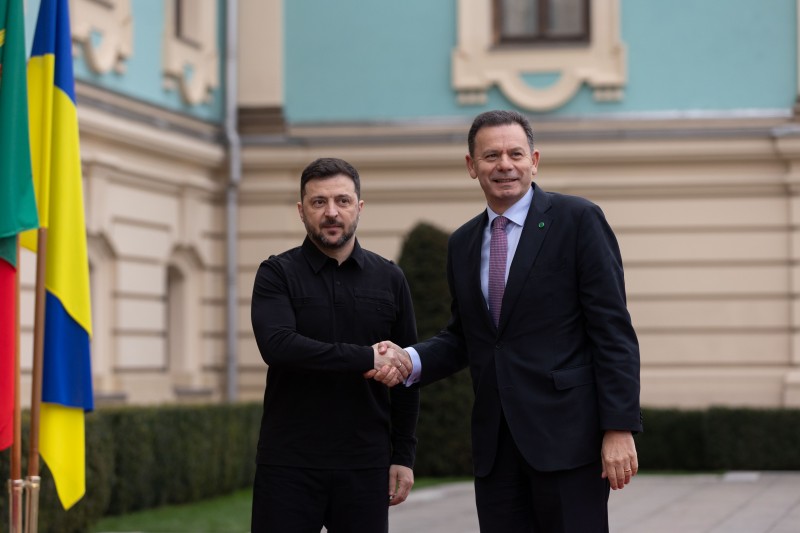
In addition, throughout the year, the President received 99 heads of foreign states, governments, parliaments, and representatives of international organizations in Ukraine, including the Presidents of Finland, Latvia, Lithuania, Cyprus, the Czech Republic, Moldova, Romania, and Poland; the Federal Chancellor of Germany; the Prime Ministers of the United Kingdom, Canada, Denmark, Sweden, Iceland, Norway, Estonia, Belgium, Latvia, Lithuania, Poland, Greece, Croatia, Bulgaria, Slovakia, the Netherlands, and Portugal; as well as the President of the European Commission, the President of the European Council, the Secretary General of NATO, the U.S. Secretary of the Treasury, the Chair of the OSCE, the Director General of the International Atomic Energy Agency (IAEA), a delegation from the United Nations, the President of the European Bank for Reconstruction and Development (EBRD), the President of the European Investment Bank (EIB), the President of the European Central Bank, the Crown Prince of Norway, and the Princess Royal of the United Kingdom.
The Head of State maintained constant contact with partners, keeping them informed of the diplomatic situation and coordinating joint next steps not only in person but also via over 230 phone conversations throughout the year.
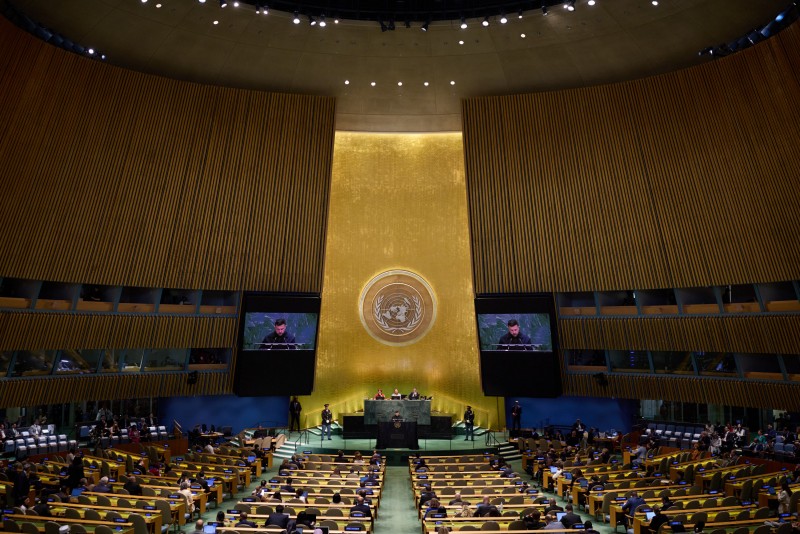
During his foreign visits and online, the President addressed the participants of the 80th session of the UN General Assembly, the 71st annual session of the NATO Parliamentary Assembly, the Parliamentary Assembly of the Council of Europe, the parliaments of Ireland and the Netherlands, the European Council, meetings of EU foreign ministers, the 50th-anniversary conference of the OSCE Helsinki Final Act, the Warsaw Security Forum, and the Parliamentary Summit of the International Crimea Platform.
Domestically, the President’s primary focus has been on the proper and continuous recognition of Ukrainian warriors.
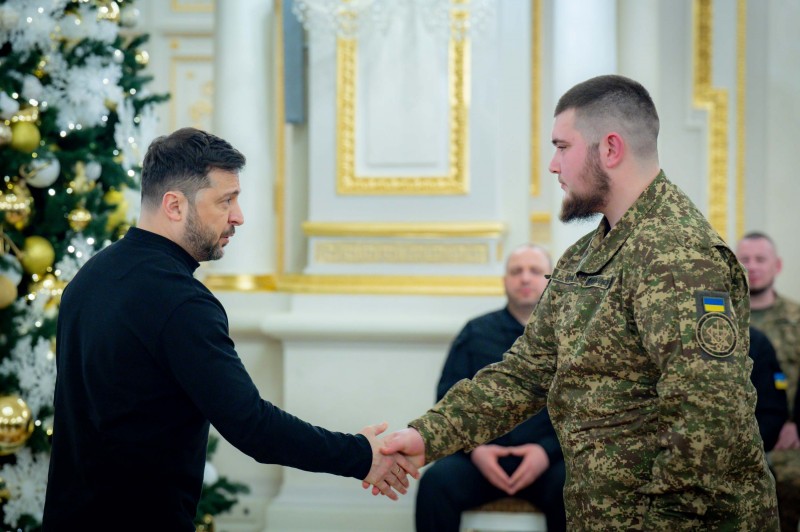
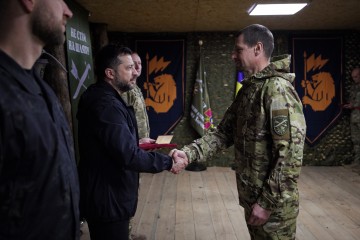
Over the course of the year, the President honored representatives of various branches of Ukraine’s Defense Forces: warriors of the Airborne Assault Forces, the Navy, the Air Force, missile and artillery troops, servicemembers of the Special Operations Forces, Territorial Defense, personnel of the foreign and military intelligence services, specialists of the State Special Transport Service, employees of the Security Service of Ukraine, warriors of the SSU Special Operations Center A, members of the National Guard, warriors and intelligence officers of the State Border Guard Service, engineer troops, representatives of the State Service of Special Communications and Information Protection, the National Police, and employees of the State Emergency Service of Ukraine.
Volodymyr Zelenskyy repeatedly presented the highest state awards to defenders – the Orders of the Golden Star to Heroes of Ukraine and families of fallen Heroes. This year also continued the tradition of awarding housing certificates to Heroes of Ukraine and the families of warriors posthumously honored with this title.
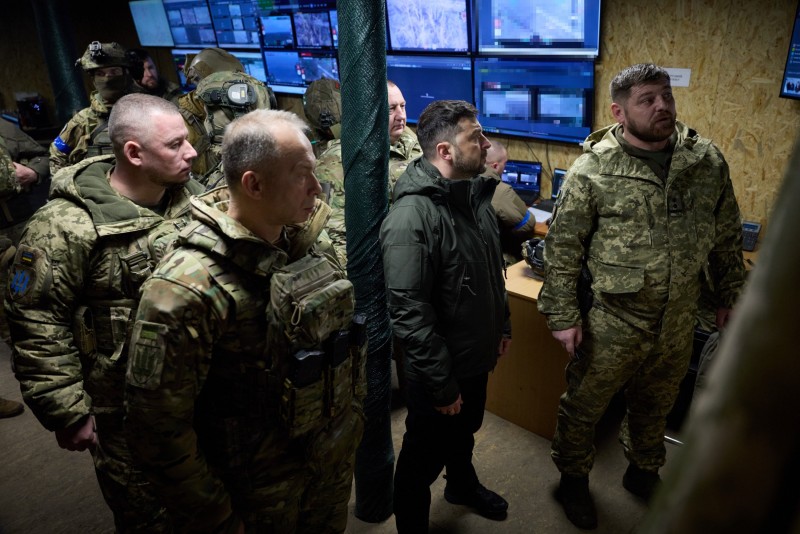
The Head of State conducted 25 working visits across Ukraine: four to the Kyiv region; three each to the Donetsk, Dnipro, and Kharkiv regions; two each to the Sumy and Odesa regions; and visits to Zakarpattia, Zaporizhzhia, Lviv, Rivne, Kherson, Khmelnytskyi, and Chernihiv regions.
The focus was on the security situation, especially in frontline regions. In these areas, the President met with servicemembers defending Ukraine, wounded warriors undergoing treatment and rehabilitation, veterans, and medical personnel. Considerable attention was also given to socio-economic development, support for producers and entrepreneurs, and the functioning and adaptation of medical and educational infrastructure to new conditions.
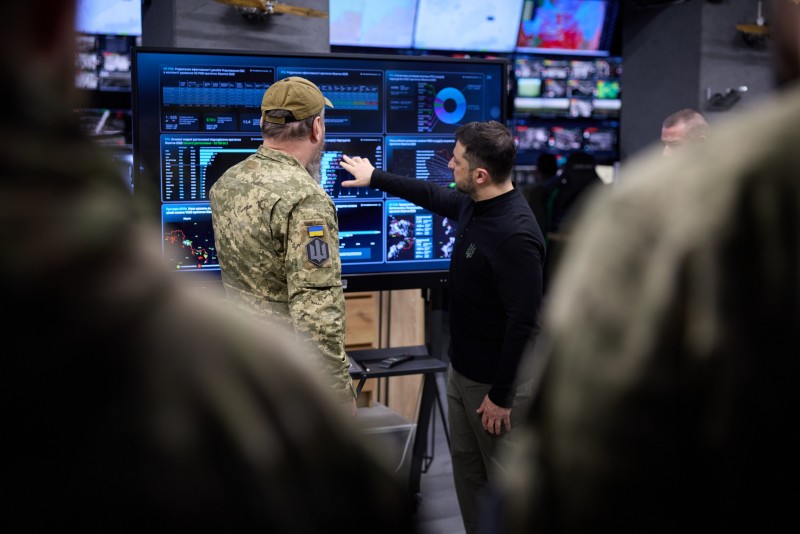
In 2025, the President participated in the International Defense Industries Forum, met with personnel of Ukraine’s defense industry, visited a facility producing interceptor drones, and spoke with employees of a company manufacturing electronics for Ukrainian weapons.
Despite the Christmas and New Year holidays, diplomatic work continues uninterrupted. Volodymyr Zelenskyy remains in constant contact with partners, and Ukraine’s negotiating team continues its work without pause. A meeting at the level of European national security advisors from the Coalition of the Willing countries is already scheduled for January 3, followed by a leaders-level meeting in France on January 6.