

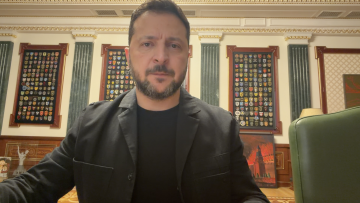
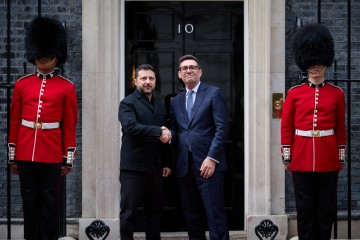
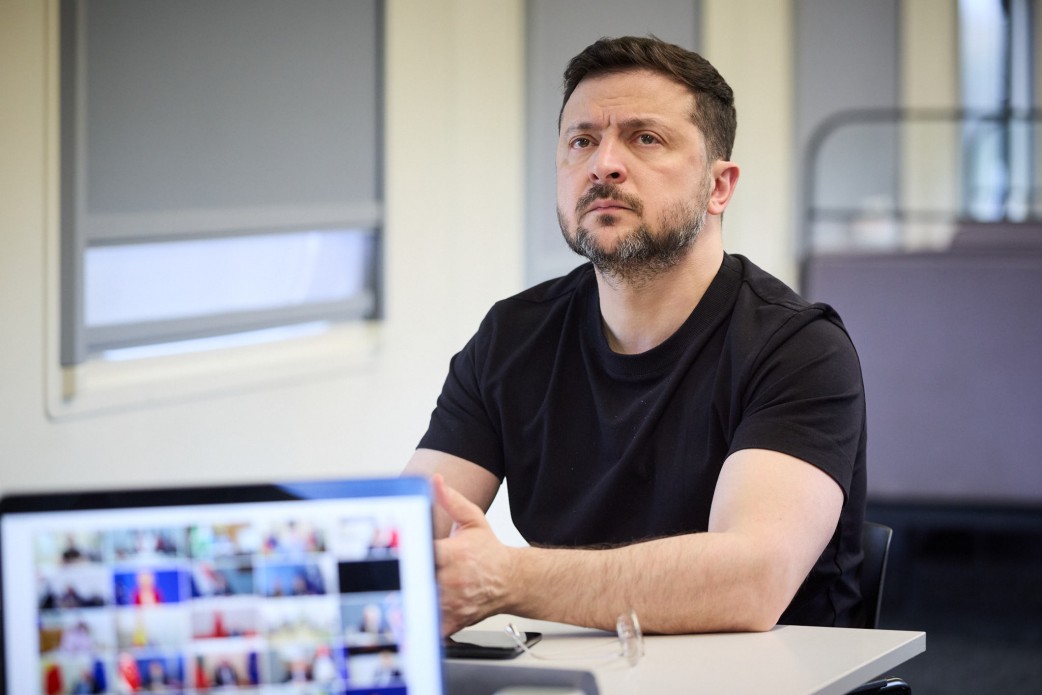
Hi, Emmanuel, Keir, Giorgia, Friedrich, all the friends!
Glad to see you, and it’s good we have this format for coordination. This is the right task – to find a joint security response for the Strait of Hormuz, because it’s about much more than just this strait.
We all understand the problems caused by the war in Iran. The economy is global now, and the cost of living is affected everywhere. We all need to work together to remove the dangers in Hormuz. But it must be done in a way that helps protect freedom of navigation everywhere in the world – not just in Hormuz. And the decisions made now on Hormuz will shape what other troublemakers might think about causing problems – in other straits and on other fronts.
So let’s be as concrete and clear as possible – and make sure this is not just words we are all saying here today. And let’s not end up six months from now like in Gaza, where lots yet to be done – security there is still largely fragile, reconstruction hasn’t really started, and many humanitarian problems remain unresolved. In Hormuz, there are security tasks that can’t be solved just by political decisions – they need to be handled in a way that is solid and long-lasting.
First, we need to define what actually depends on all of us in Hormuz, and what depends on the United States. It’s also important to involve the countries of the Middle East and the Gulf in a way that reflects their shared interests. The key principle is this: after this war, security must be stronger – not weaker.
Second, let’s have our military teams meet as soon as possible and go through all the critical aspects of how a security mission in Hormuz could work, and what experience each side can bring.
Ukraine has gone through a very similar mission – not the same but very similar mission – in the Black Sea. Russia also tried to block our sea. We have experience with escorting commercial vessels, demining, protection from air attacks, and overall coordination of such operations. Ukrainians are already working in the Gulf region on air security – so we can also contribute to security at sea.
At the same time, this war in Iran is already affecting the situation here in Europe in a negative way – through Russia’s war against us, against Ukraine. Russia remains a terrorist state and has no intention of reducing the number or the brutality of its strikes. The United States, for various reasons, may be easing pressure on Russia, and this could lead to shortages of the weapons we need here to defend against those attacks, especially air defense – you know it.
So this means, we in Europe need to take even stronger joint steps to protect lives – above all, to defend against ballistic threats and to maintain pressure on Russia over the war. I’m grateful to all the countries already helping us with this – those taking new steps on air defense, supporting the PURL program, and speeding up domestic production projects, especially in Europe, for the weapons we need.
All key parts of the world need to rely more on their own strength. This applies to Europe, to the Middle East and the Gulf – where we will clearly see more regional security cooperation, new partnerships – as well as to key regions in Asia, and also Canada, Australia, New Zealand.
With formats and meetings like this one, and like the Coalition of the Willing, and like JEF and others – we are shaping the security system future generations will live with. Please, let’s keep this practical and real – not empty words – for Hormuz, for Europe, and for everyone who needs coordination and support.
Thank you, guys! Thank you.