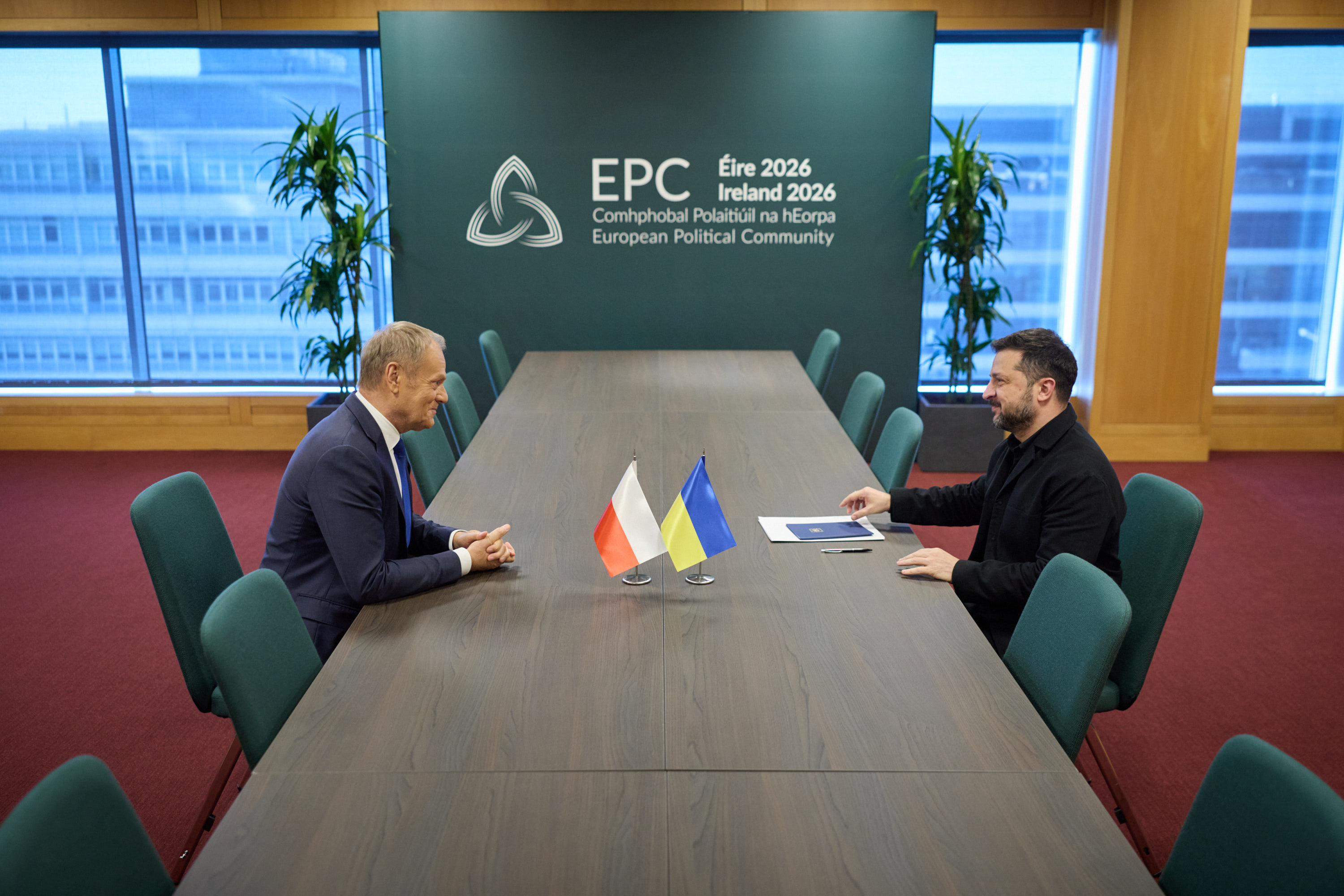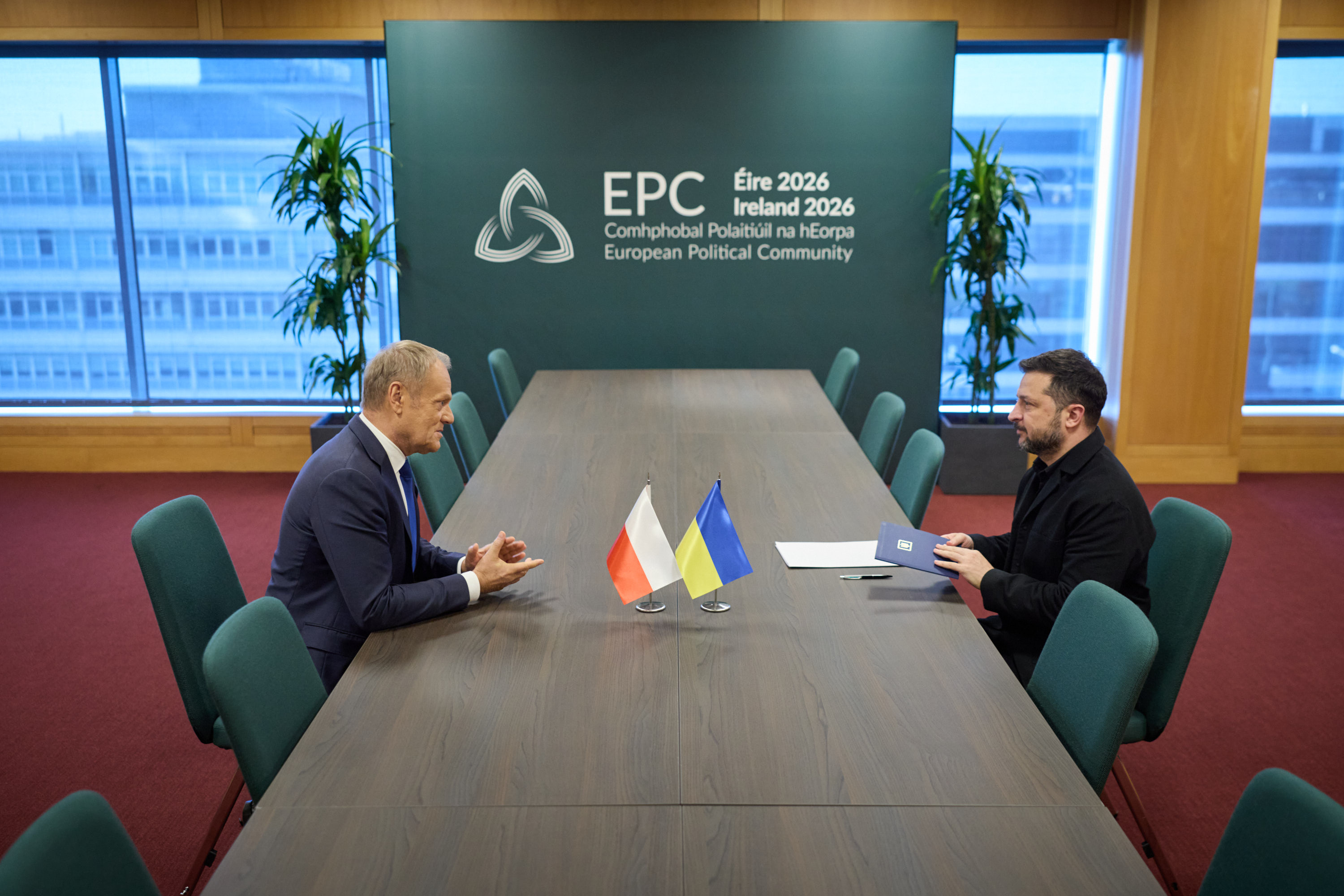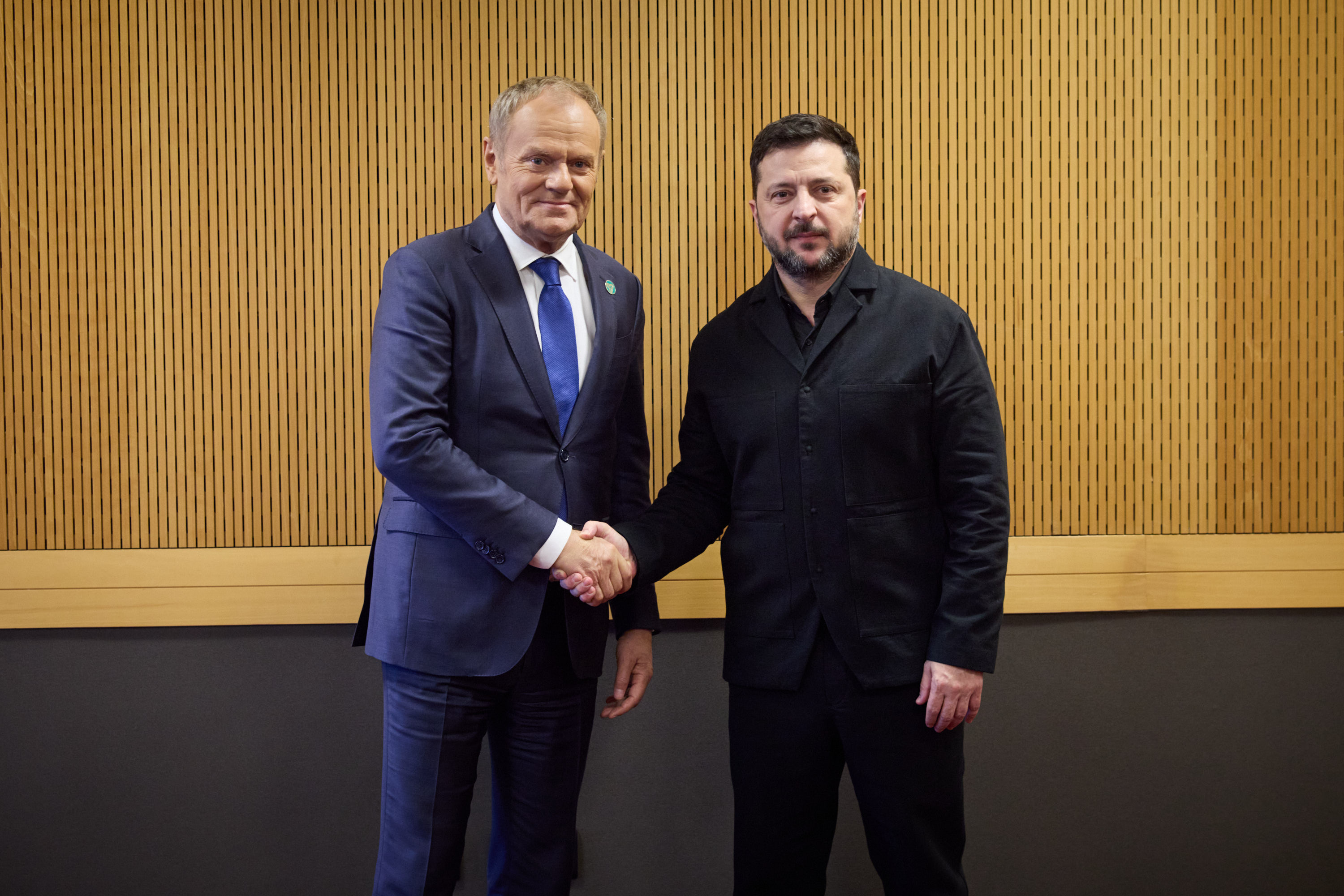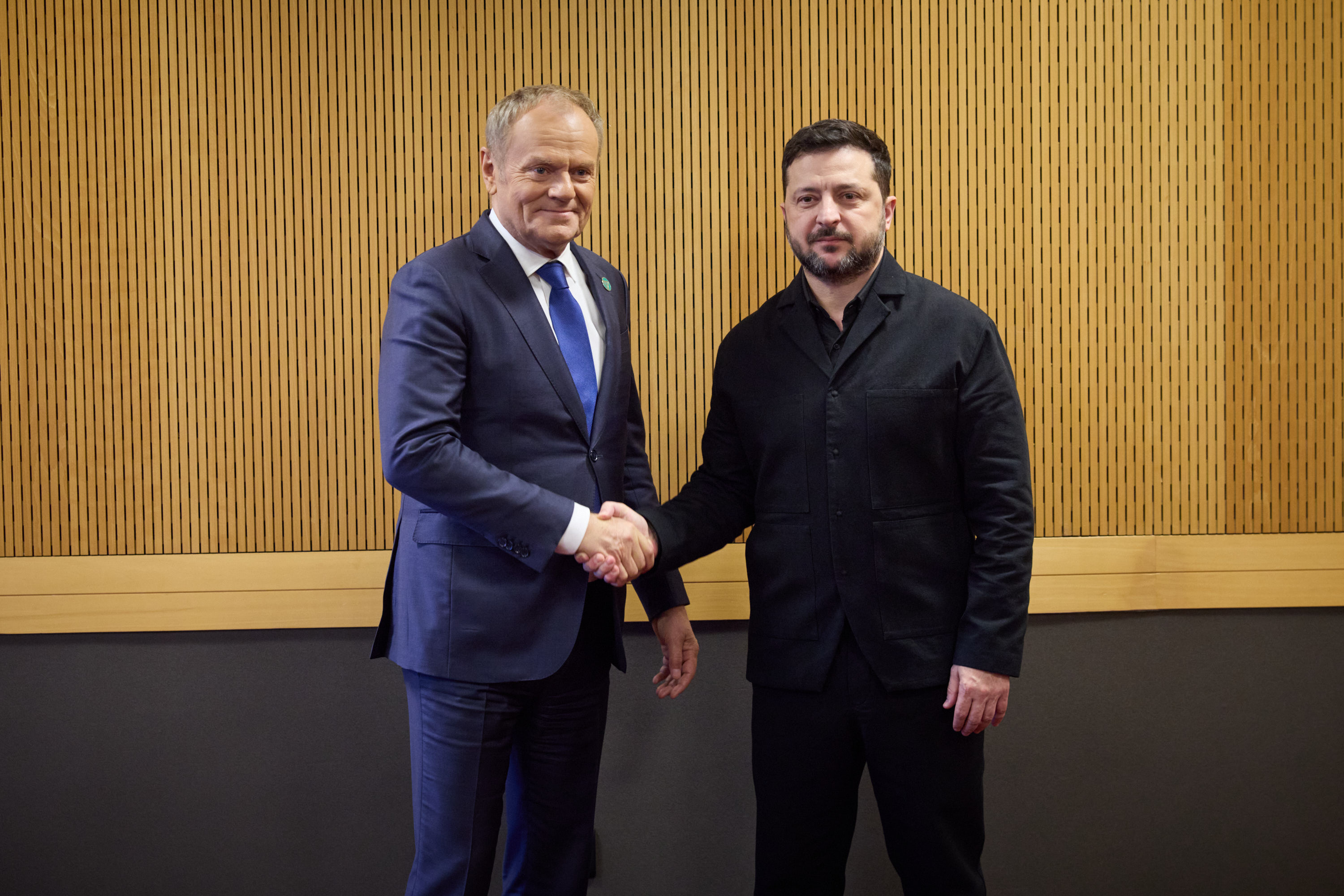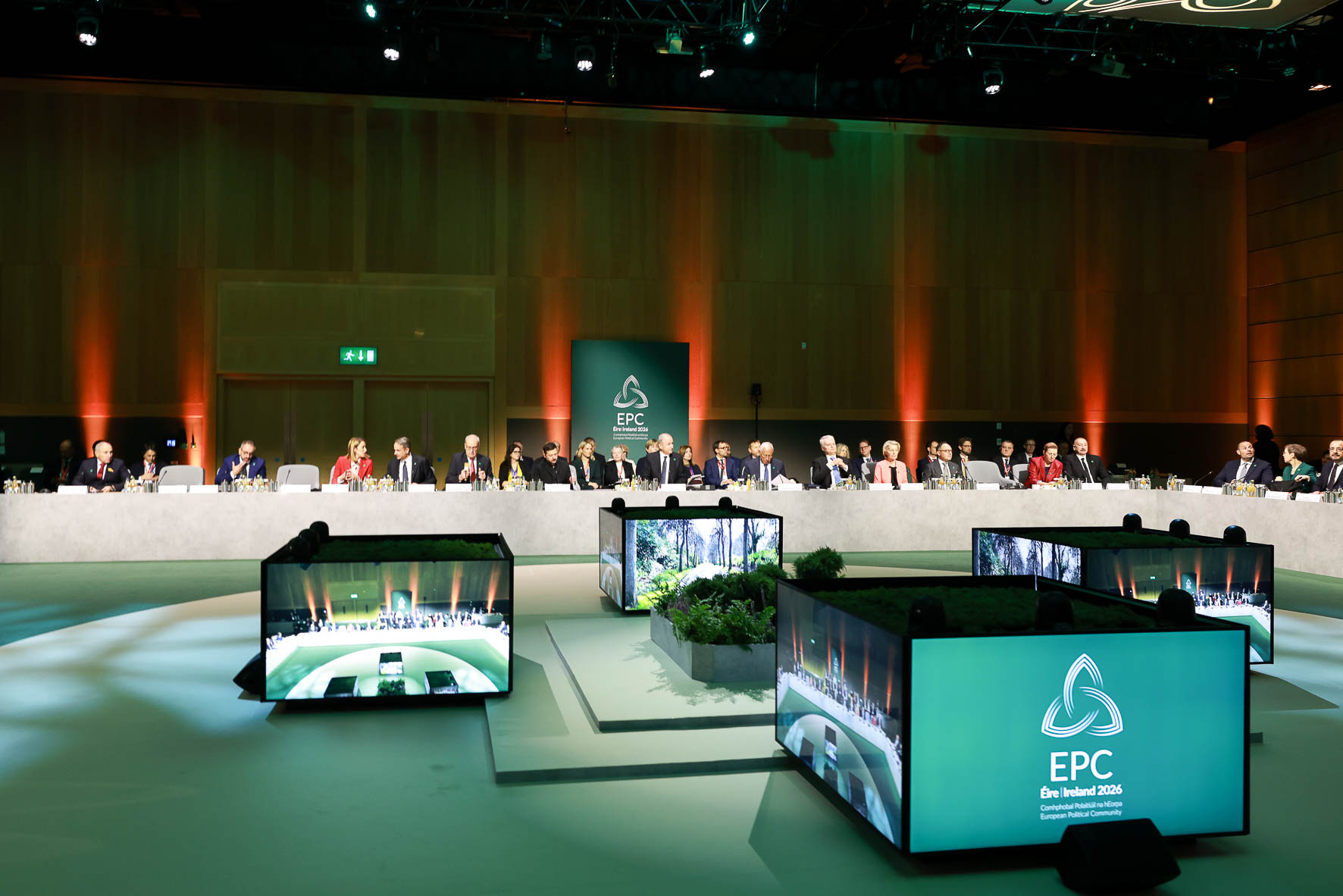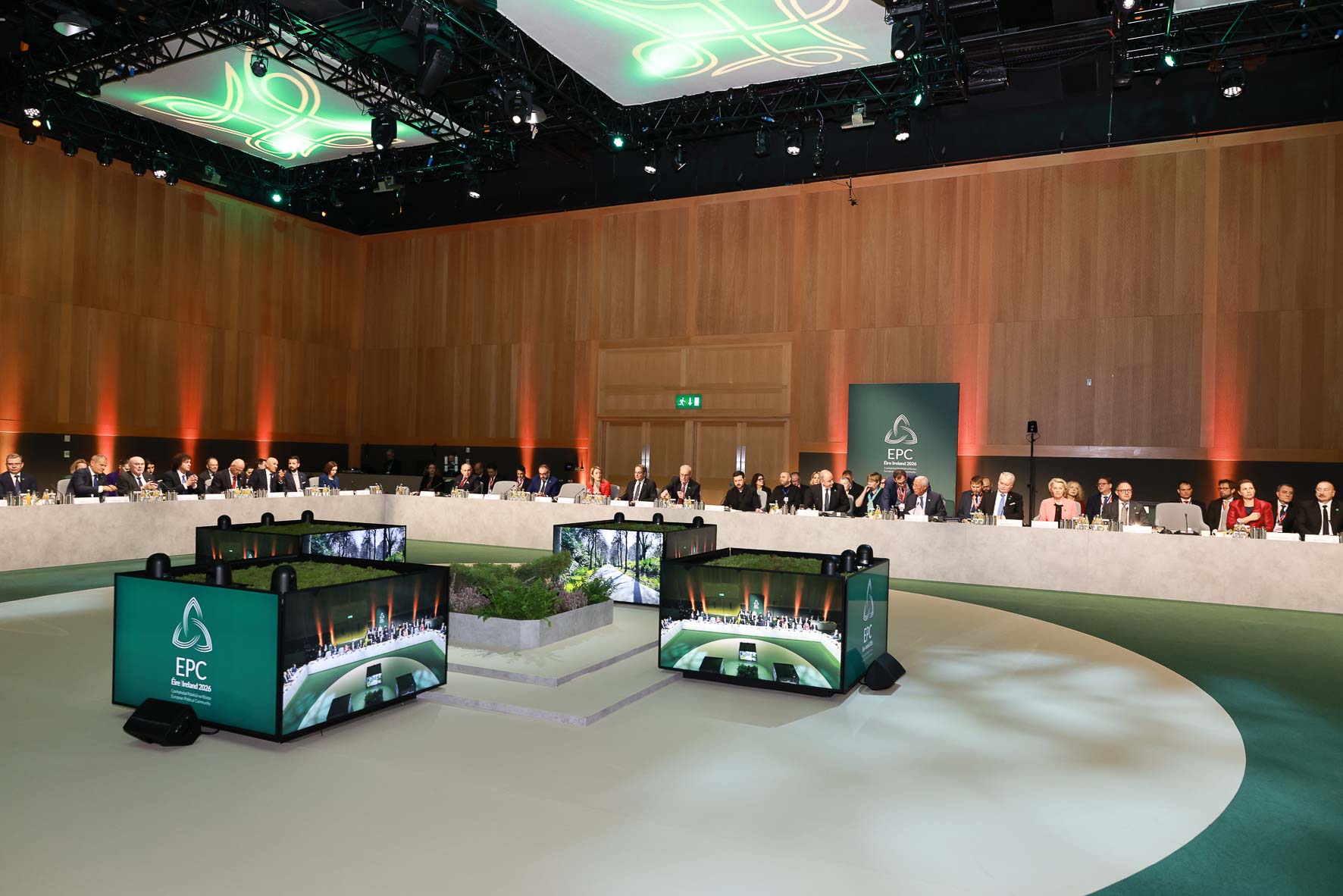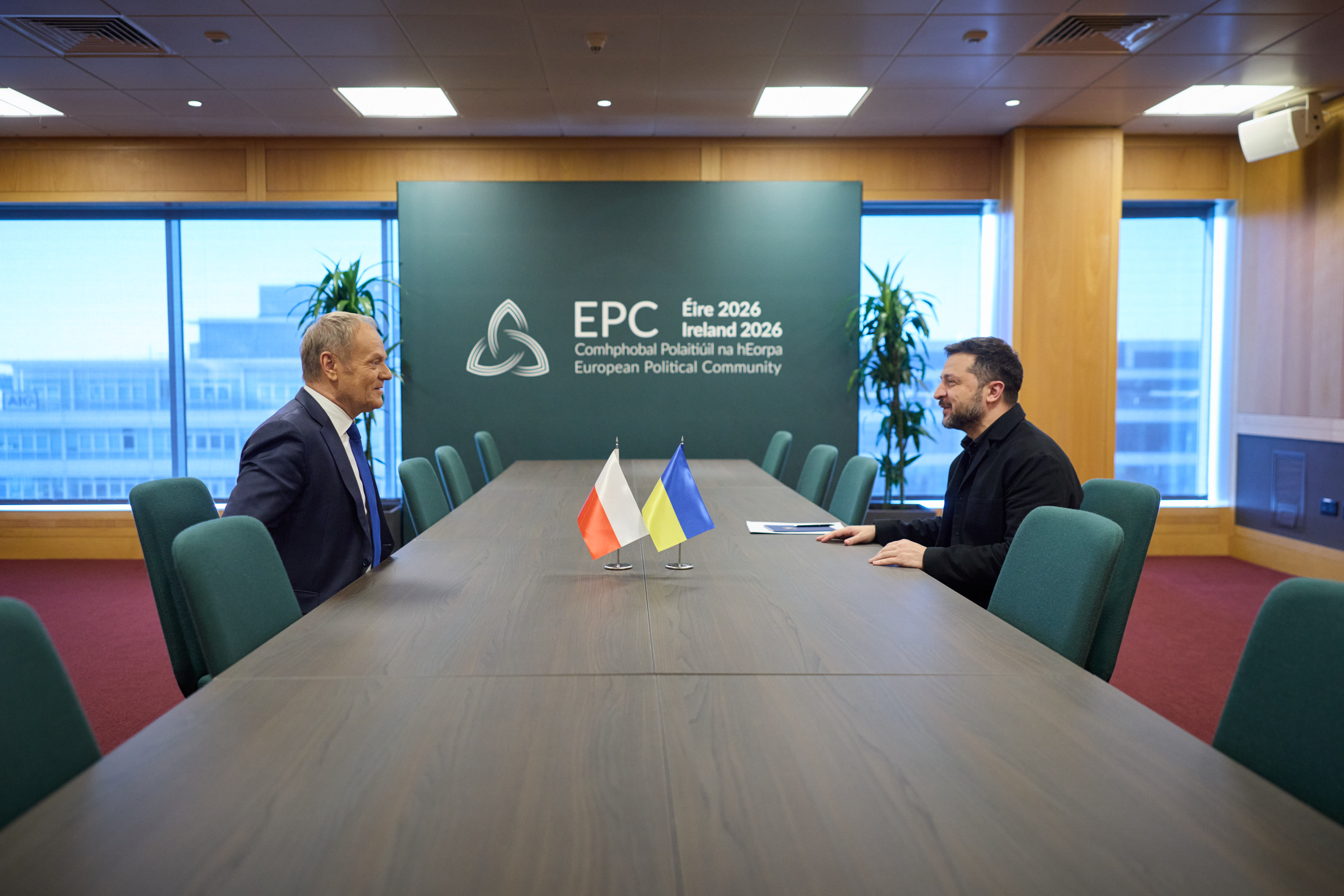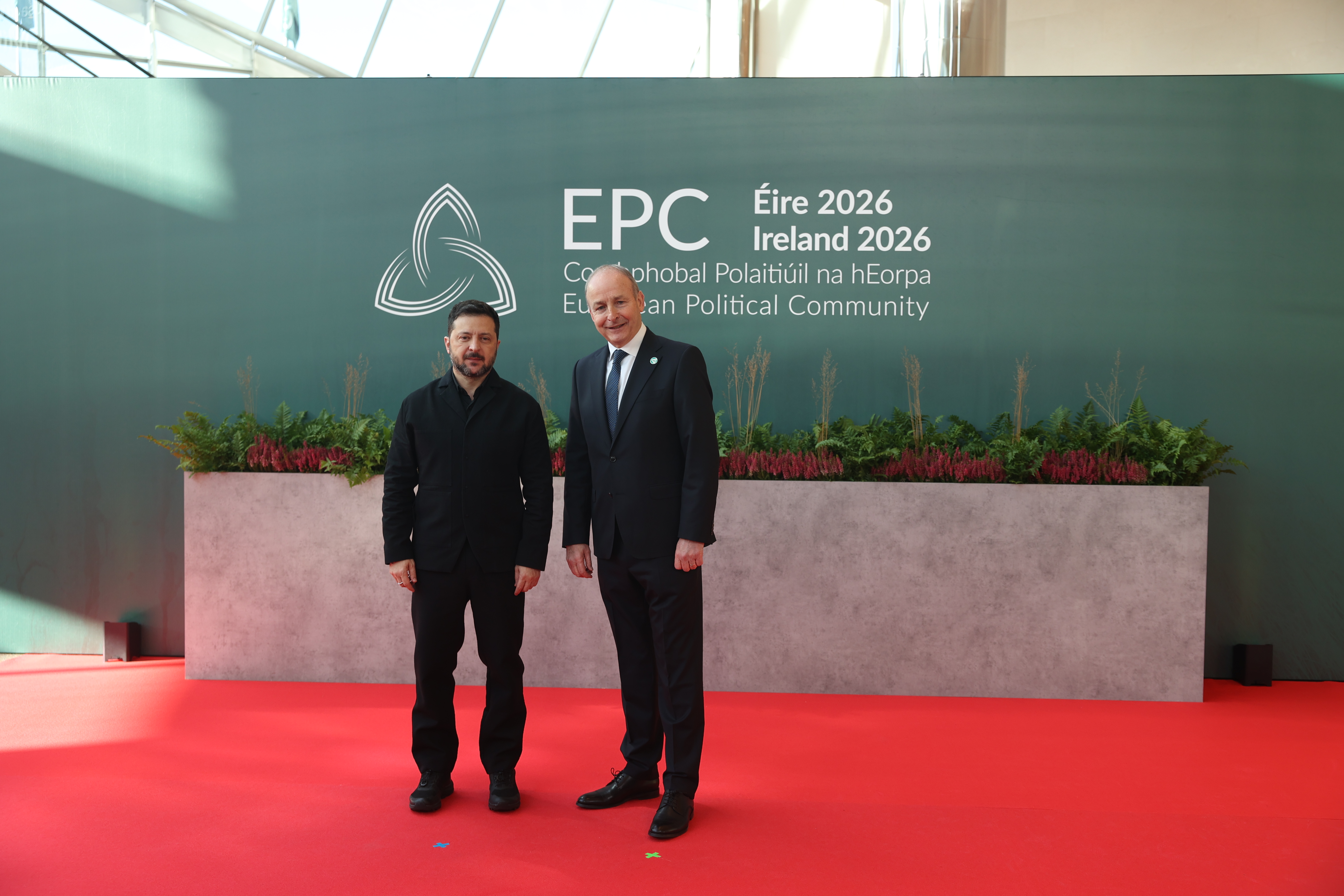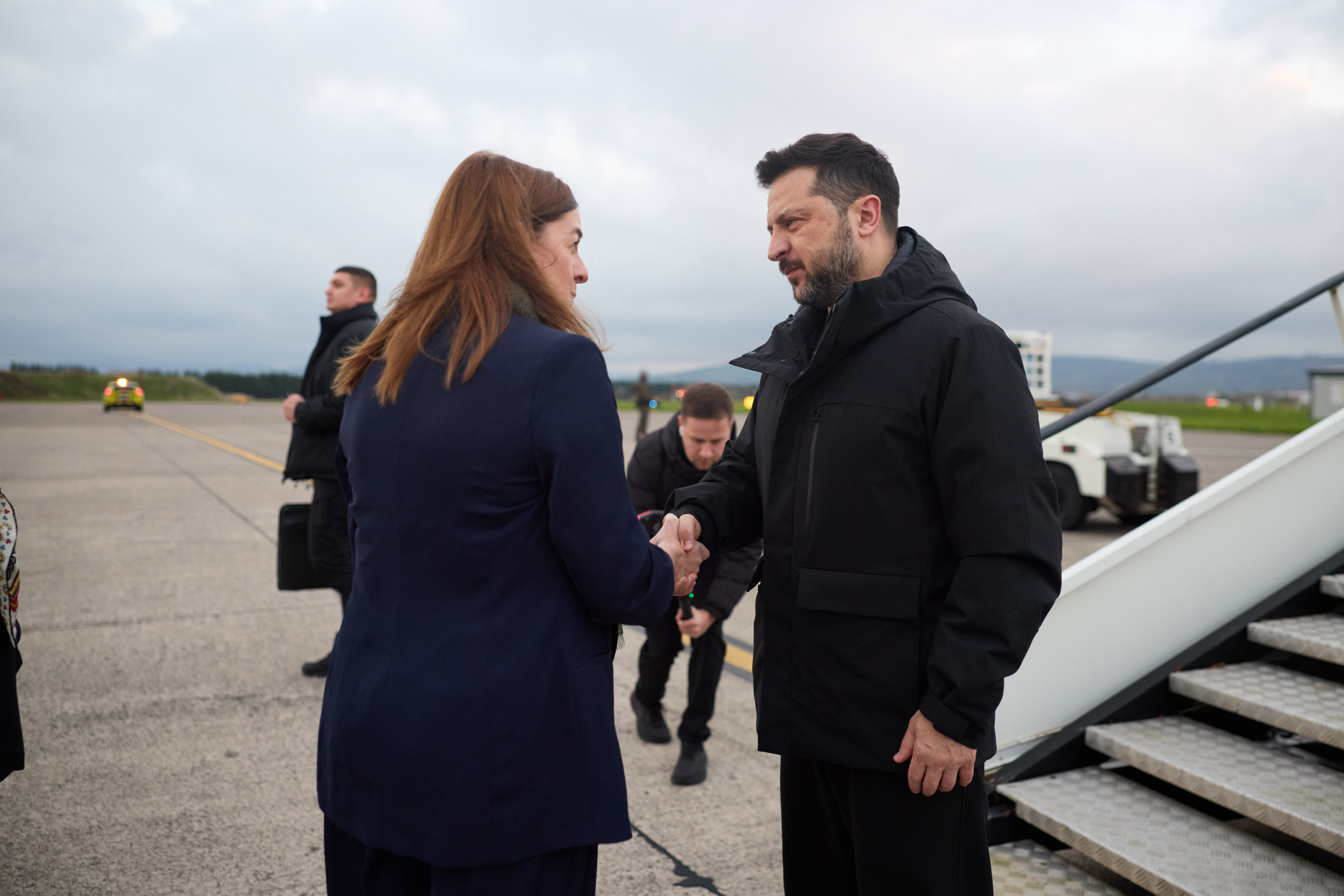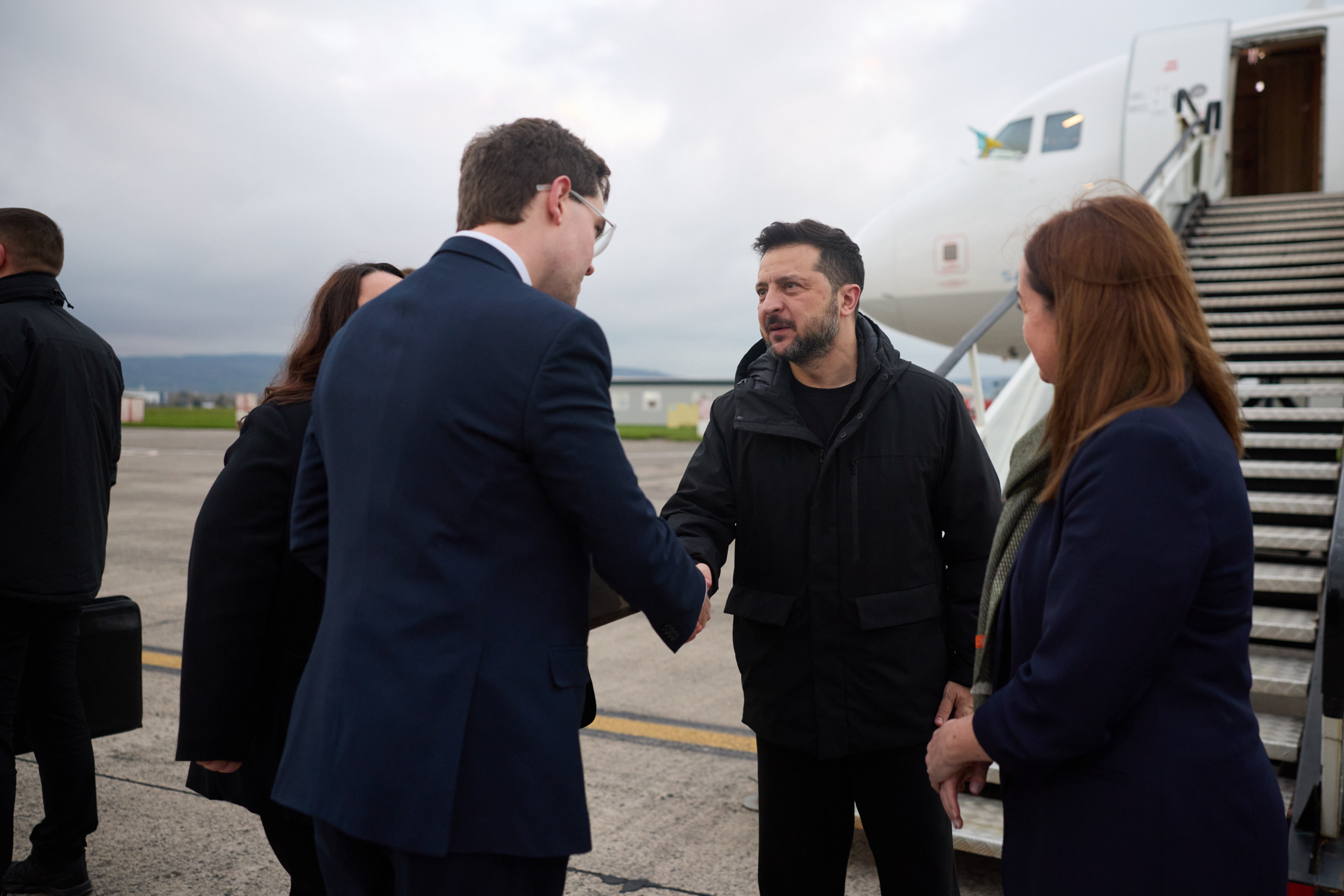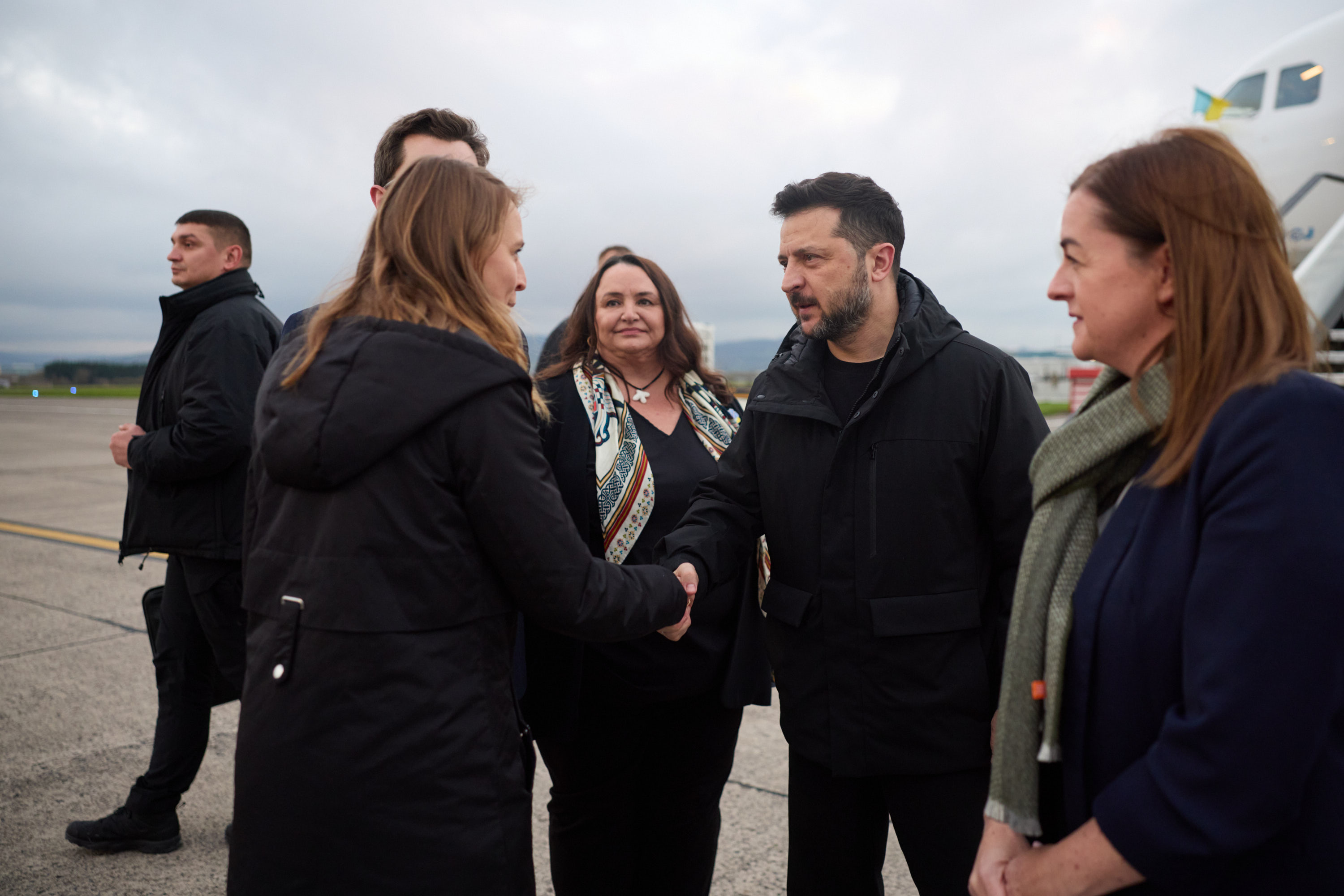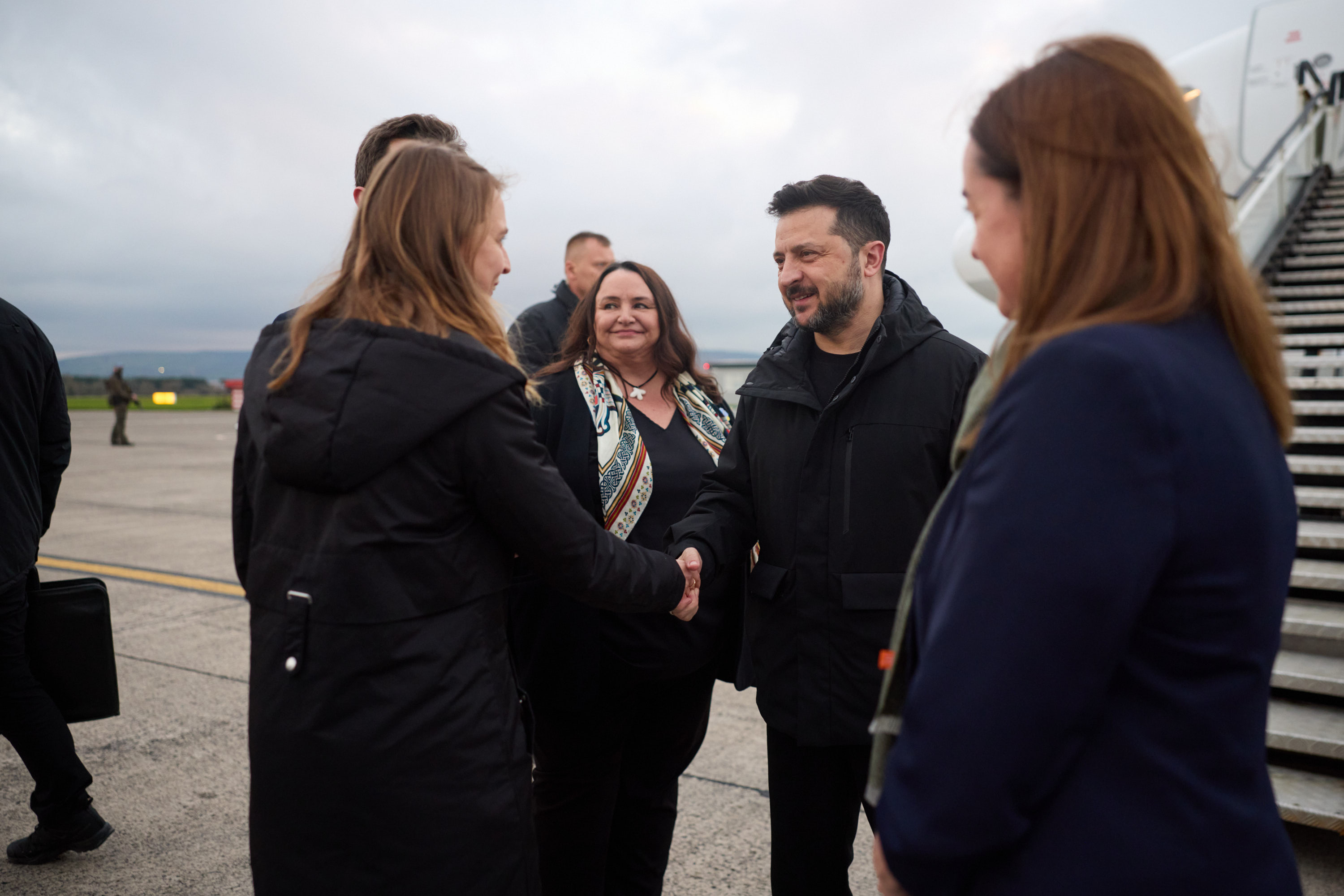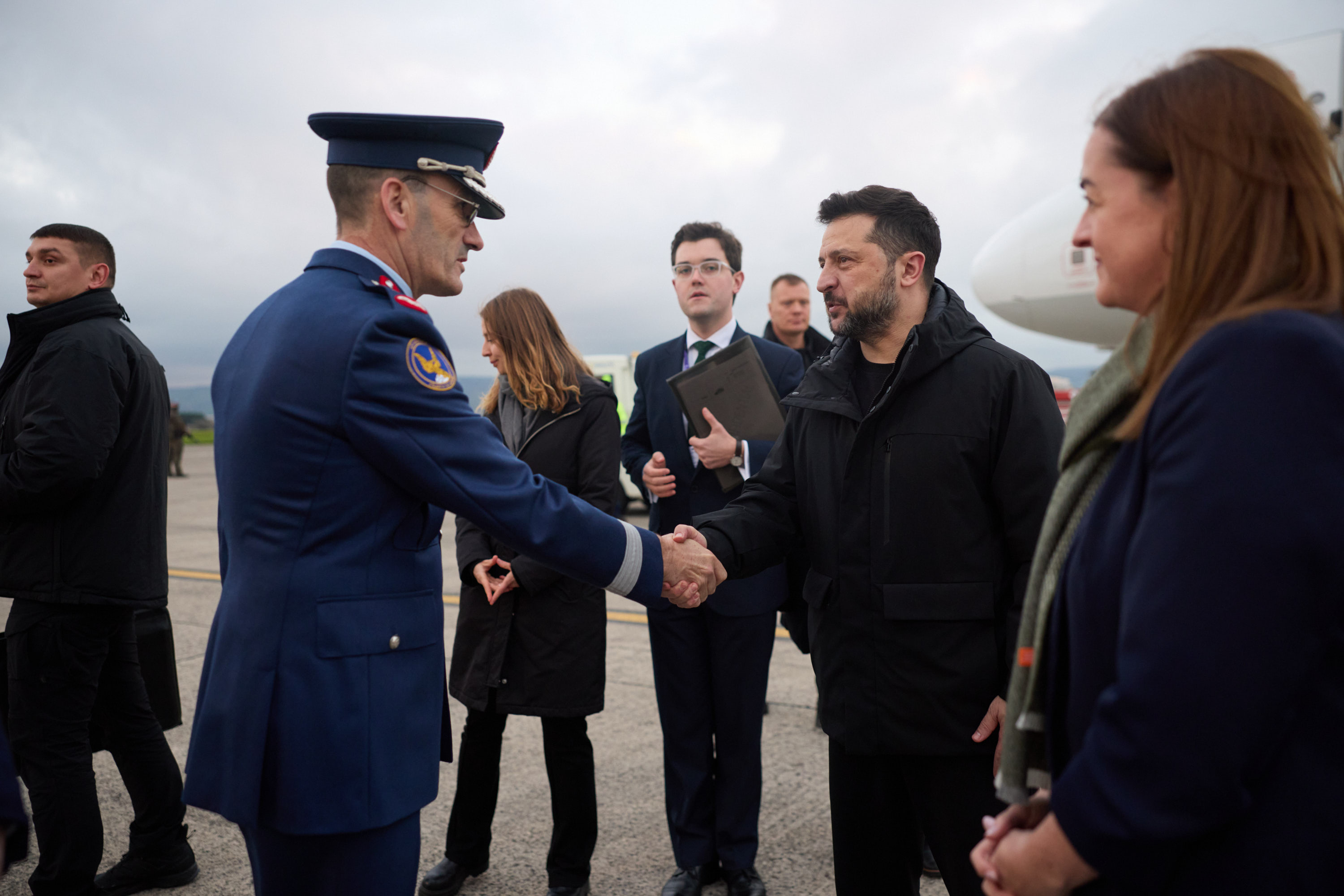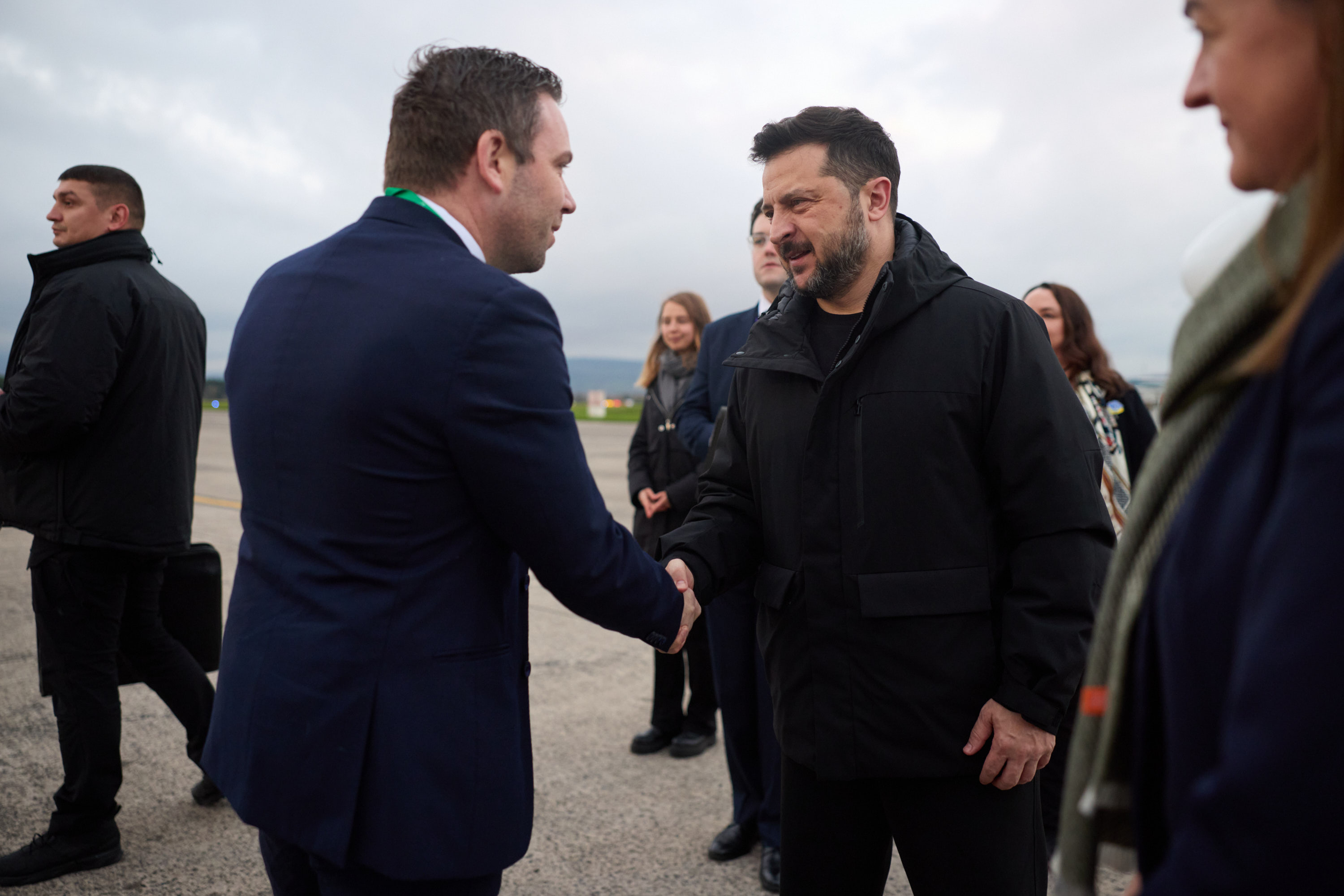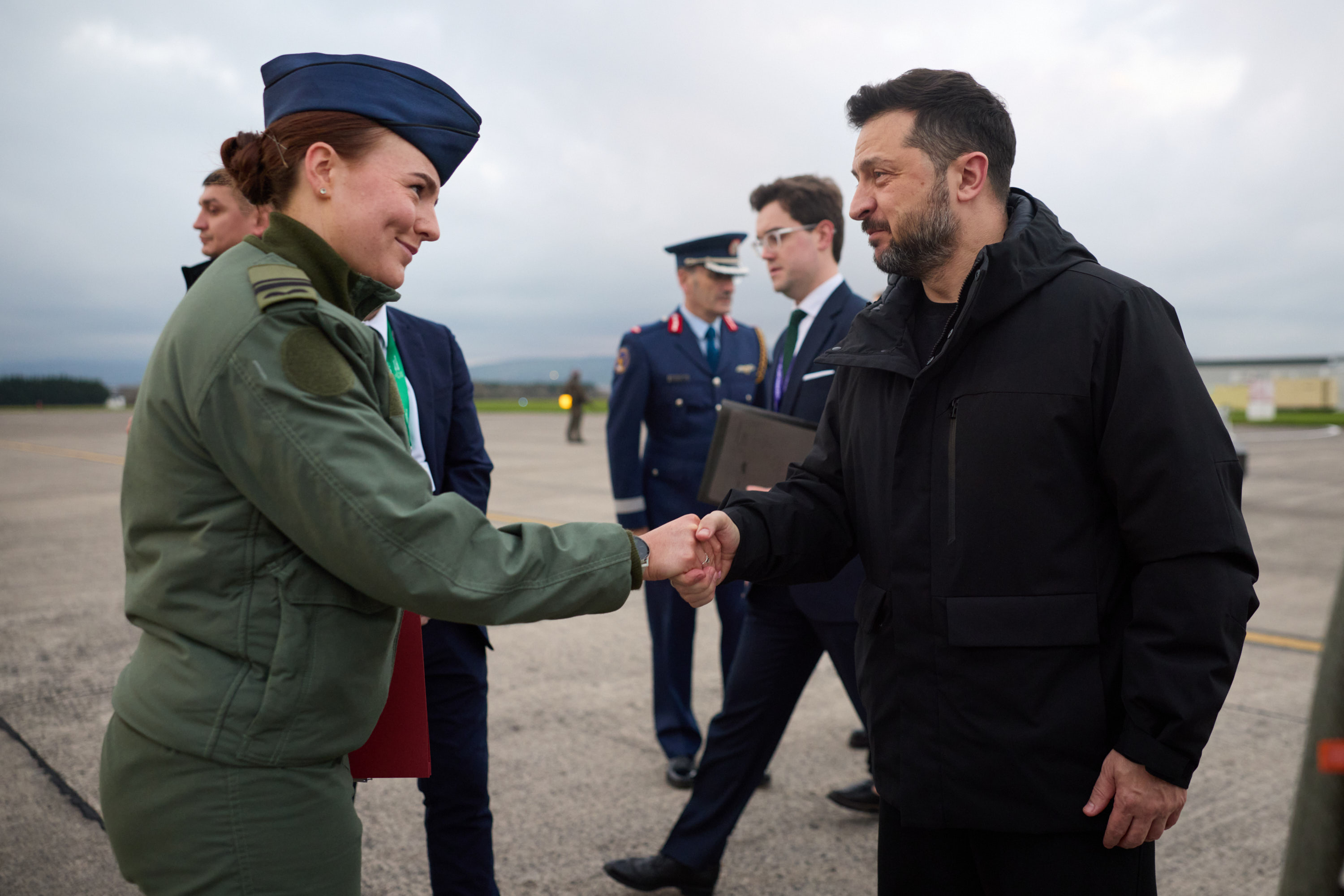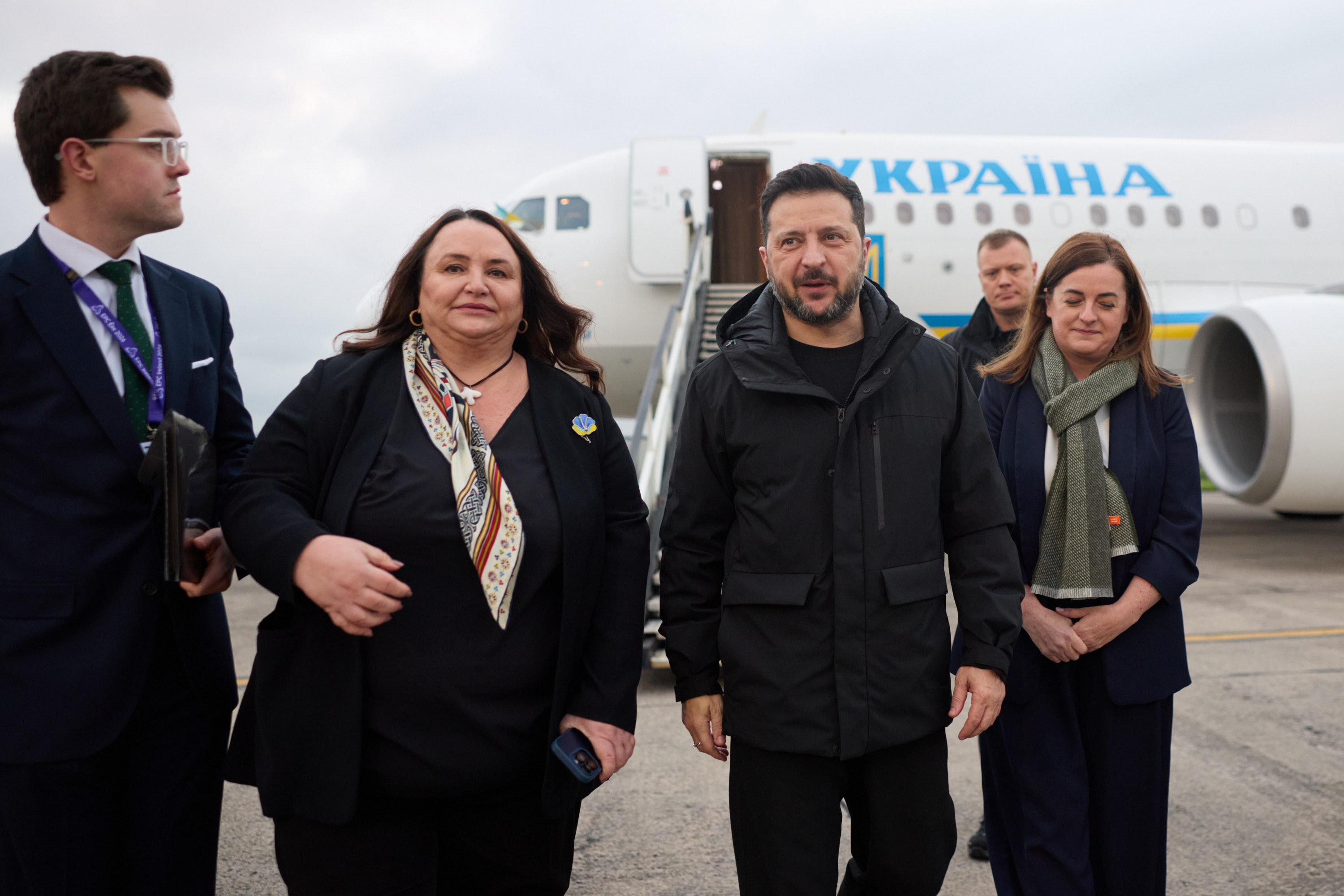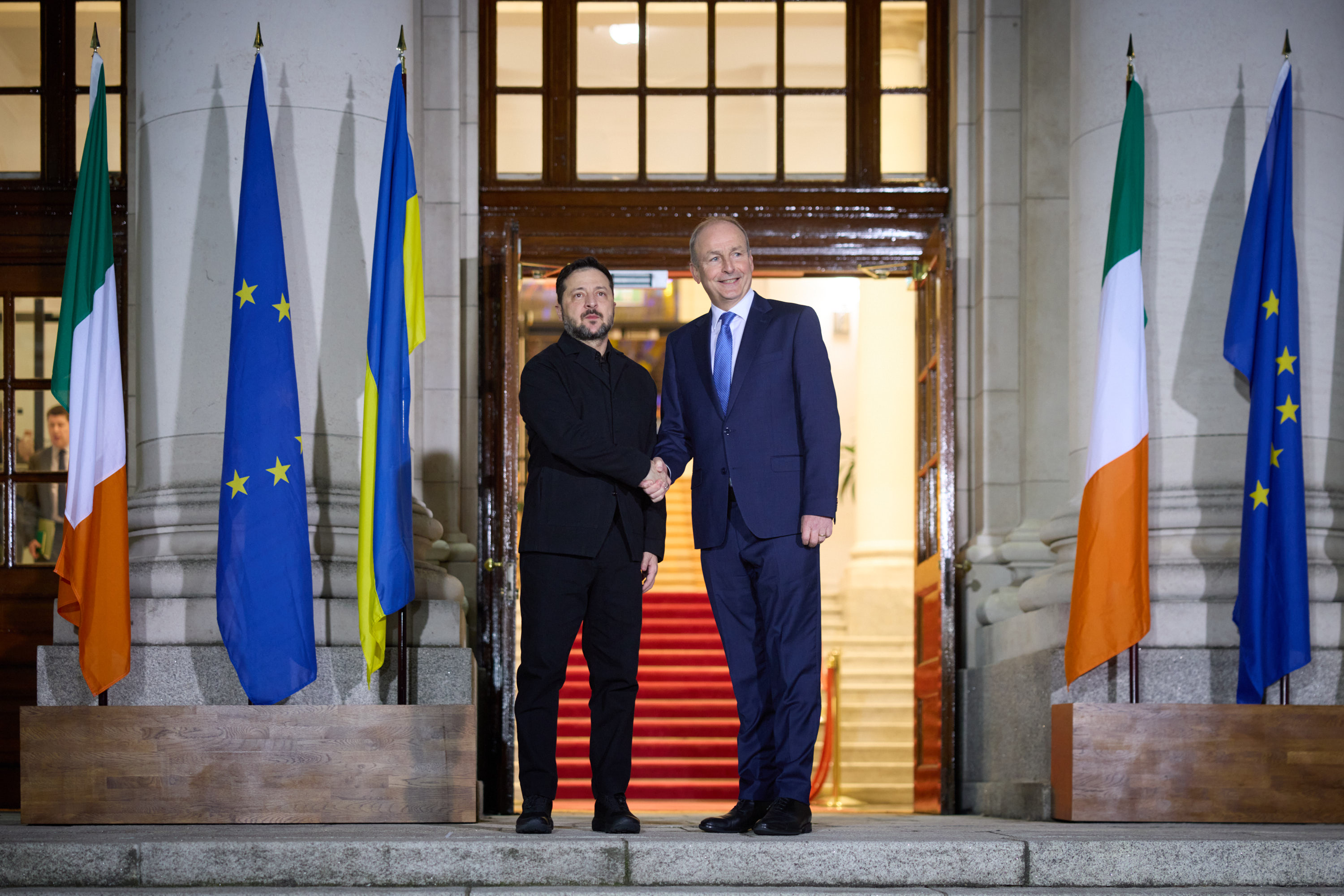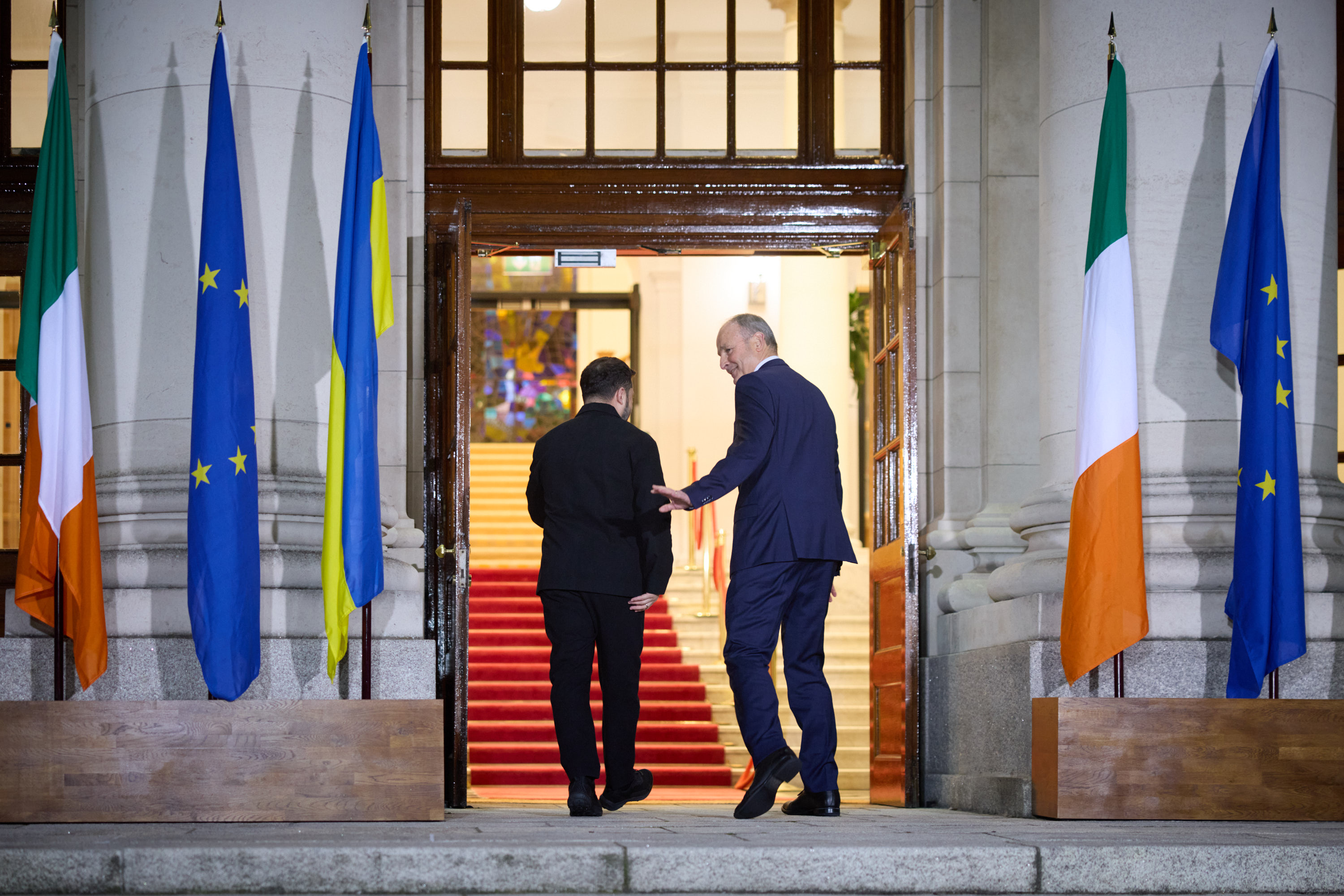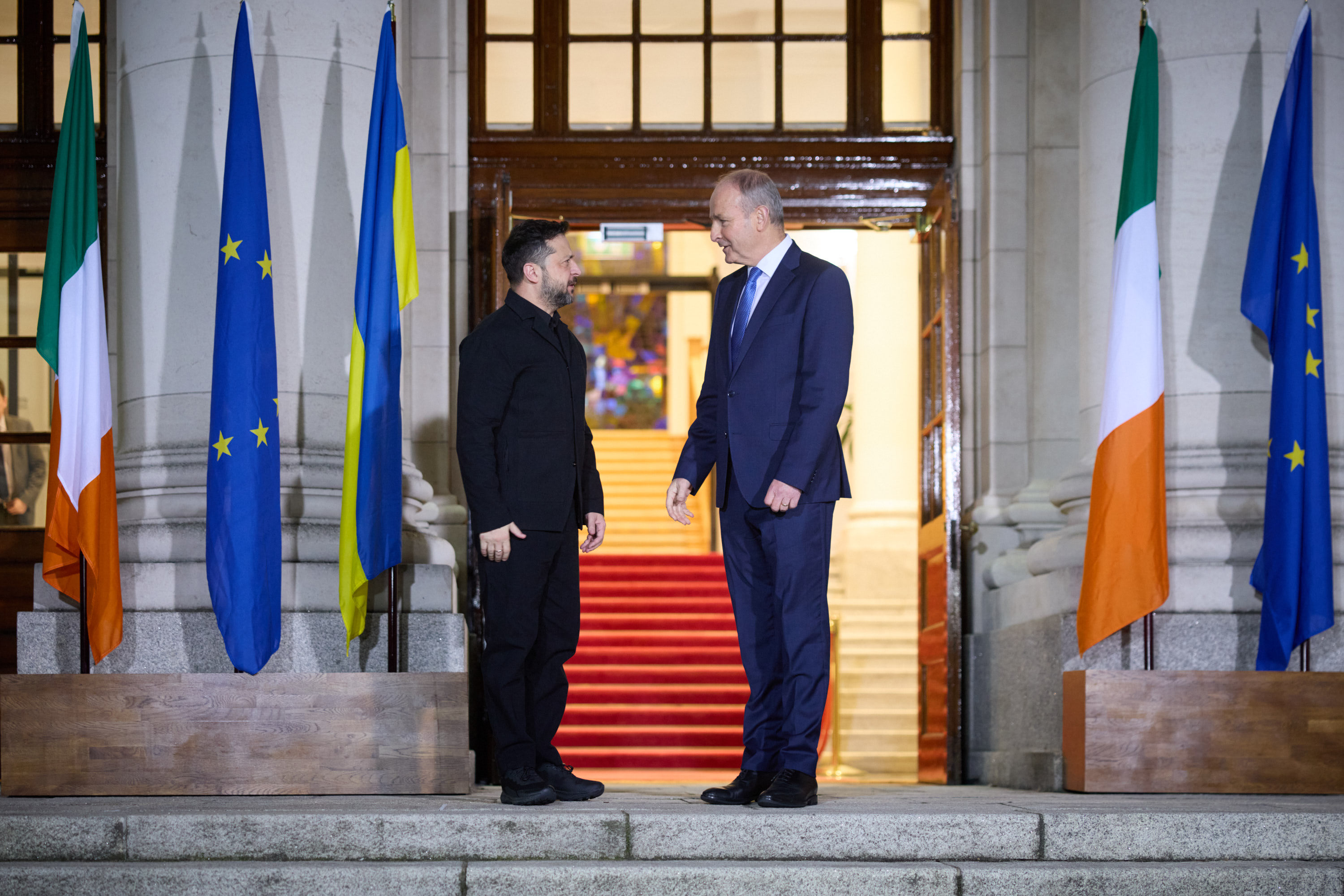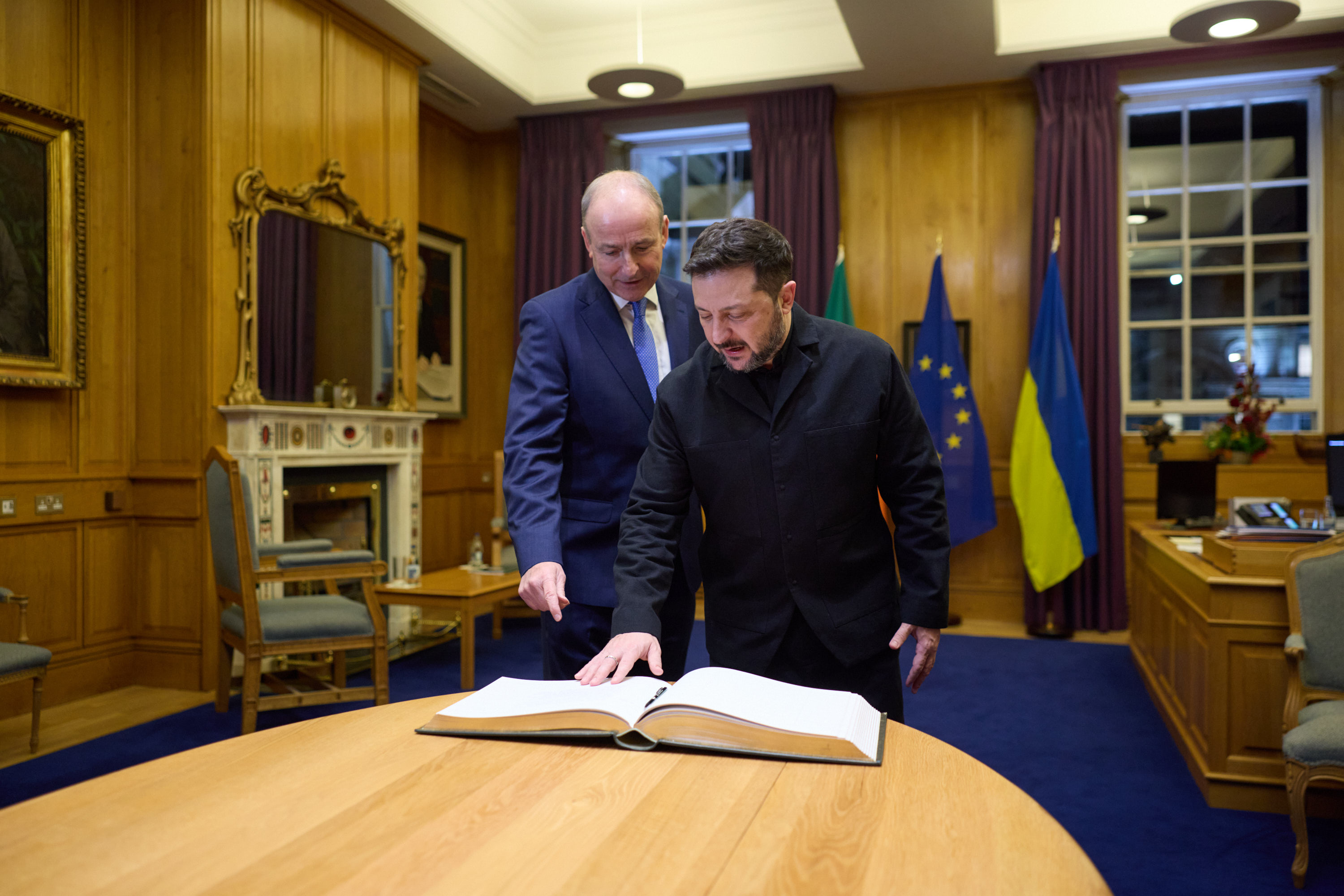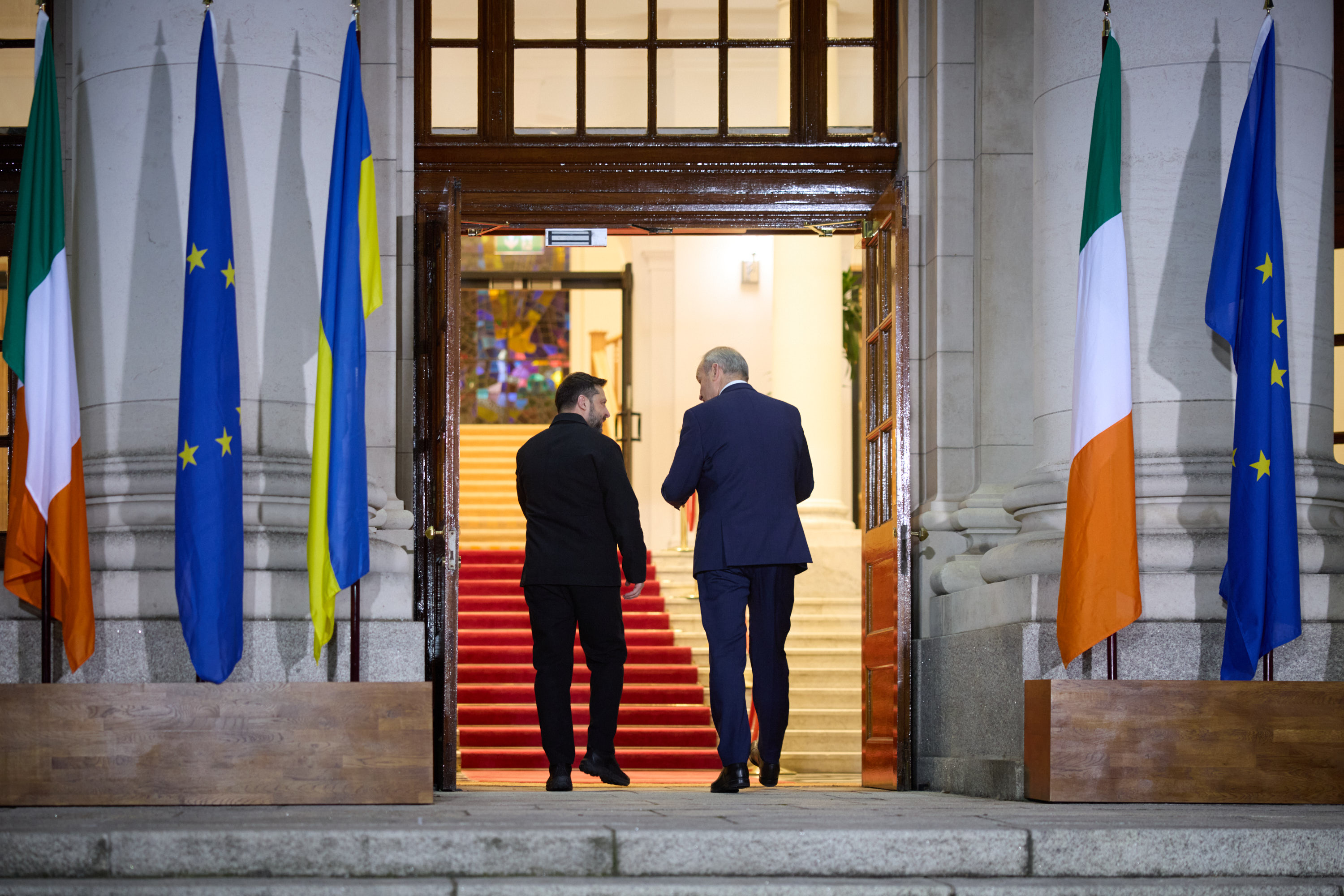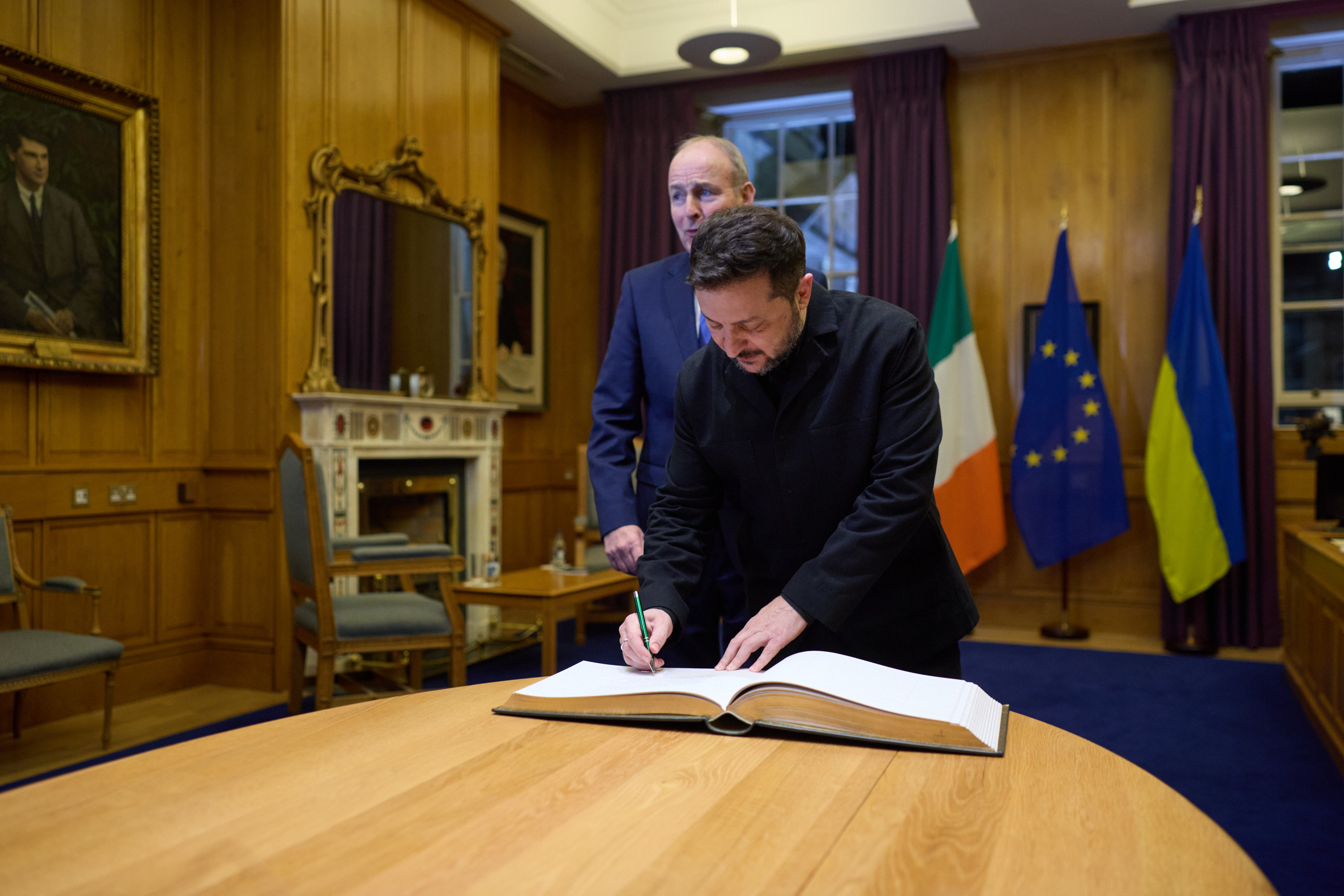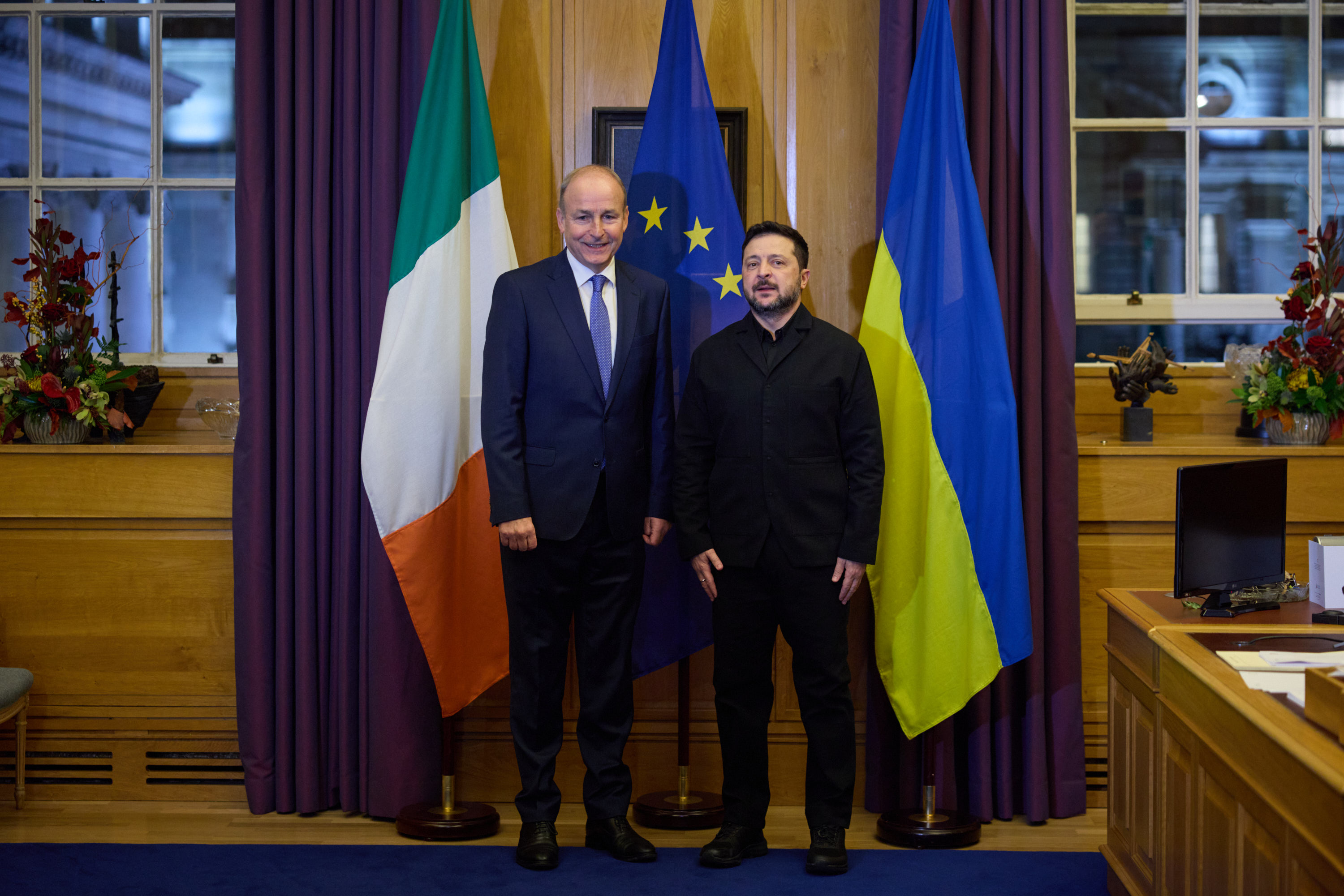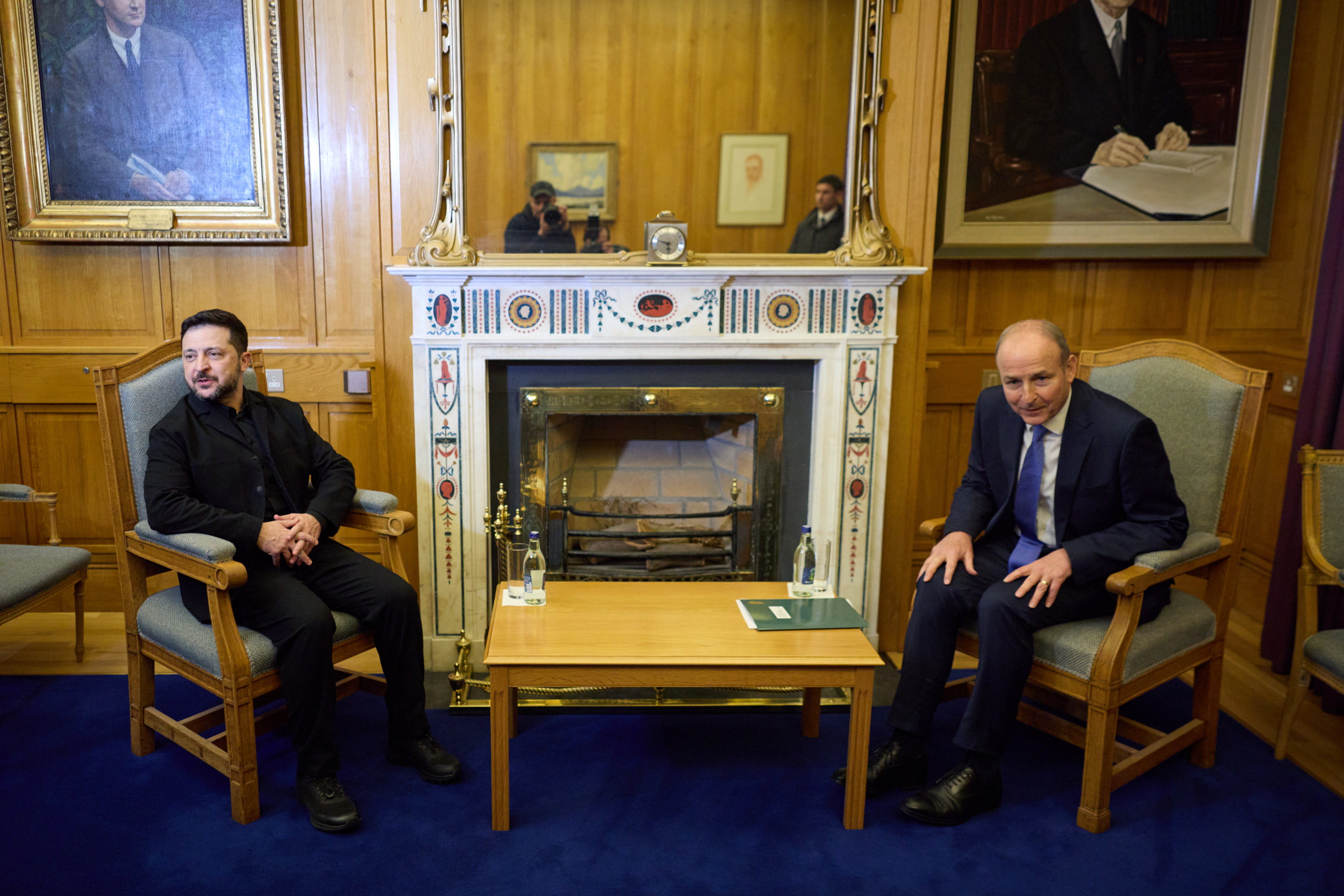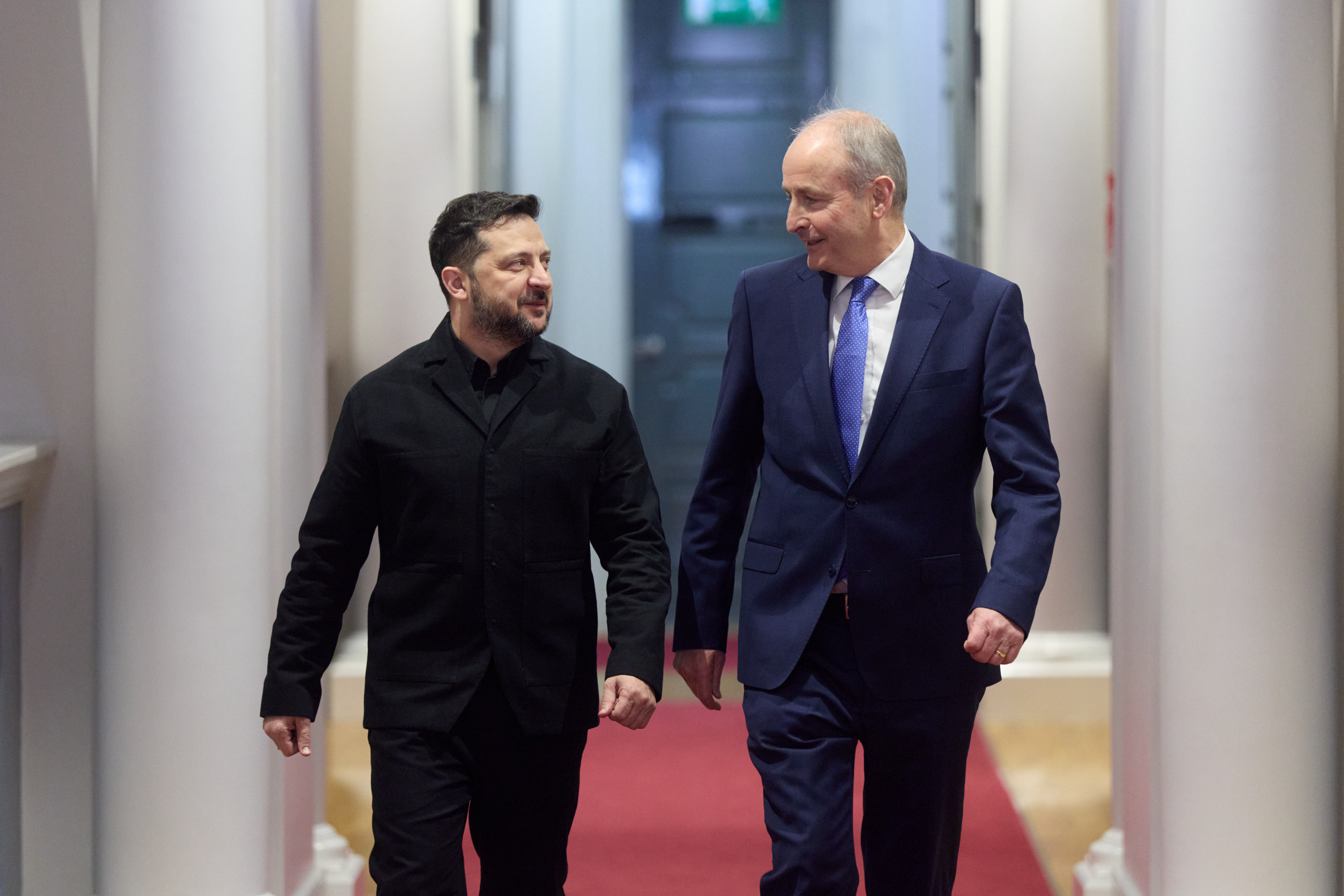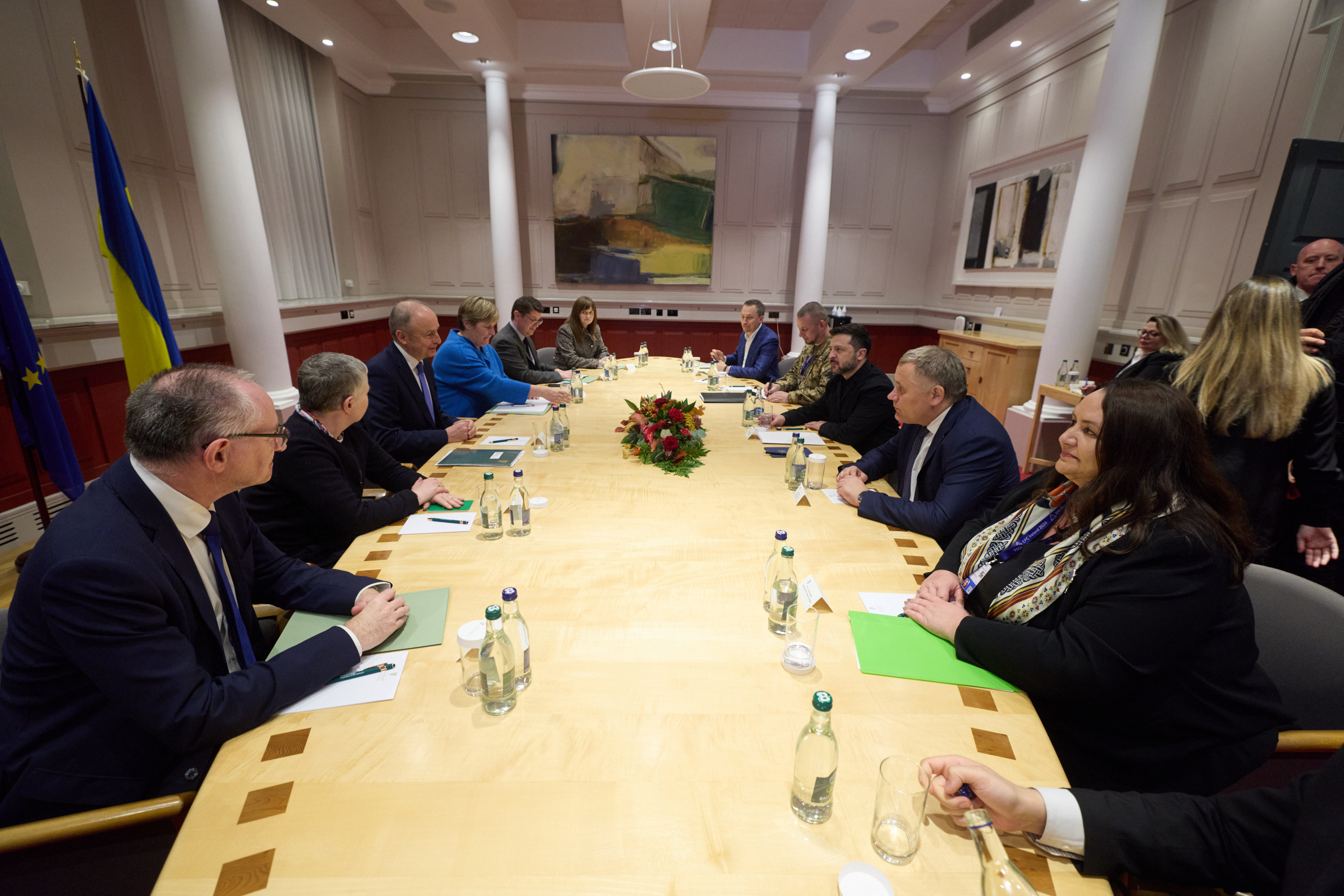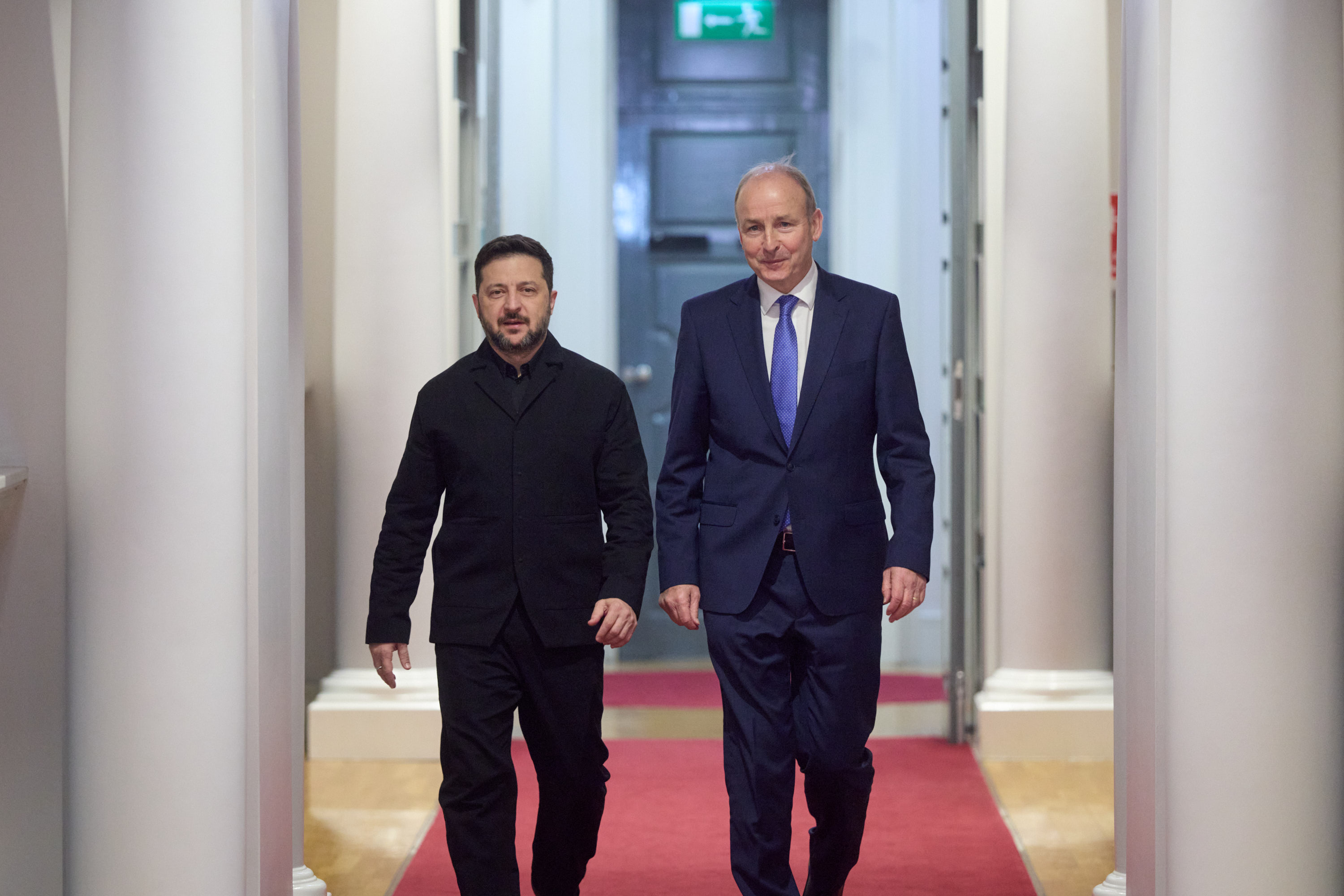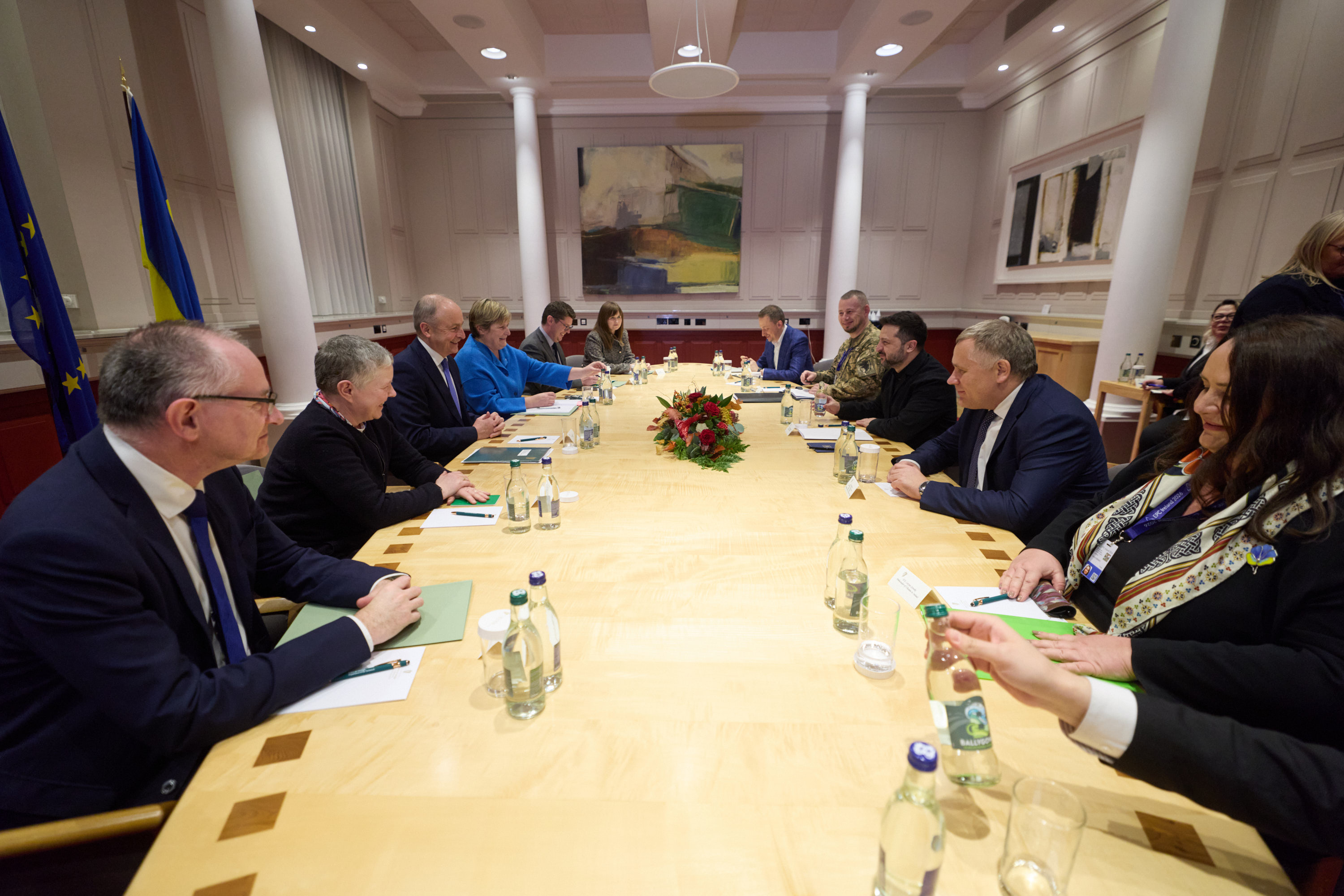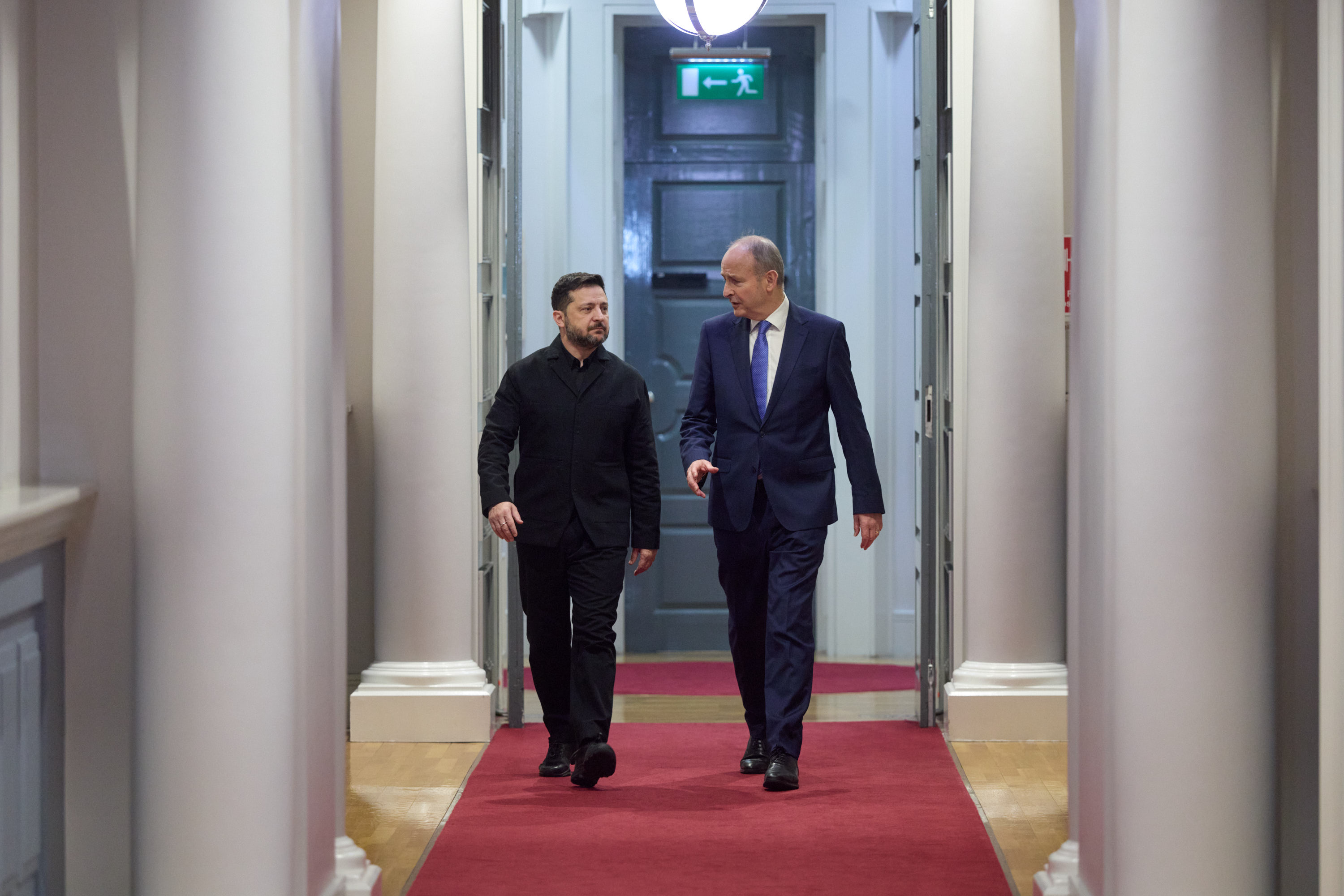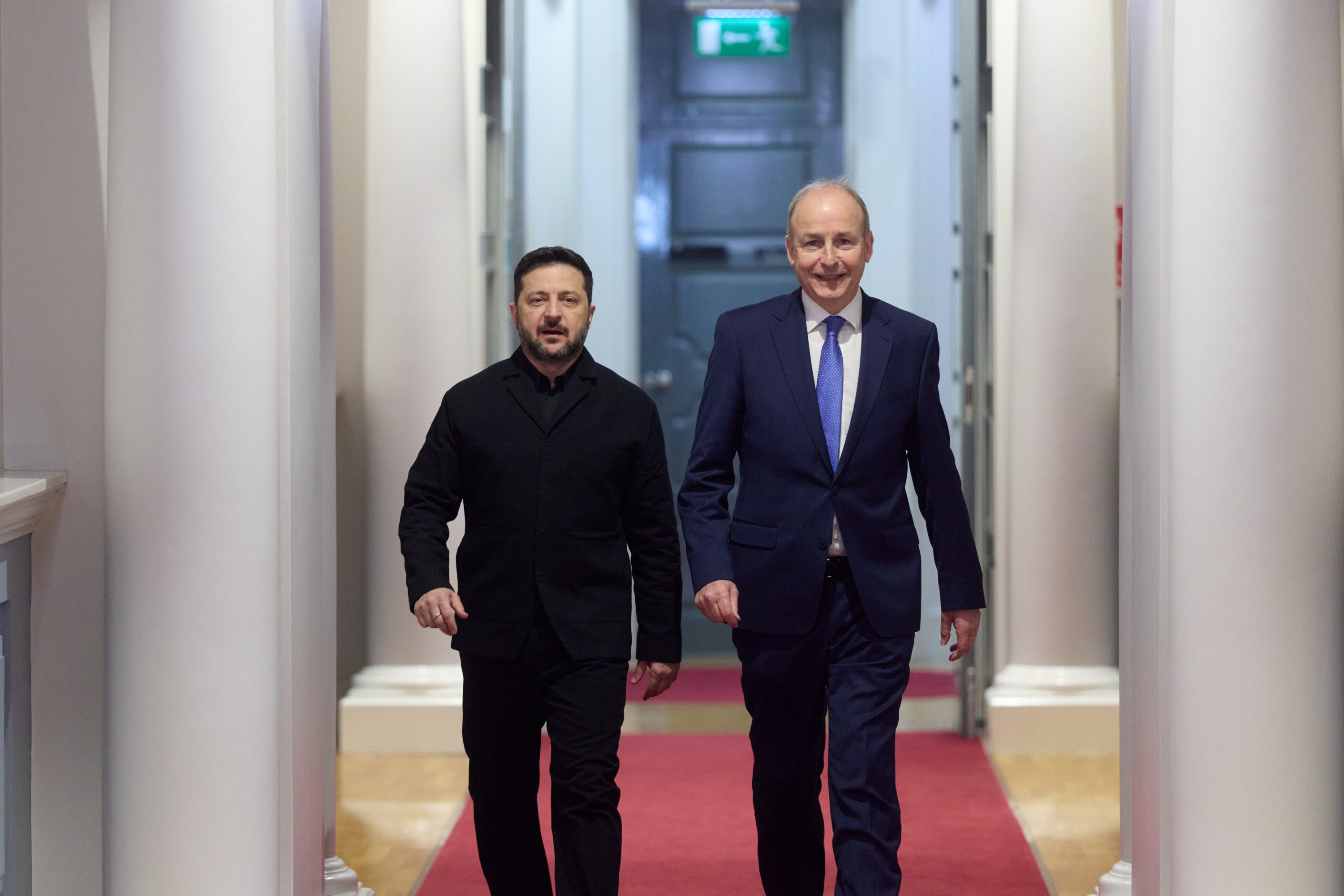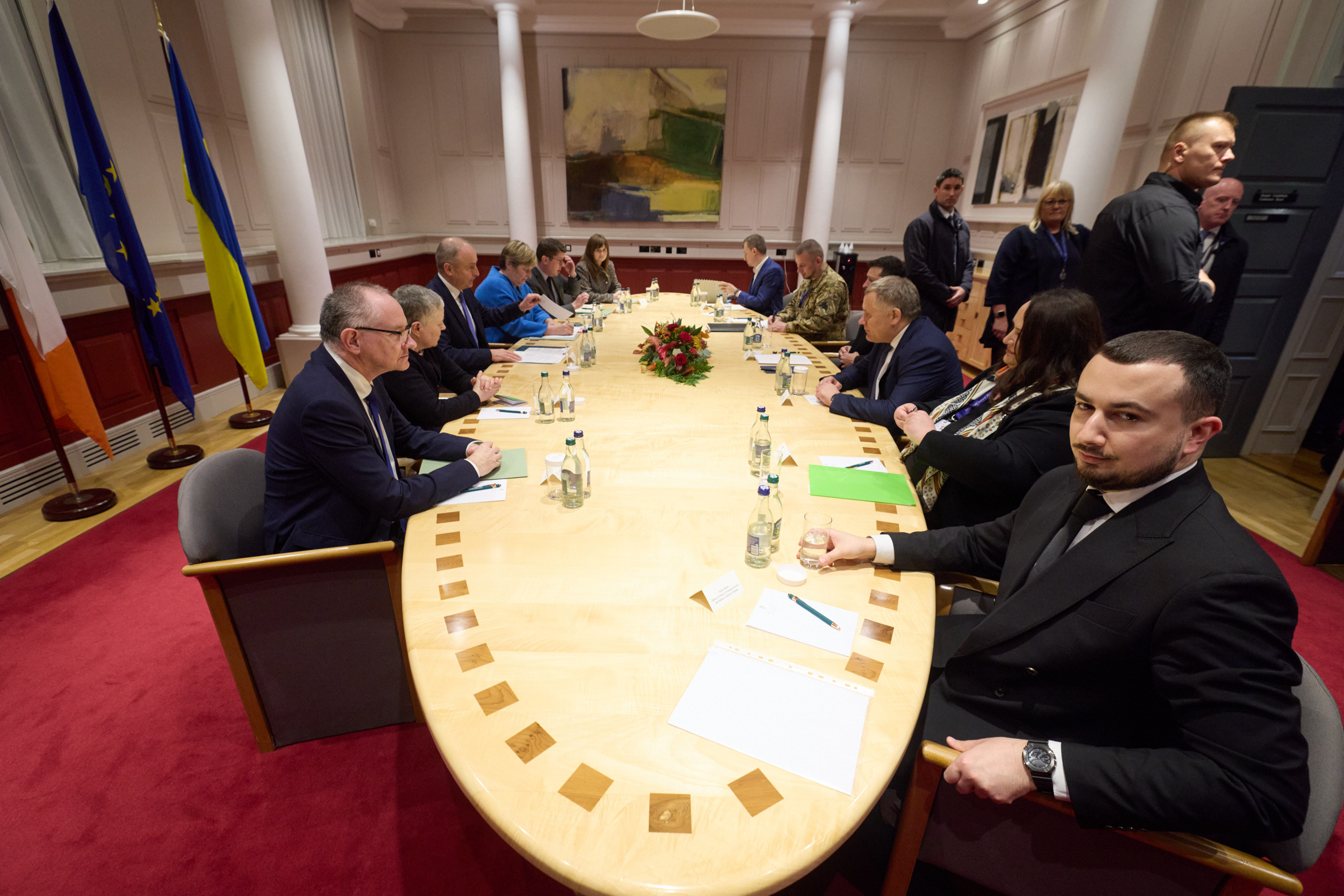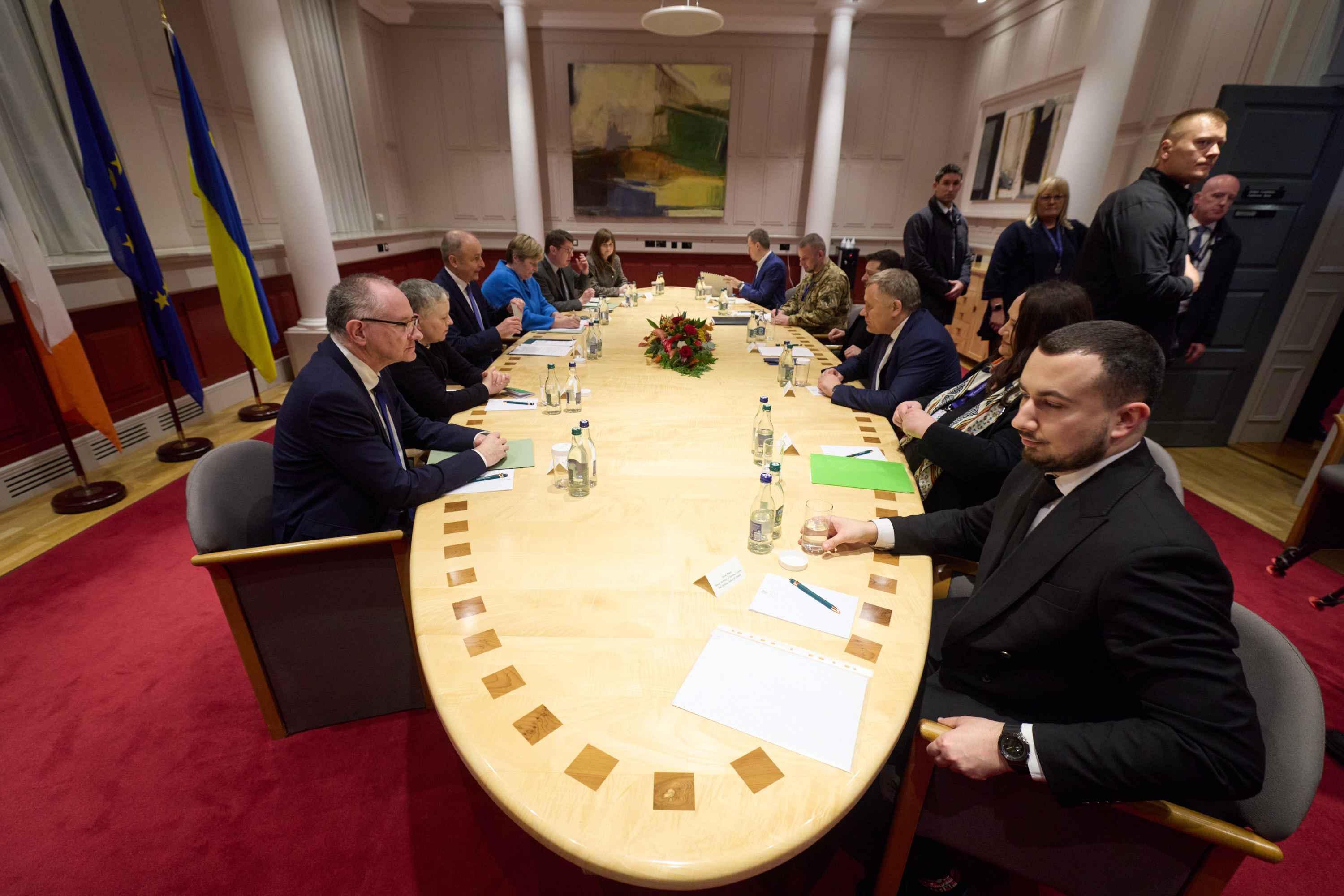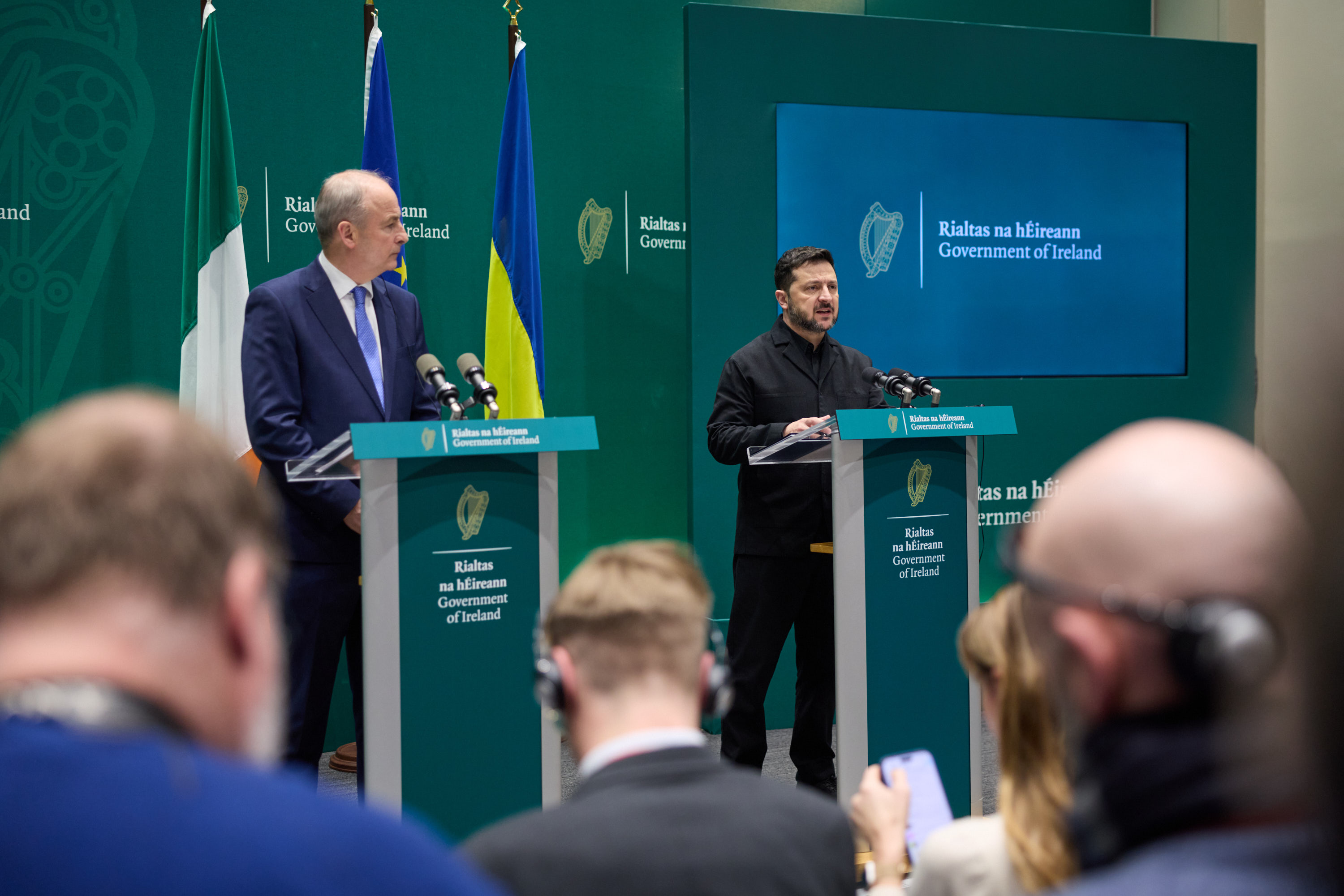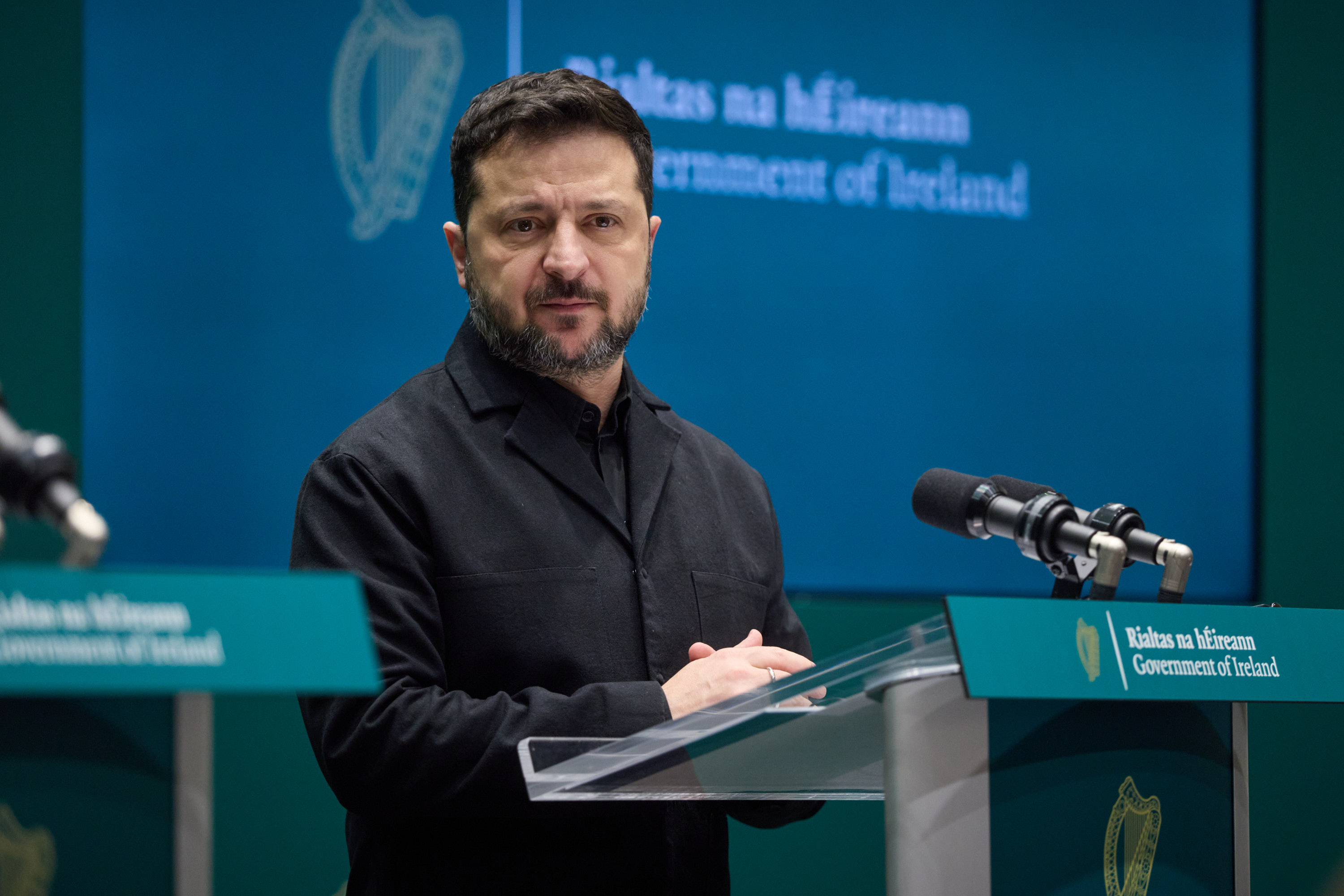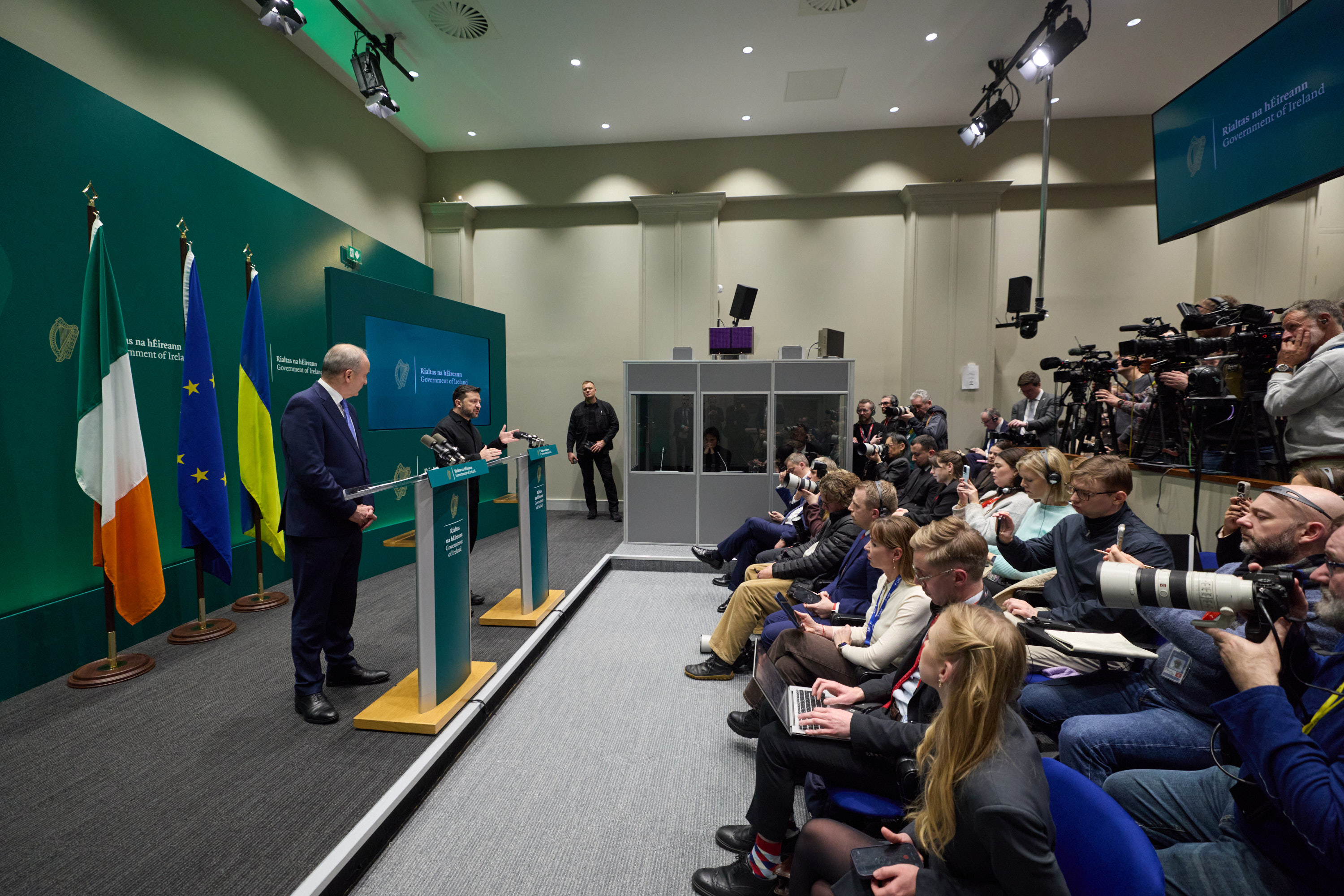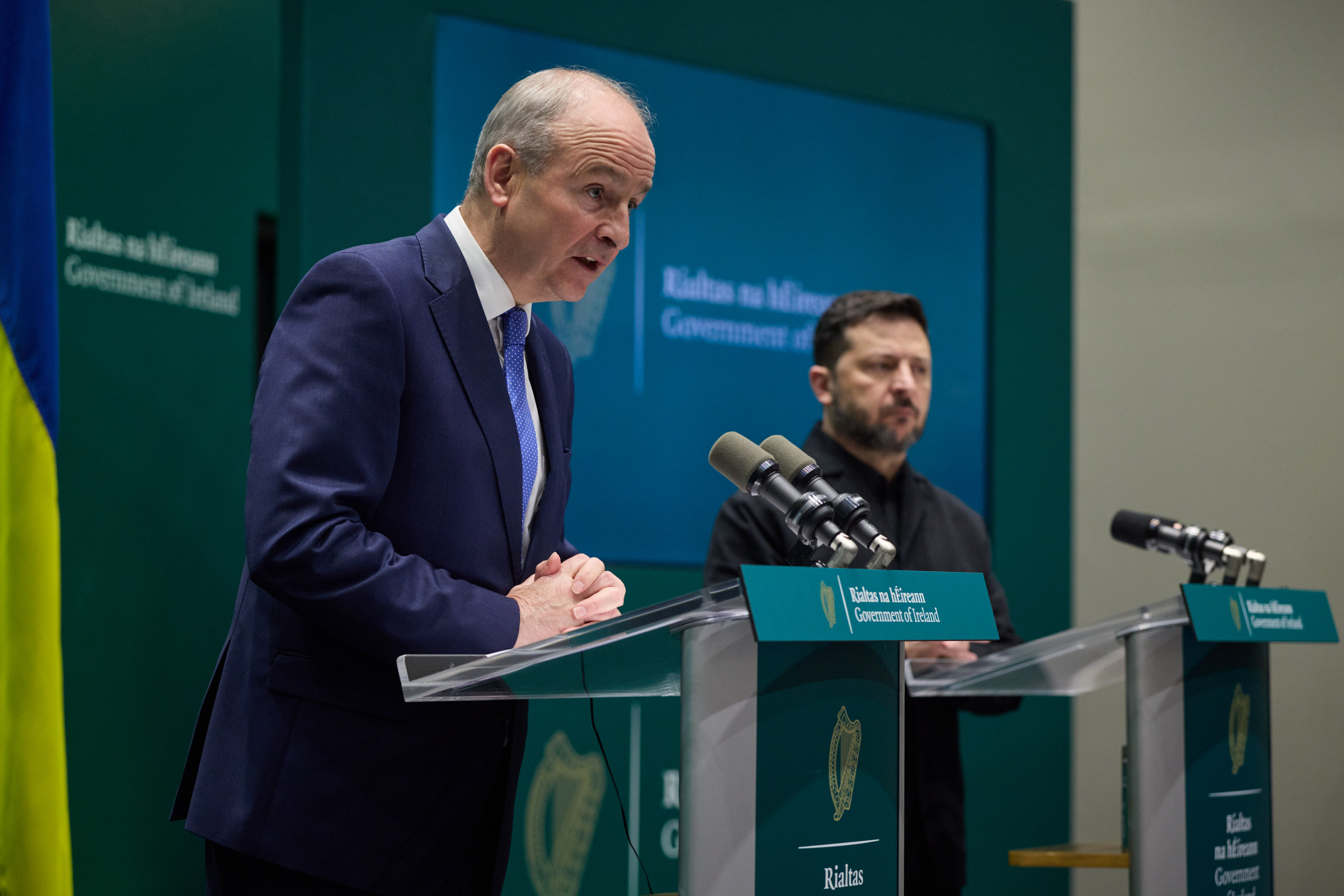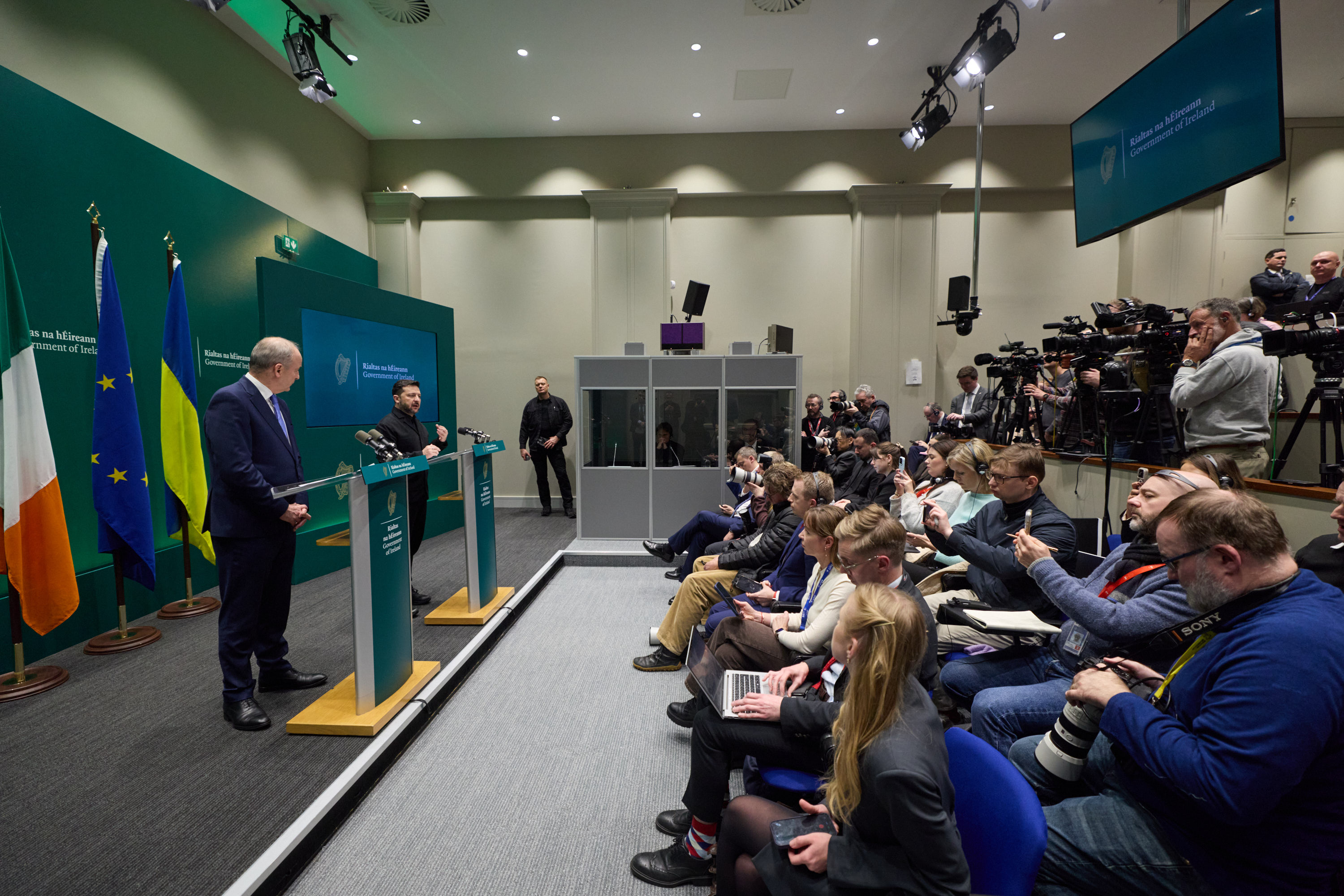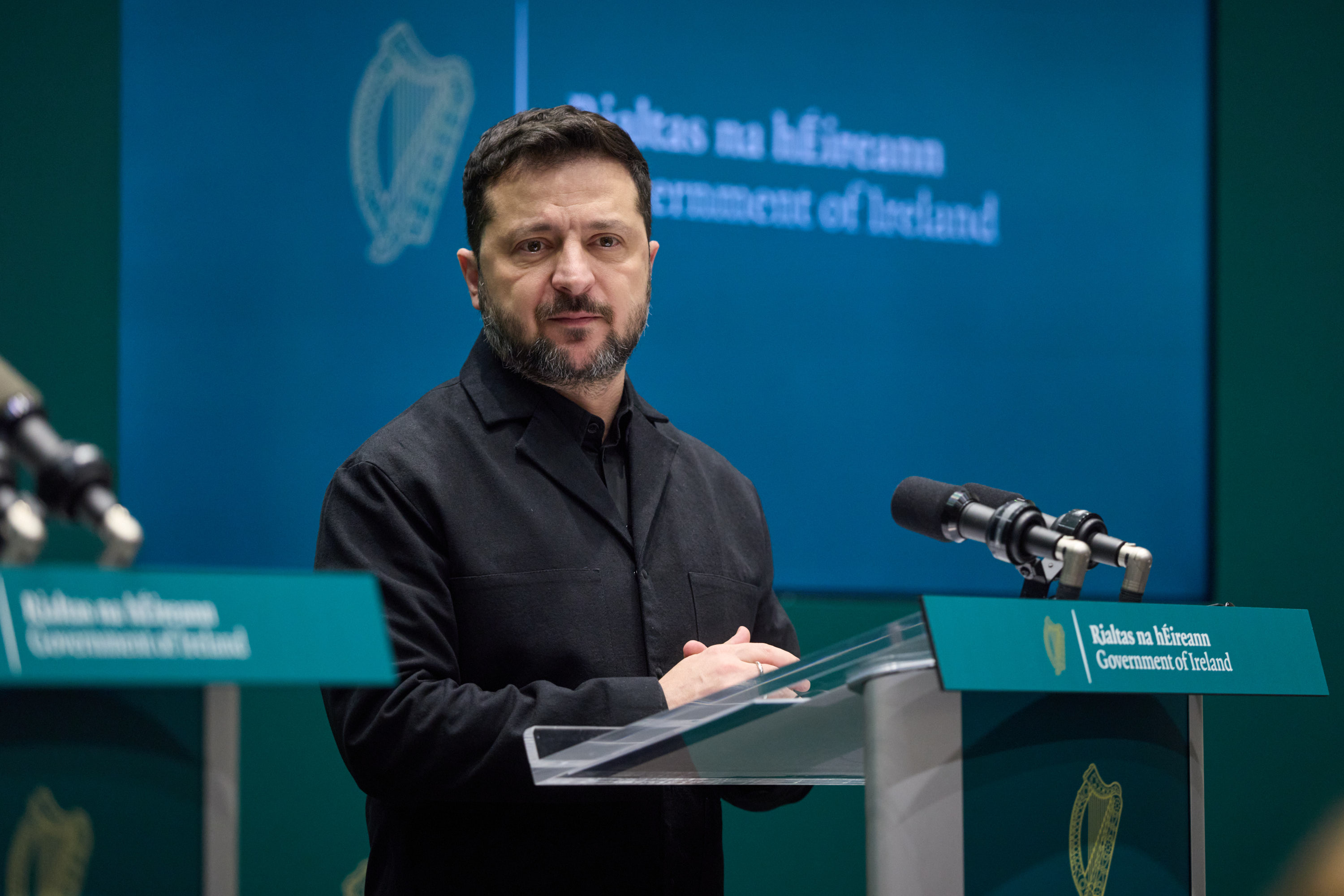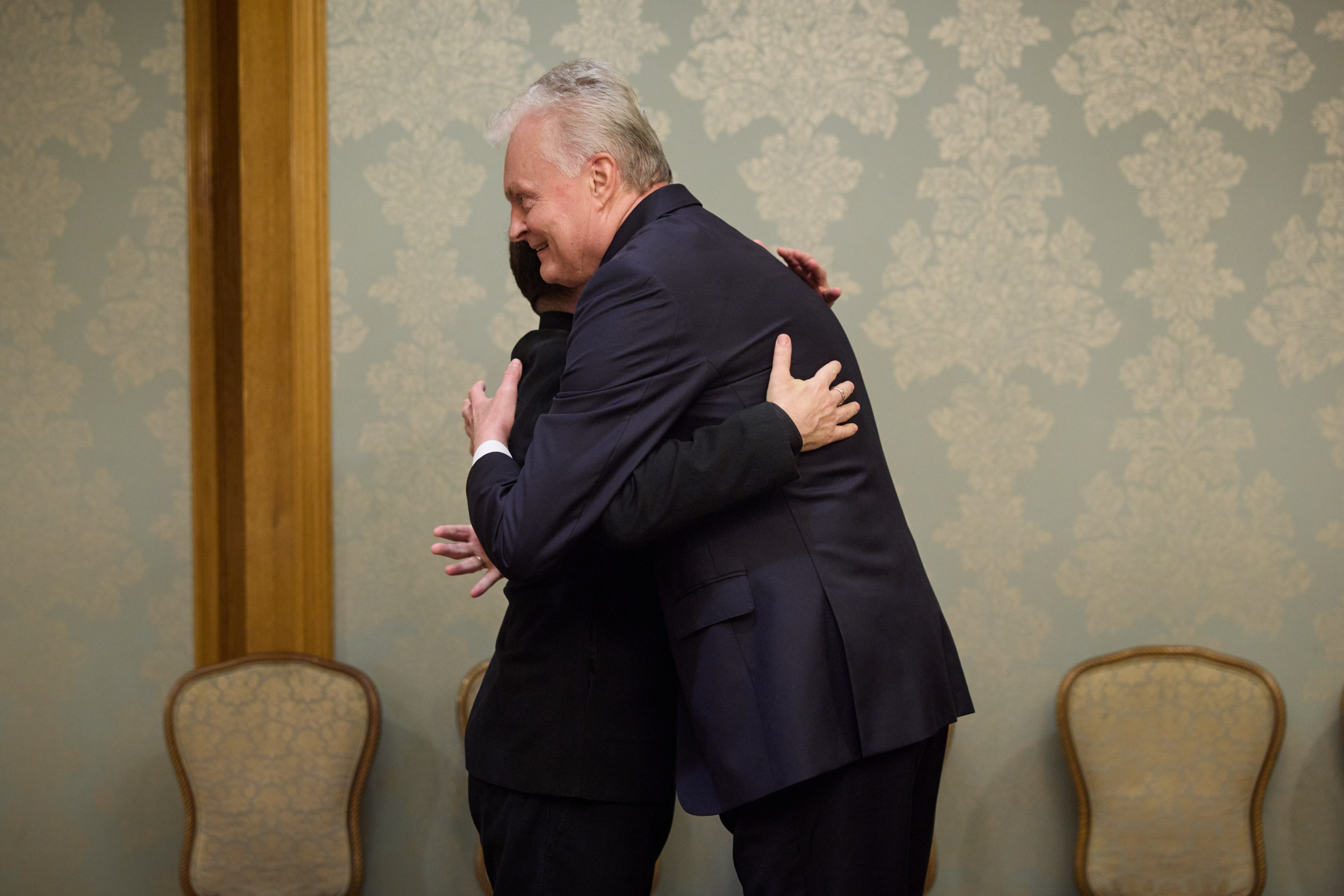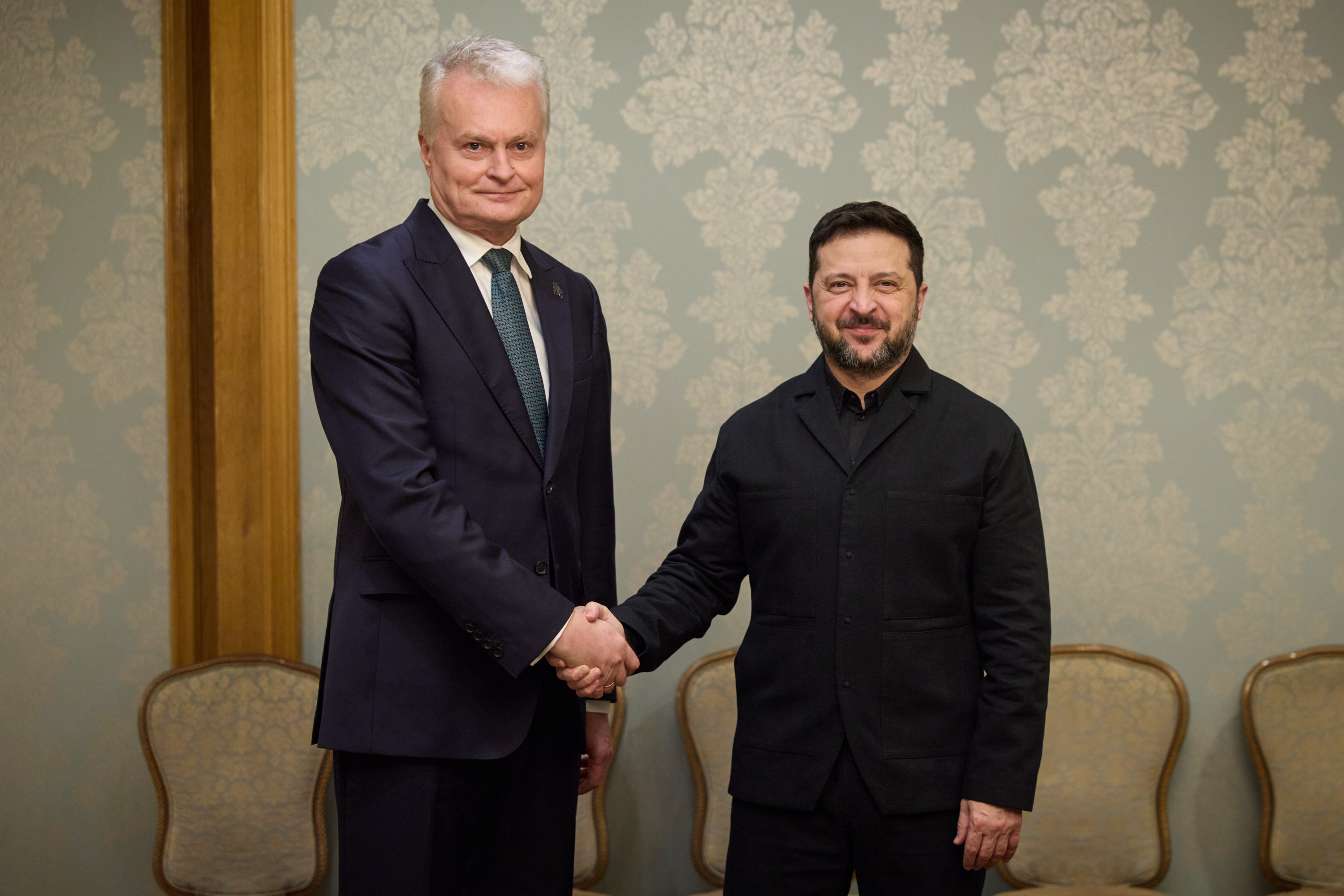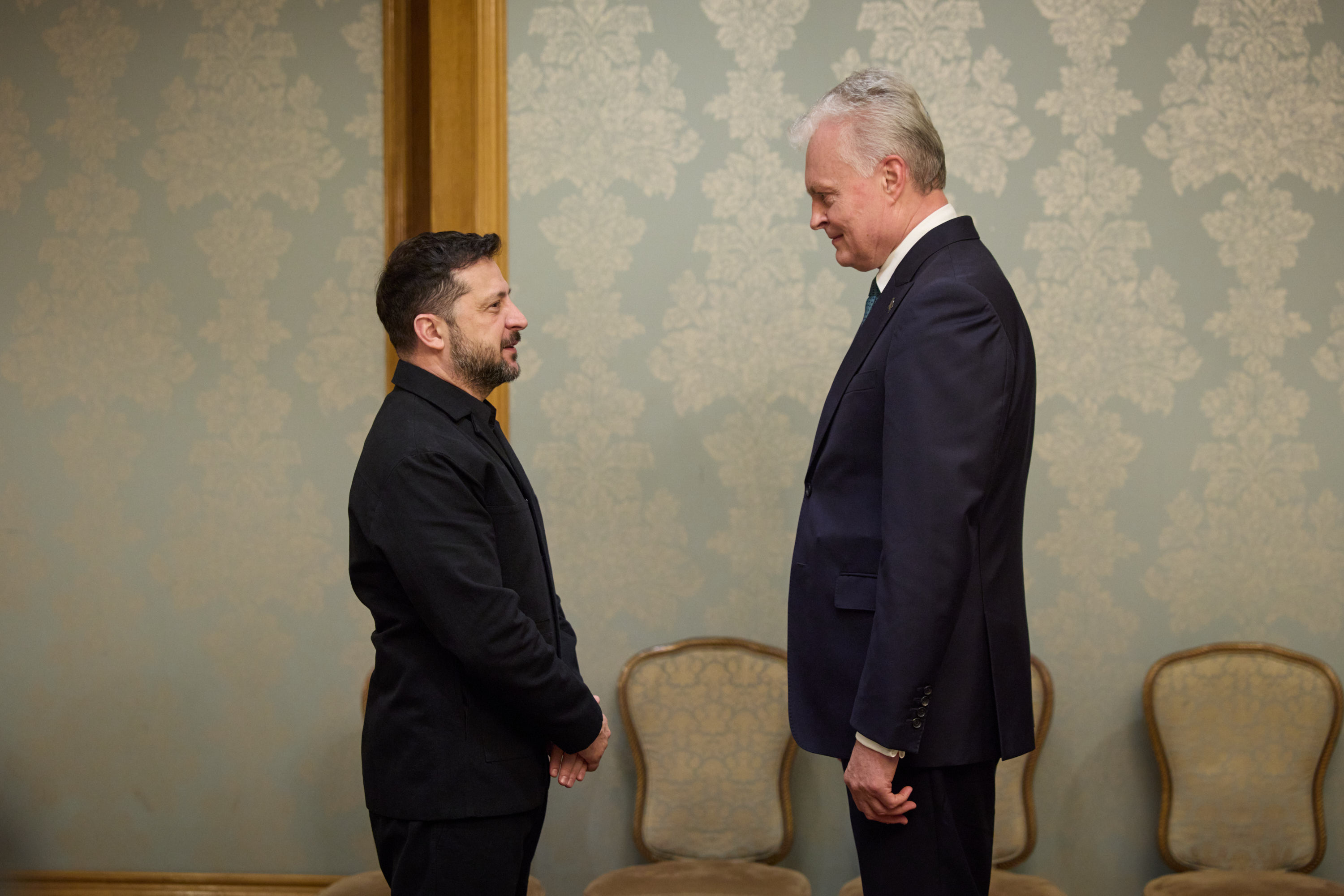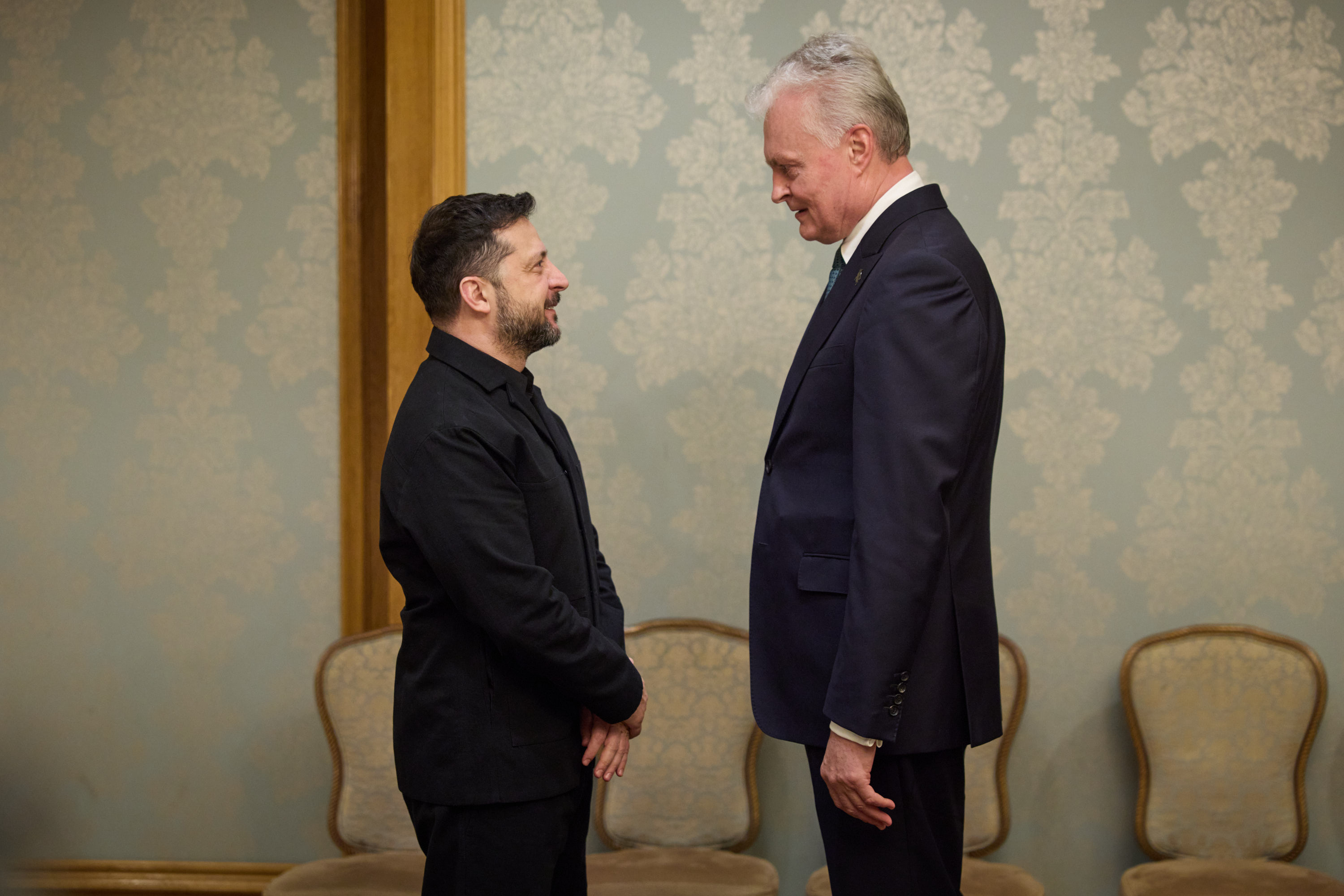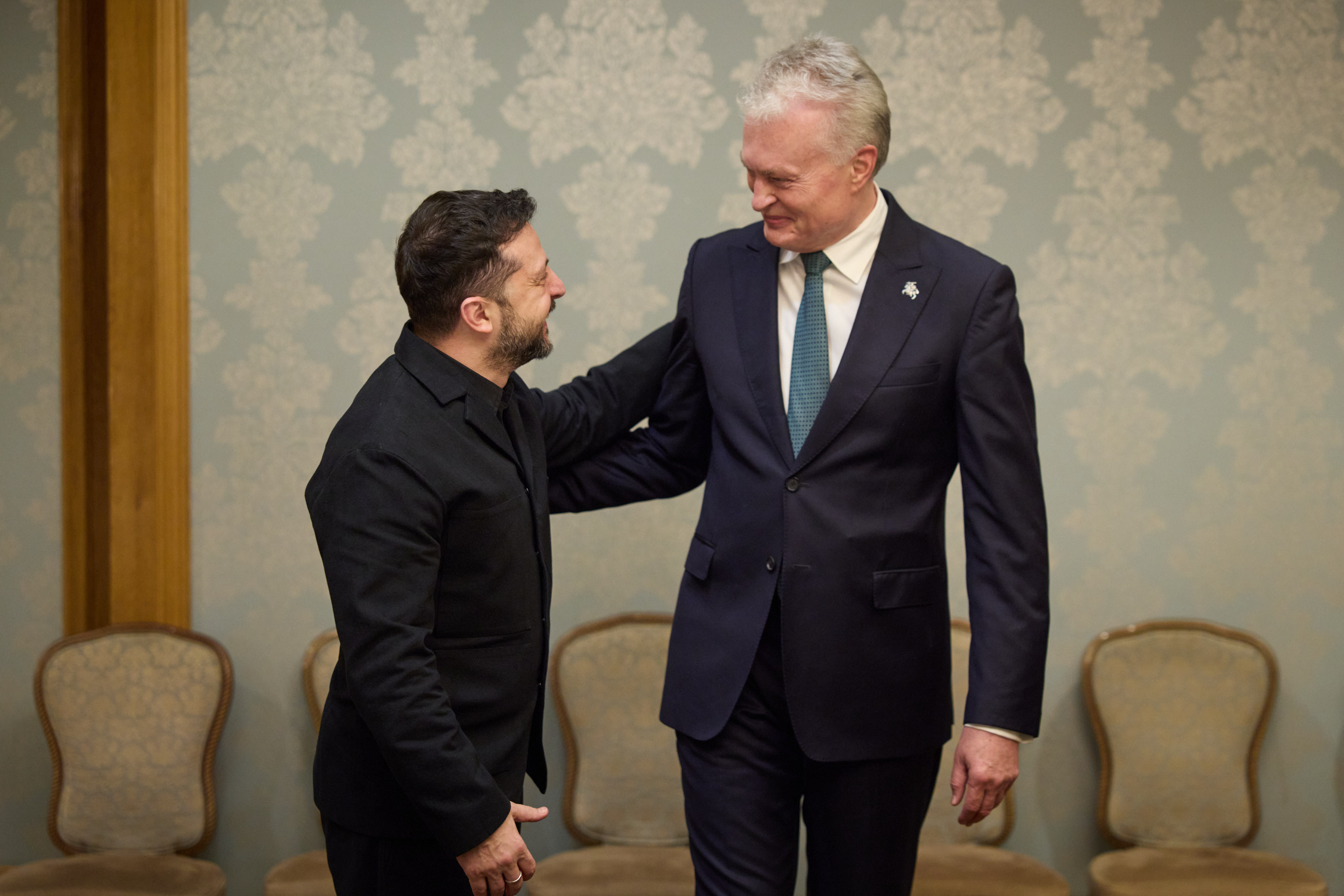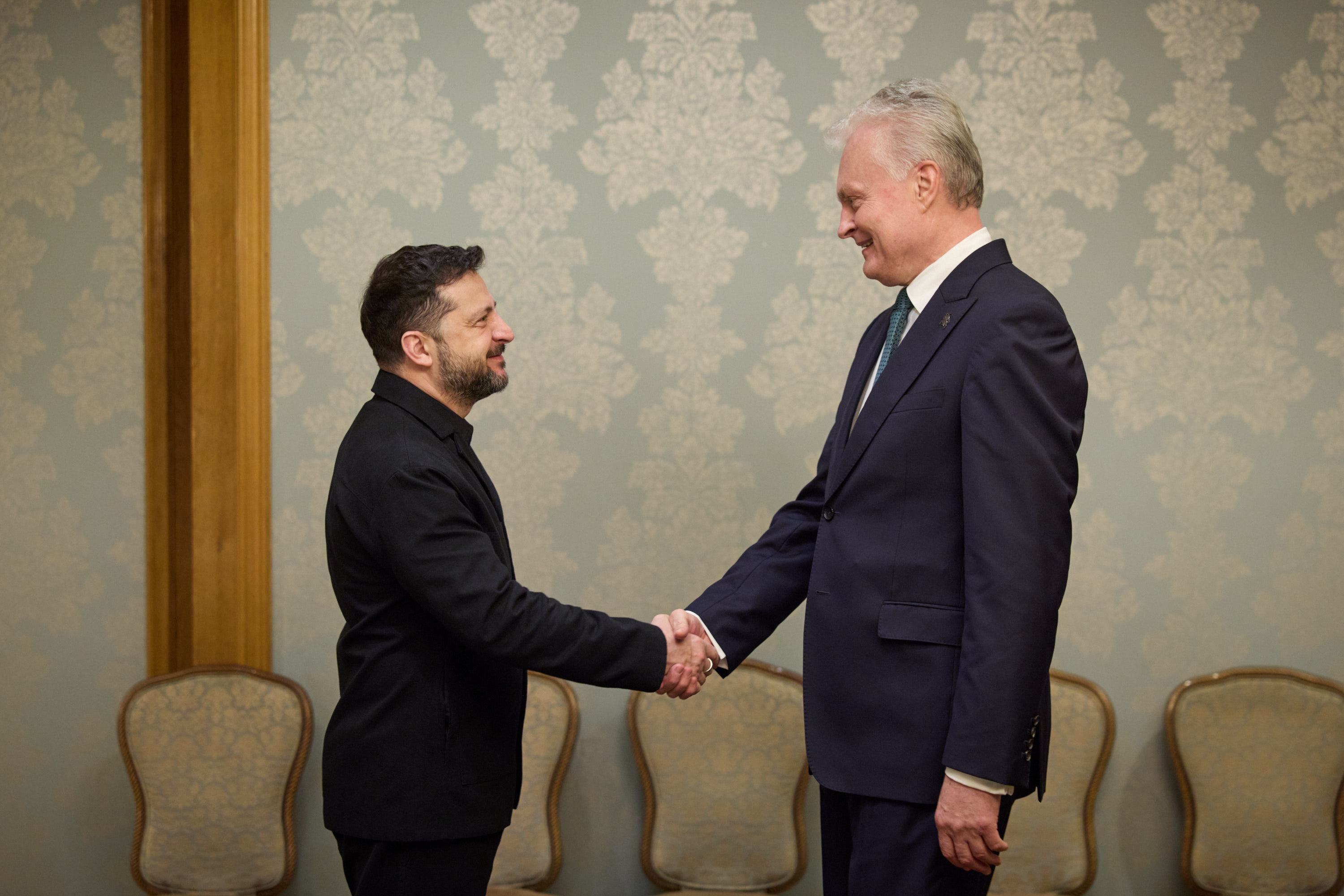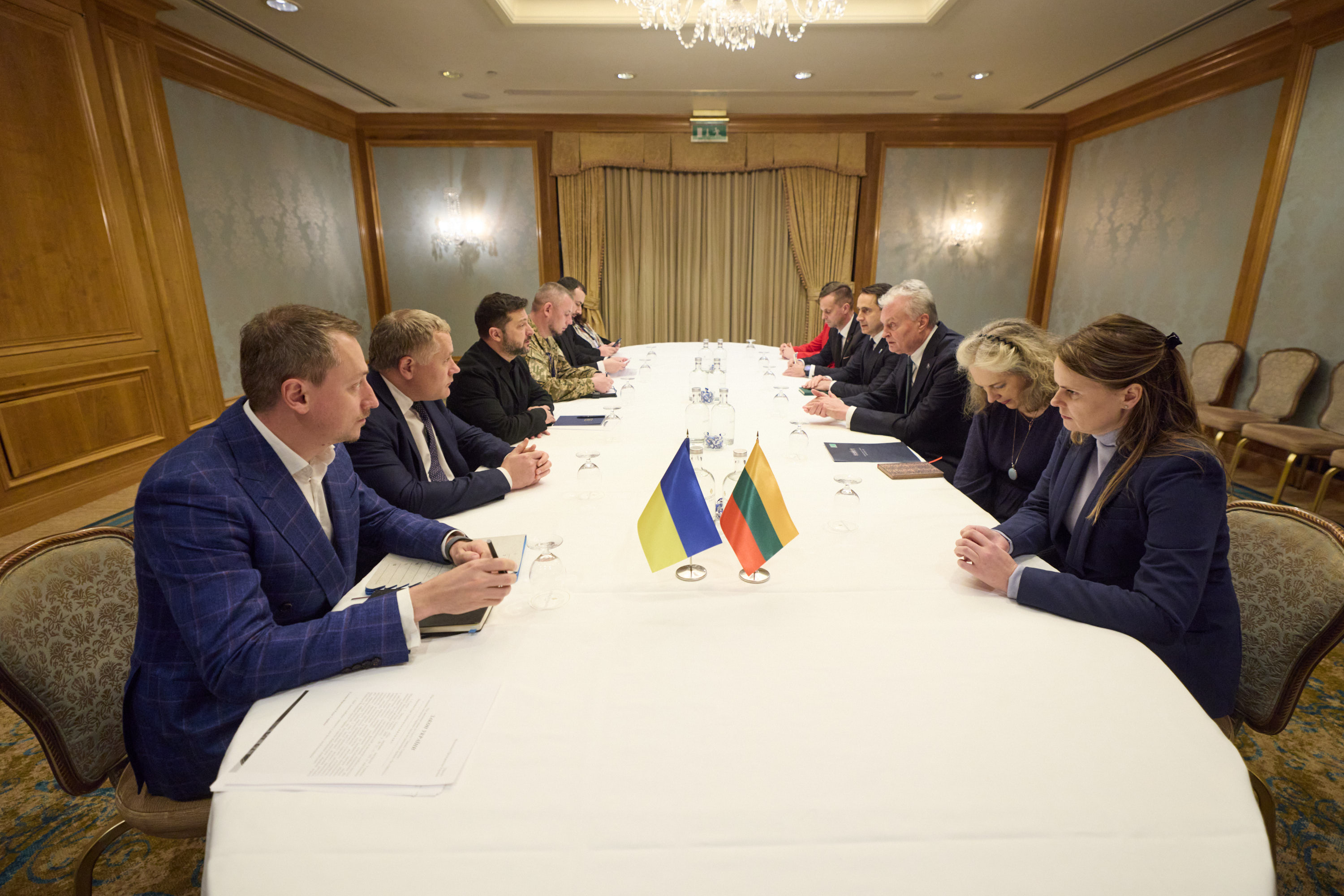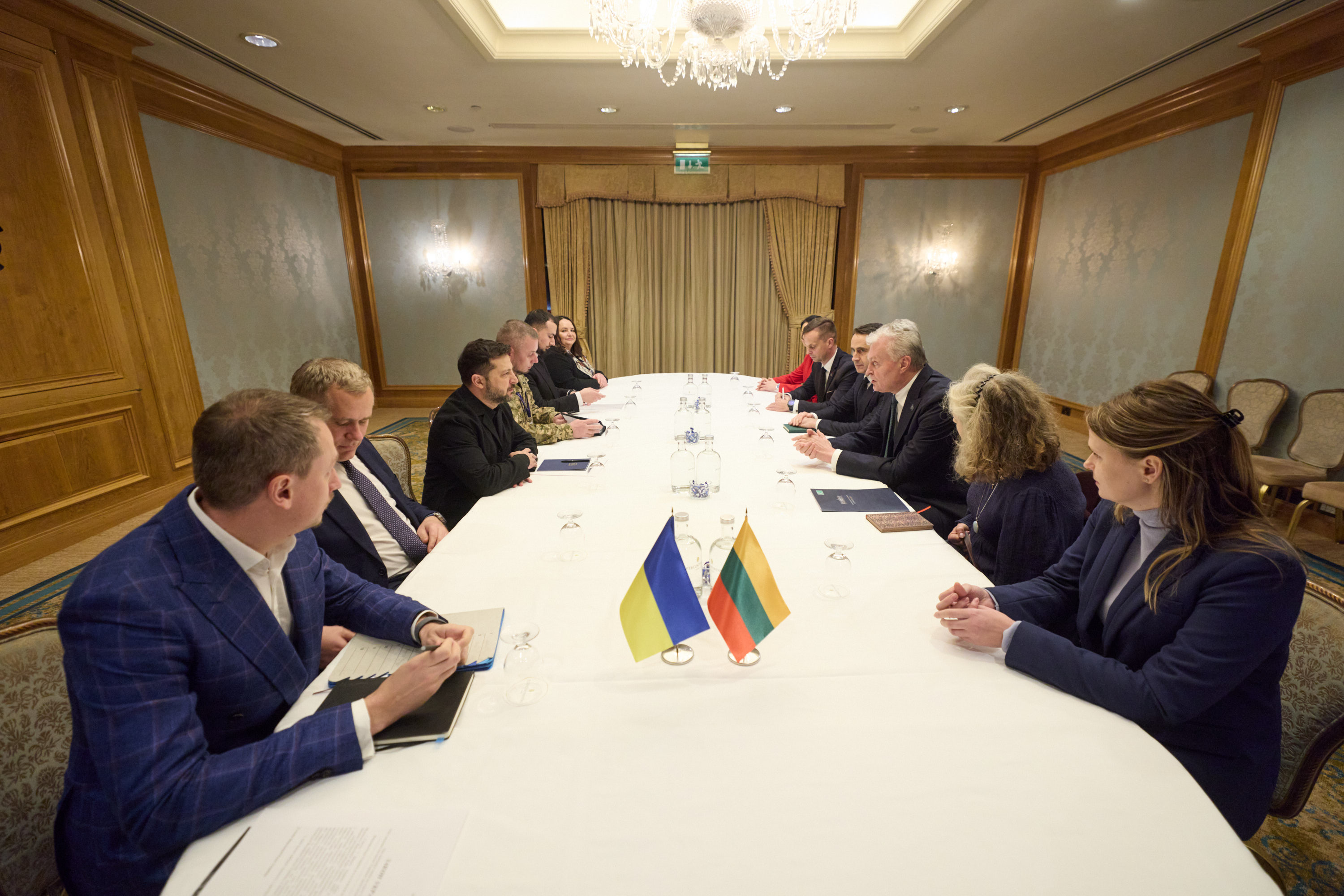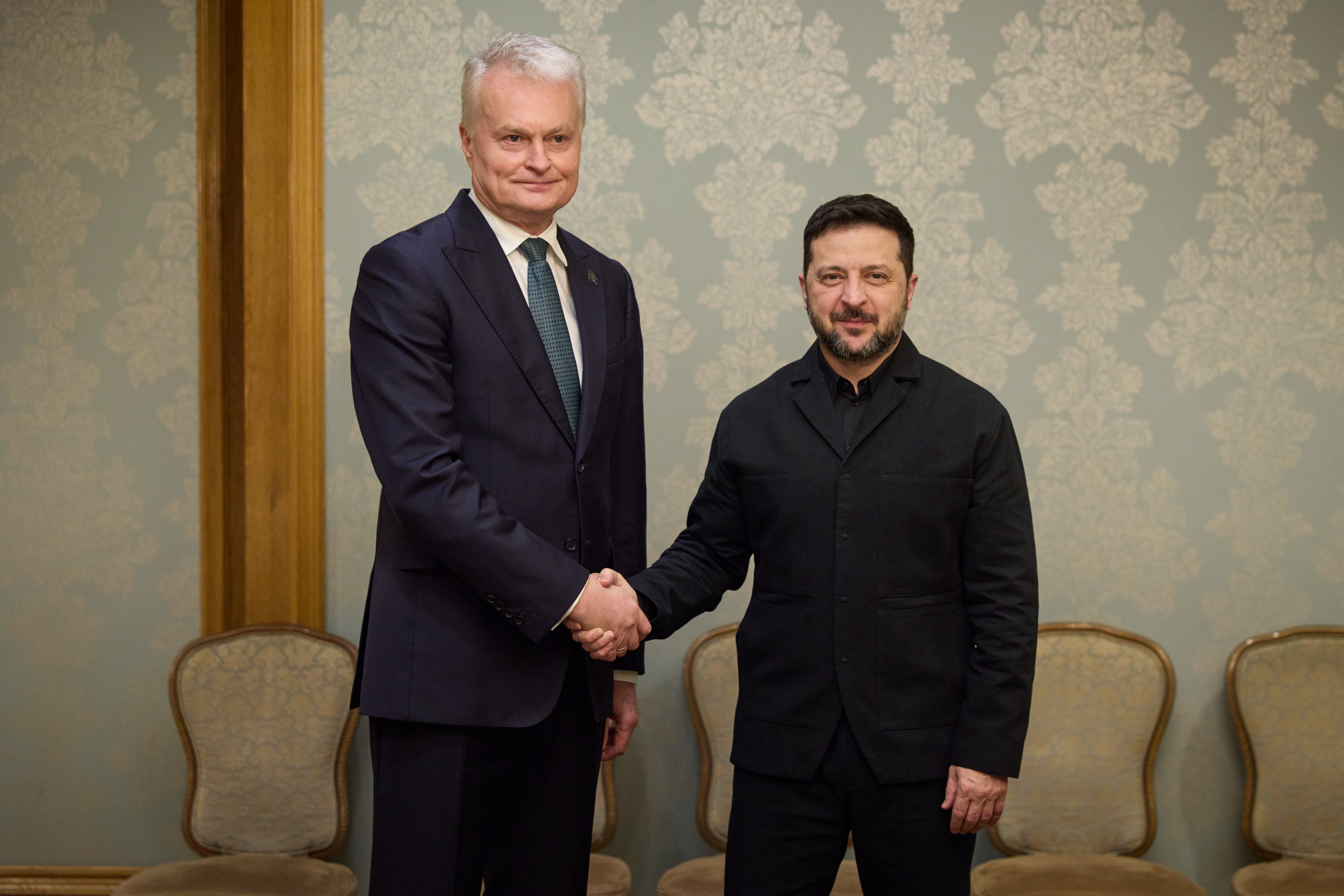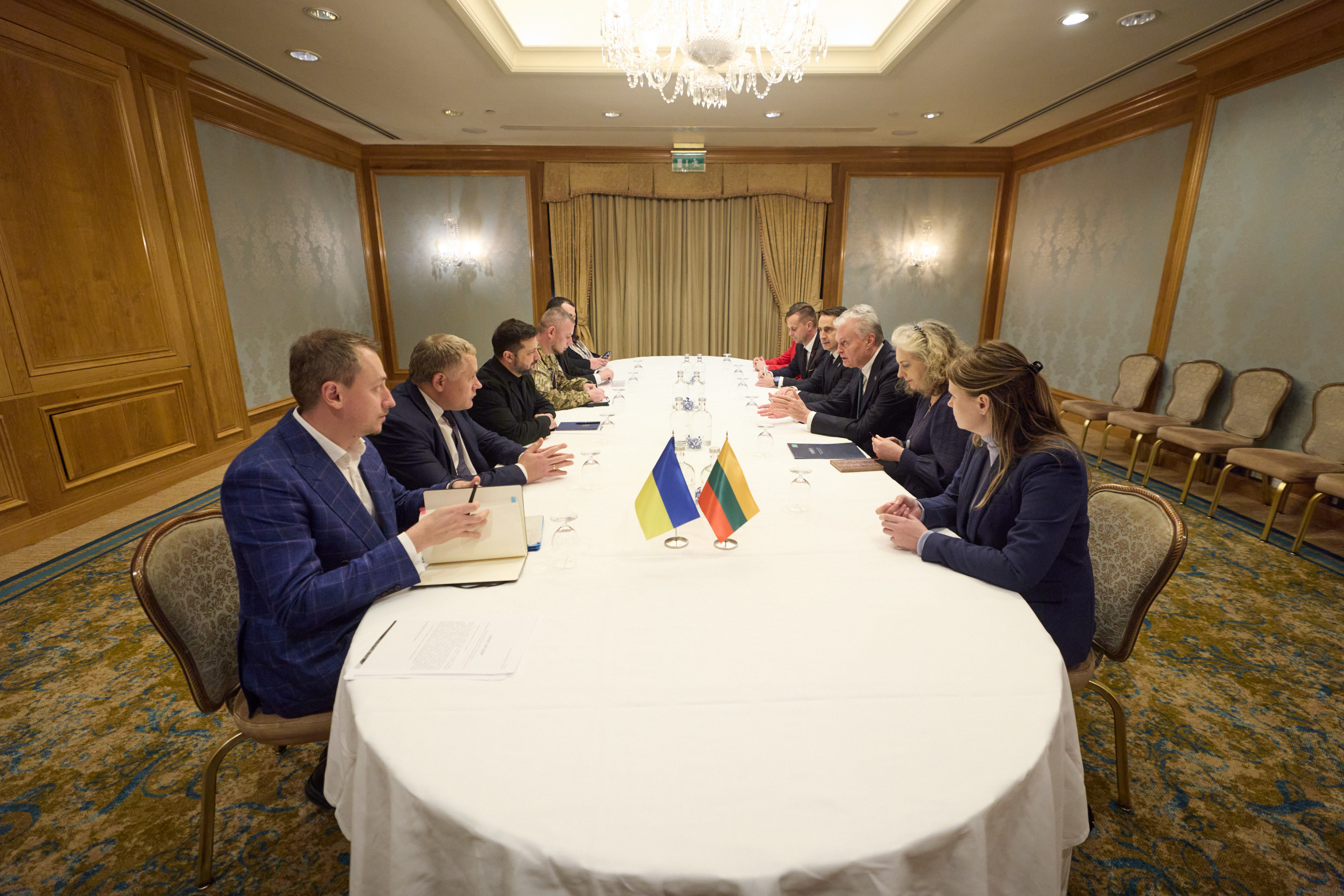
Thank you very much, Micheál. Thank you so much.
Dear friends, good to see you all.
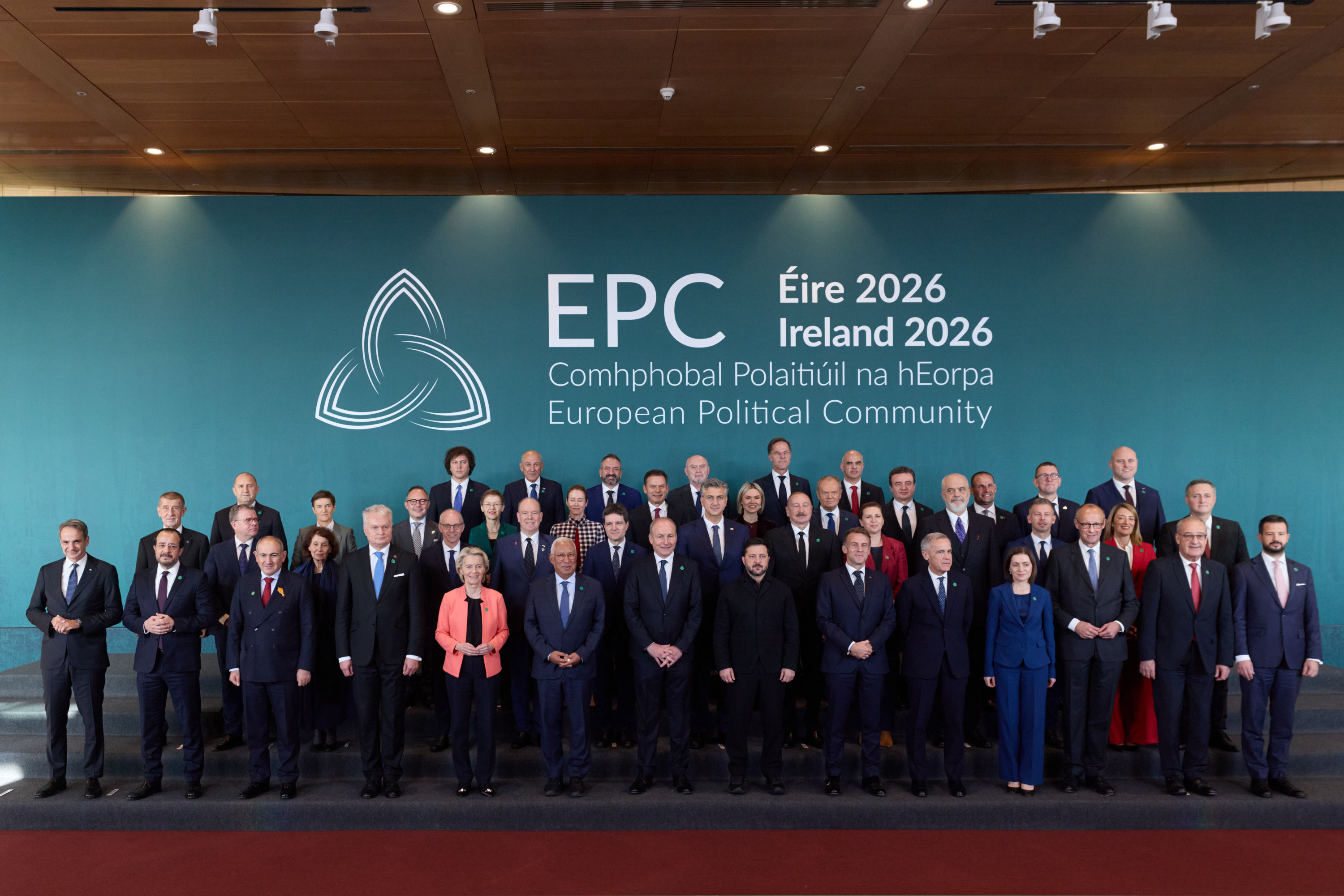
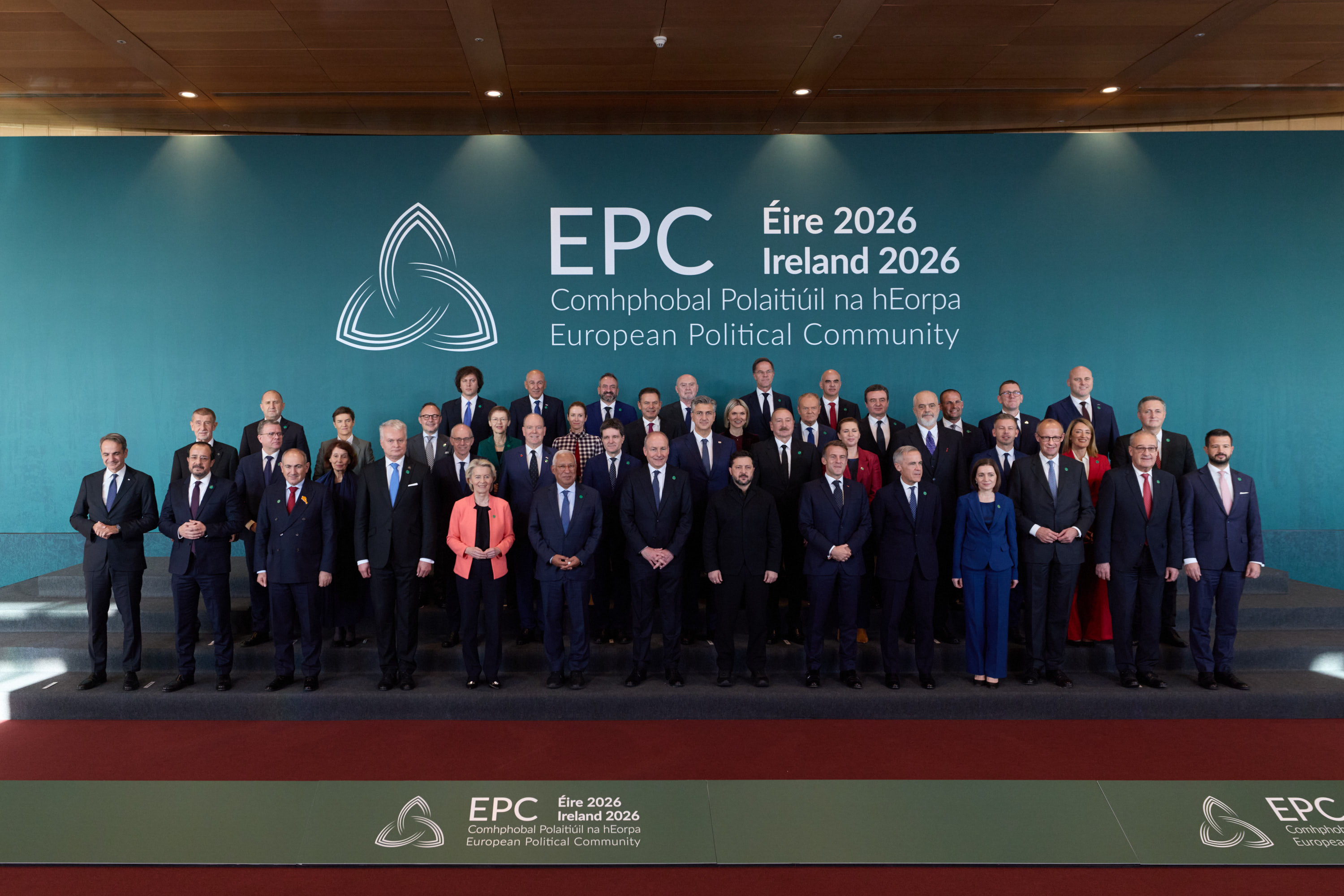
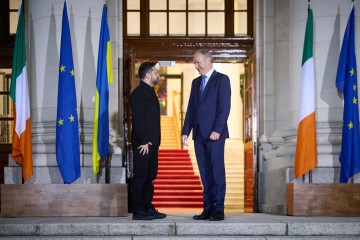
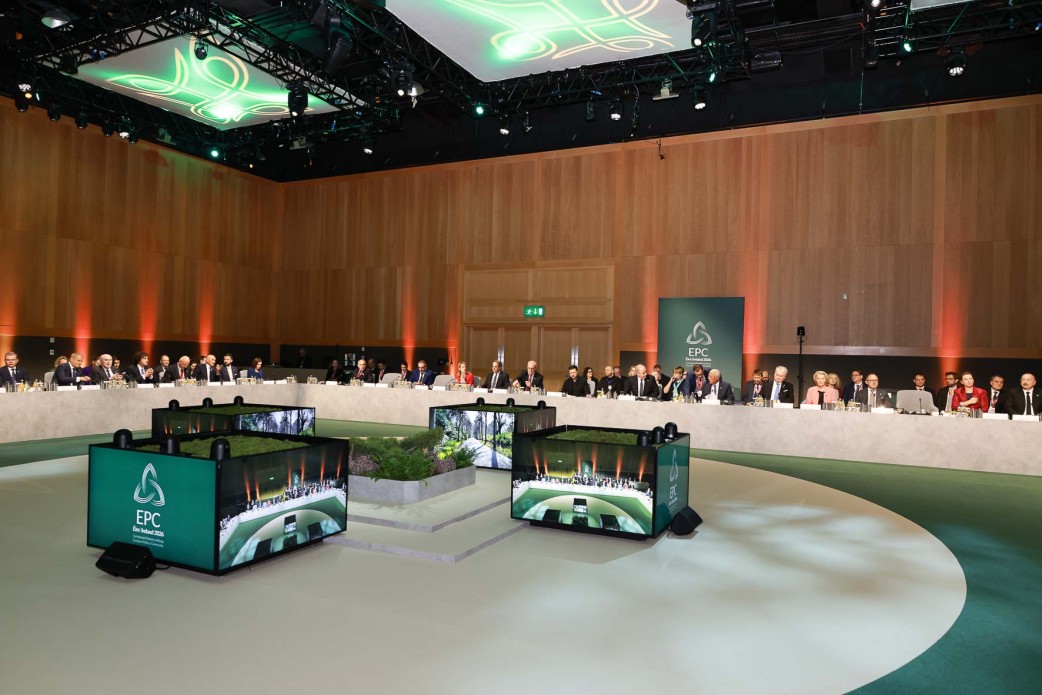
Thank you, and thanks to Ireland for organizing summit so well. Thank you so much, Micheál.
And it’s great that Europeans can coordinate in this format for the ninth time already.
As you all know, yesterday our representatives met with the Russians and Americans in Abu Dhabi. Today, the Americans are in Moscow, and this evening they will be here in Dublin. We will talk with them about the results of these negotiations over the past few days. And it is very good that Europeans are now part of these talks. Not directly yet, and not yet when the Russians are at the table, but Europeans are already involved. And we need to make sure that Europe becomes a regular part of these negotiations.
From what I’ve heard from our delegation, the talks were serious. Not empty. First, an agreement on a POW exchange. And this is important for us – bringing our people, our warriors, back from Russian captivity. Second, a lot of talk about security guarantees. And here Europe really needs to pay attention. When the Americans and Russians talk about this, it’s not just about security guarantees for Ukraine. In fact, it’s more about some kind of new security framework between Europe and Russia. And we find this approach a bit strange. Because for 30 years after the Soviet Union collapsed, Europe treated Russia well. And Europe tried to have as much trade as possible, as much cooperation as possible, and as good relations as possible with Russia. Putin’s wars are really about only his attitude toward others – not some kind of permanent confrontation with Europe that was impossible to avoid. But still, we hear what we hear today. We are waiting for more details, and Europe needs to pay close attention.
Unfortunately, yesterday the Russians said they had no permission to discuss steps that could reduce the horrors of this war. And this was despite another attempt from our side to push for steps to de-escalate in the Black Sea and stop attacks on energy infrastructure in Ukraine. But what our delegation heard in response was that the Russian boss is angry and wants to keep striking.
Every winter the Russians try to do as much harm as possible. And we’ve seen this every day. And we see it every year. And even before this war – when Putin used gas as a weapon almost every winter, against Ukraine and others, by the way, using energy to blackmail people. He sees energy as a battlefield. And we understand that.
So our priorities remain the same.
First – air defense. We need interceptor missiles for our Patriots and NASAMS. And I urge you to take this very seriously and help us find these missiles. Second – our F-16 fighter jets and the ammunition they need. It’s again about air defense. We use F-16s to shoot down Russian jet-powered “shahed” drones. Hundreds and thousands of them. The Russians are planning to increase both the production of jet-powered “shaheds” and the number of attacks with them. So we need ammunition to defend. I ask for your support with this too.
Third – energy support. We need it now, already in November, and throughout the winter. Our team has lists of the equipment, what was destroyed, by the way, by Russian attacks. And we have this lists we need.
Next. Please, let’s take a look at how we can support our major cities. And these are the economic and social centers of the country. Putin has told people – and it’s real information – he told people close to him directly that he wants to destroy life in these cities. That’s why we see this constant terror against Kyiv – the capital, Dnipro, Kharkiv, Zaporizhzhia, Odesa, and our Kherson, and other cities. And we have resilience plans for these cities. They are ready. And we need special support to put these plans into action.
As for the frontline, our positions are strong. And this is a direct result of our cooperation – thank you so much – our joint defense projects, our joint weapons production. We need to keep all this cooperation going.
The only bad news is that we are again seeing problems with Starshield. We have detected speed restrictions on Starshield on our Ukrainian territory again – in the temporarily occupied parts of Ukraine. The speed limit is back at 161 kilometers per hour – that’s 100 miles per hour. This directly affects our ability to intercept Russian jet-powered “shahed” drones. These drones come from those areas, and because of the speed restrictions, we simply cannot catch up with them in time. And near the frontline, we cannot use our aircraft. Only drone interceptors can operate there. And without the speed we need, shooting down these “shaheds” becomes much harder. And this means more Russian strikes get through, and more of our people are killed – our civilians are killed by Russia. We are trying to get the details from the American side, but so far, we know very little. But some things are already clear. If someone in America is making decisions that basically treat Ukrainian territory as if it is not Ukrainian, then this tells us where things are going. We need to be clear and never recognize Russia’s occupation of Ukrainian territory in any way.
And quickly, two more things.
We have already opened 4 negotiation clusters. Thank you very much, during your Presidency. Thanks to all the leaders and to you. And we need to open all 6 by the end of this year. Please support this. It gives our people motivation, of course, and hope.
And the last thing: sanctions. We need new packages. Russia must feel that terror brings more pressure. And let’s be clear – your sanctions also limit the very Russian weapons and capabilities that Russia could use to threaten you or even use against you. So we need strong sanctions against everything Russia uses to produce ballistic missiles, first of all, attack drones, communications systems. And we also need to keep putting pressure on Russia’s fleet that carries oil and oil products. And on Russian banks and other financial institutions as well. Please, let’s show progress on this.
Thank you again, Micheál, for the invitation.
Thank you!