

All news
Diplomacy, European Integration, and Further Support for Ukraine: President Met with the Prime Minister of Greece
18 June 2026 - 20:42
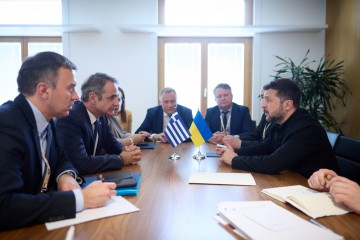
President of Ukraine Volodymyr Zelenskyy met with Prime Minister of Greece Kyriakos Mitsotakis.
President Discussed with António Costa and Ursula von der Leyen Further Steps on Ukraine’s Path Toward EU Accession
18 June 2026 - 20:11
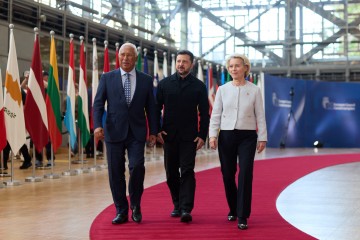
The Head of State thanked them for their support and assistance and emphasized that it is important to open the remaining five negotiating clusters for Ukraine’s accession to the European Union in the near future.
The President of Ukraine Had an Audience with King Philippe of the Belgians
18 June 2026 - 19:29
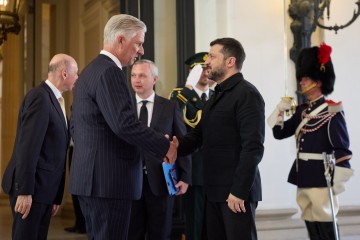
The Head of State informed the King about Russian strikes on civilian infrastructure that resulted in damage to the Kyiv-Pechersk Lavra. Volodymyr Zelenskyy noted that sanctions against Russia must be stepped up and spoke about diplomatic efforts with partners, as well as the need to strengthen Europe’s role in the negotiation process.
Ukraine and Germany Agreed to Develop Anti-Ballistic Capabilities and Jointly Produce UGVs
18 June 2026 - 18:31
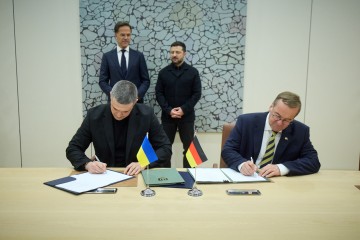
In Brussels, in the presence of President of Ukraine Volodymyr Zelenskyy and NATO Secretary General Mark Rutte, Ukraine’s Minister of Defense Mykhailo Fedorov and Germany’s Federal Minister of Defense Boris Pistorius signed implementing arrangements on the development of anti-ballistic capabilities and the joint production of TerMIT UGVs in the Federal Republic of Germany.
Another Large Foster Family Received a New Home under the Room for Childhood Project – Olena Zelenska
18 June 2026 - 18:12
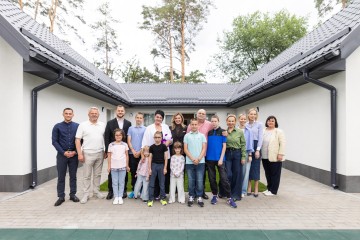
In Bucha, Kyiv region, First Lady of Ukraine Olena Zelenska handed over the keys to a new home to the Hrantsev large foster family.
Preparation of a New Defense Package and Contributions to the PURL Initiative: The President Met with the Prime Minister of Belgium
18 June 2026 - 15:06
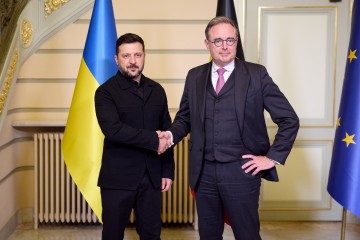
In Brussels, President of Ukraine Volodymyr Zelenskyy met with Prime Minister of Belgium Bart De Wever.
Strengthening Air Defense and Implementation of the PURL Initiative: The President Met with the NATO Secretary General
17 June 2026 - 23:59

In Brussels, President of Ukraine Volodymyr Zelenskyy held a meeting with NATO Secretary General Mark Rutte.
Presidents of Ukraine, the United States, and France Reviewed the Outcomes of the G7 Summit Talks and Coordinated Positions
17 June 2026 - 23:49
President of Ukraine Volodymyr Zelenskyy held a coordination phone call with President of the United States Donald Trump and President of France Emmanuel Macron, a call that can bring about significant change.
Volodymyr Zelenskyy and Alexander Stubb Discussed Key Agreements Reached at the G7 Summit
17 June 2026 - 22:29
On his way to Brussels, President of Ukraine Volodymyr Zelenskyy held a phone call with President of Finland Alexander Stubb.
Olena Zelenska Took Part in a Working Session on Coordinating Communications for School Nutrition Reform
17 June 2026 - 21:48
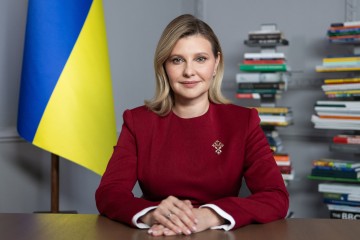
First Lady of Ukraine Olena Zelenska took part in a working session on coordinating communications for the School Nutrition Reform. The event brought together representatives of the Ministry of Education and Science, the Ministry of Health, the Ministry for Communities and Territories Development, and international organizations supporting the implementation of the reform, as well as around 2,000 representatives of territorial communities, regional military administrations, central executive authorities, state institutions, local self-government bodies, and communication teams involved in the reform’s implementation.