

The foreign policy work of President of Ukraine Volodymyr Zelenskyy in May focused on bringing a dignified peace closer, strengthening Ukraine’s air defense amid intensified Russian attacks – in particular through additional missile supplies and the reinforcement of combat aviation – forming an anti-ballistic coalition to protect Ukraine and all of Europe from aerial threats, securing contributions to the PURL initiative, concluding new Drone Deals with partners, and bringing Ukrainians back from Russian captivity.
With mediation by the American side, an agreement was reached to conduct a 1,000-for-1,000 POW exchange. The first stage took place on May 15, when 205 Ukrainians returned home. In total, since the beginning of Russia’s full-scale invasion, Ukraine has freed more than 8,000 people from Russian captivity.
 Special attention was also given to the implementation of the EUR 90 billion European support package and the opening of the first negotiating clusters for Ukraine’s full membership in the European Union. The Head of State consistently raises this issue during meetings and phone calls with the heads of European Union institutions and the heads of state and government of European countries.
In May, Volodymyr Zelenskyy held 26 international meetings.
Abroad, he met with partners in the Washington format – President of France Emmanuel Macron, Prime Minister of the United Kingdom Keir Starmer, President of the Council of Ministers of Italy Giorgia Meloni, Prime Minister of Canada Mark Carney, Prime Minister of Norway Jonas Gahr Støre, Prime Minister of Poland Donald Tusk, Prime Minister of Finland Petteri Orpo, President of the European Council António Costa, President of the European Commission Ursula von der Leyen, and NATO Secretary General Mark Rutte — as well as with President of Latvia Edgars Rinkēvičs, President of Lithuania Gitanas Nausėda, President of Poland Karol Nawrocki, President of Romania Nicușor Dan, President of Finland Alexander Stubb, King of the Kingdom of Bahrain Hamad bin Isa Al Khalifa, Prime Minister of the United Kingdom Keir Starmer, Prime Minister of Armenia Nikol Pashinyan, Prime Minister of Georgia Irakli Kobakhidze, Prime Minister of Canada Mark Carney, Prime Minister of Norway Jonas Gahr Støre, Prime Minister of Poland Donald Tusk, Prime Minister of Slovakia Robert Fico, Prime Minister of Finland Petteri Orpo, Prime Minister of Czechia Andrej Babiš, Prime Minister of Sweden Ulf Kristersson, President of the European Council António Costa, President of the European Commission Ursula von der Leyen, and NATO Secretary General Mark Rutte.
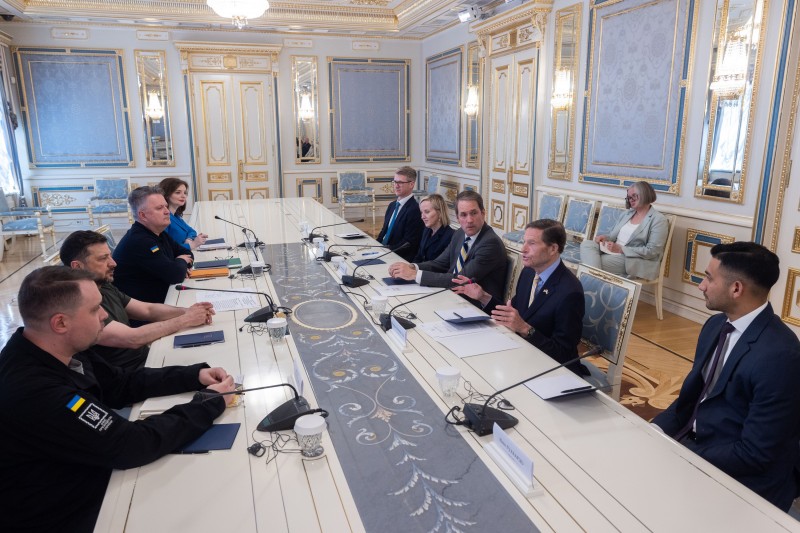 In Ukraine, the Head of State met with Federal Minister of Defense of Germany Boris Pistorius; Federal Minister for Special Tasks and Head of the Federal Chancellery of Germany Thorsten Frei and President of the Federal Intelligence Service of Germany Martin Jäger; President of the Congress of Deputies of Spain Francina Armengol; U.S. Senator Richard Blumenthal and member of the United States House of Representatives Jim Himes; Mayor of Le Havre, France, Édouard Philippe; and Head of the United Transitional Cabinet of Belarus Sviatlana Tsikhanouskaya.
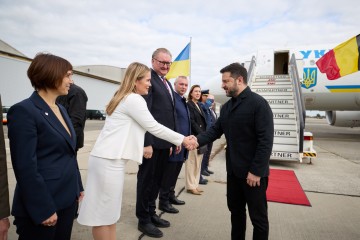
In May, Volodymyr Zelenskyy made four foreign visits: to Armenia, Bahrain, Romania, and Sweden.
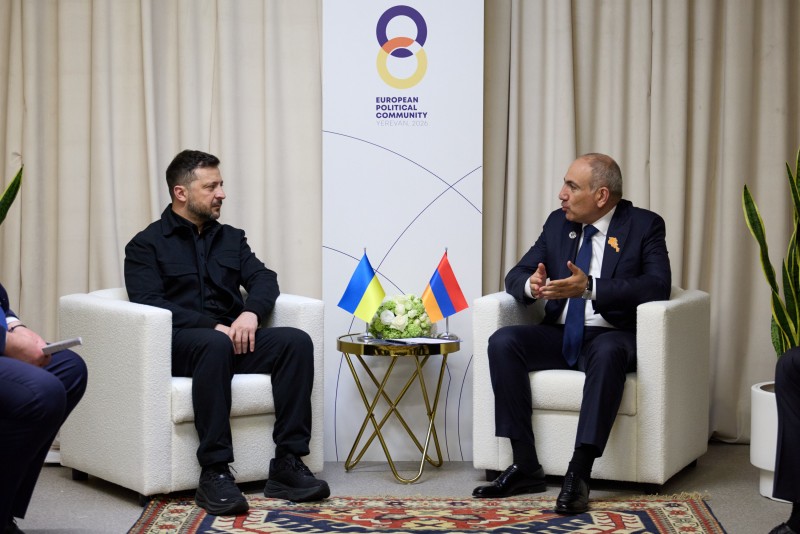
In Yerevan, the Head of State took part in the European Political Community Summit. This was the first visit by a President of Ukraine to Armenia in the past 24 years.
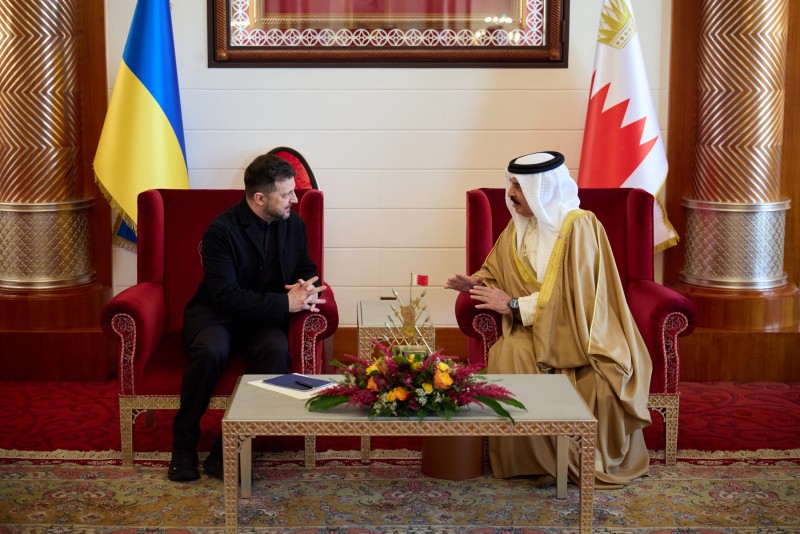 In Manama, during his first visit to Bahrain, Volodymyr Zelenskyy discussed the security situation in the Middle East and the Gulf region with King Hamad bin Isa Al Khalifa. The President proposed concluding a Drone Deal and scaling up cooperation with Bahrain. This was the first meeting between the leaders of the two countries since 2003.
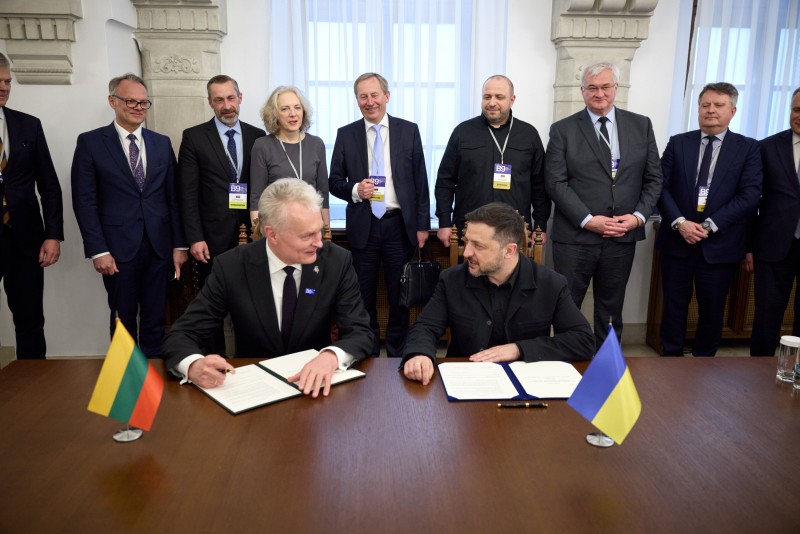
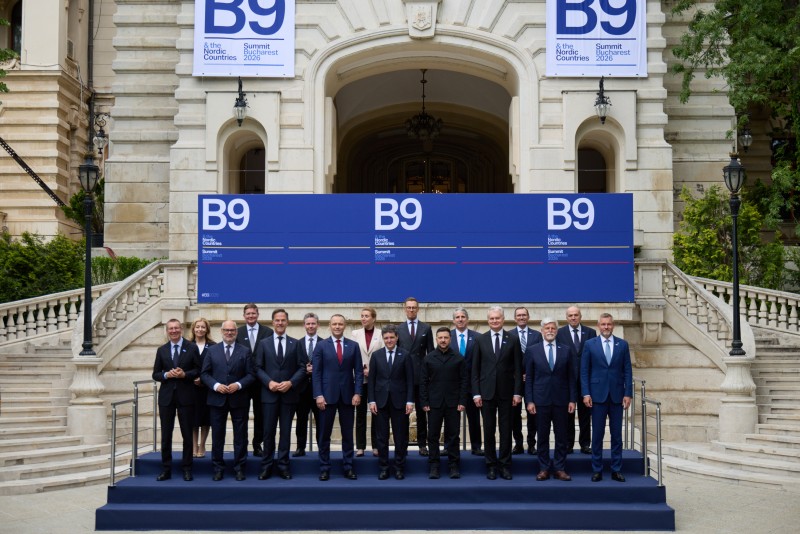
In Bucharest, the President took part in the B9 and Nordic Allies Summit and concluded a Drone Deal with Lithuania. Overall, Ukraine has already signed five agreements with partners in the Drone Deal format, with work ongoing on 20 more.
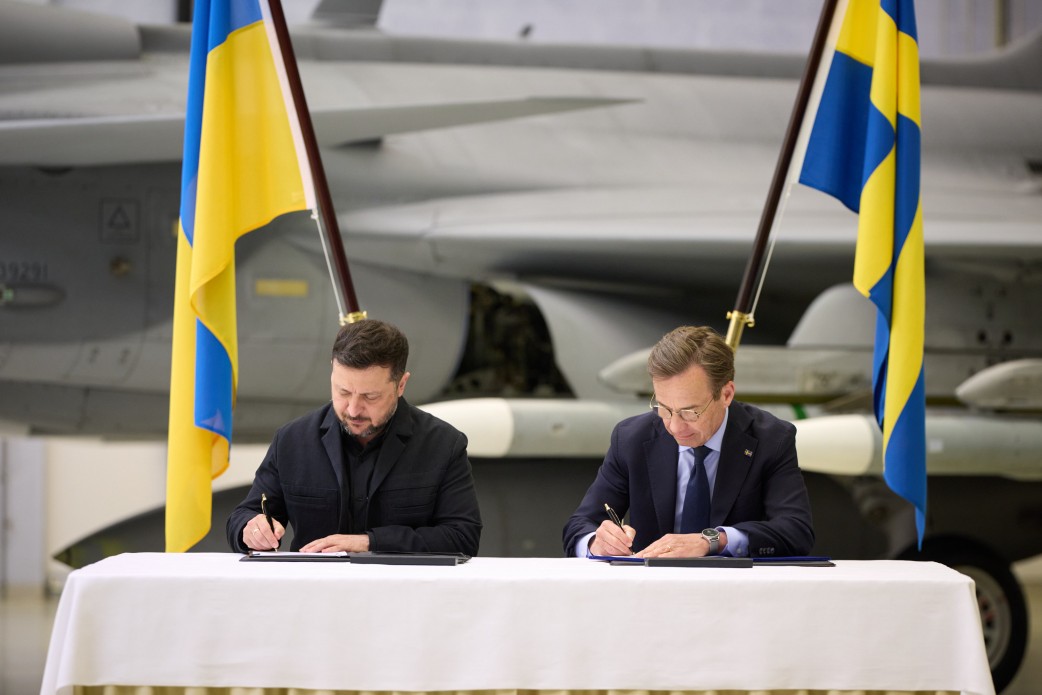
In Uppsala, President of Ukraine Volodymyr Zelenskyy and Prime Minister of Sweden Ulf Kristersson agreed on Ukraine’s acquisition of up to 20 latest Gripen E/F aircraft. EUR 2.5 billion from the European Union support package will be allocated for this. Sweden will also provide Ukraine with another 16 Gripen C/D fighter jets as part of bilateral assistance. Deliveries are expected in early 2027. The leaders also signed a Joint Declaration on Enhanced Security and Defense Cooperation.
 Throughout May, the Head of State held 16 phone calls: with President of Azerbaijan Ilham Aliyev; President of the United Arab Emirates Mohamed bin Zayed Al Nahyan; President of Romania Nicușor Dan; President of Finland Alexander Stubb; President of France Emmanuel Macron twice; in the E3–Ukraine format with President of France Emmanuel Macron, Prime Minister of the United Kingdom Keir Starmer, and Federal Chancellor of Germany Friedrich Merz; President of Serbia Aleksandar Vučić; Federal Chancellor of Austria Christian Stocker; Prime Minister of the United Kingdom Keir Starmer; Prime Minister of Estonia Kristen Michal; Prime Minister of Norway Jonas Gahr Støre; Prime Minister of Slovakia Robert Fico; President of the European Council António Costa twice; and President of the European Commission Ursula von der Leyen.
Participation in international events and meetings: the 8th European Political Community Summit in Yerevan; the B9 and Nordic Allies Summit in Bucharest; the 4th International Summit of Cities and Regions, “Partnership. Resilience. Readiness,” in Kyiv; and an online address to the participants of a meeting of the International Coalition for the Return of Ukrainian Children.
 Defense packages and other assistance:
Sweden: a USD 2.7 billion assistance package, under which Ukraine will receive 16 Gripen C/D fighter jets.
Norway: around USD 300 million for the PURL initiative and a EUR 40 million grant to support Ukraine’s energy resilience.
Canada: USD 200 million for the PURL initiative.
Finland: a EUR 128 million military assistance package.
Japan: its first contribution to the PURL initiative, amounting to nearly USD 15 million.
Spain: USD 58 million for the PURL initiative.
Sanctions measures: Ukraine imposed sanctions against individuals who threaten its national interests, security, sovereignty, and territorial integrity; Russians and Russian companies supplying products for the enemy’s defense industry; occupiers responsible for missile strikes against our country; and civilian merchant vessels involved in transporting cargo for Russia’s military needs.
Ukraine also synchronized its sanctions with the European Union.
The United Kingdom, Canada, and the European Union imposed sanctions on Russian entities and individuals involved in the abduction of Ukrainian children. In addition, the United Kingdom introduced sanctions against cryptocurrency payment systems that Russia had used to circumvent sanctions restrictions.