

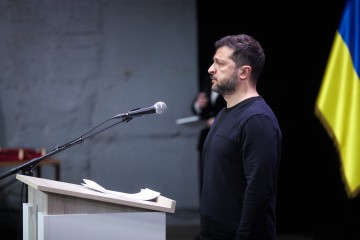
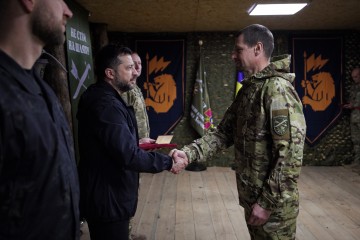
The diplomatic work of President of Ukraine Volodymyr Zelenskyy in March was focused on strengthening Ukraine and reinforcing the protection of lives together with partners. The Head of State visited several countries in the Middle East, where documents on defense cooperation were signed.
 Among the priorities of the foreign policy work are the unblocking of the €90 billion financial assistance package and the negotiation process on Ukraine’s accession to the European Union, continued sanctions pressure on Russia, and the expansion of the PURL initiative and SAFE instrument. In March, Bulgaria joined the PURL initiative, bringing the total number of participating countries to 28.
In March, Volodymyr Zelenskyy held 23 international meetings. Abroad – with President of France Emmanuel Macron, President of Romania Nicușor Dan, President of the UAE Mohamed bin Zayed Al Nahyan, Crown Prince of Saudi Arabia Mohammed bin Salman Al Saud, Amir of Qatar Sheikh Tamim bin Hamad Al Thani and Prime Minister of Qatar Mohammed bin Abdulrahman Al Thani, King of the United Kingdom Charles III, King of Spain Felipe VI, King of Jordan Abdullah II, Prime Minister of the United Kingdom Keir Starmer, Prime Minister of Spain Pedro Sánchez, Prime Minister of Romania Ilie Bolojan, Secretary General of NATO Mark Rutte, exiled Crown Prince of Iran Reza Pahlavi, as well as Spanish parliamentarians led by the Speakers of the Congress of Deputies and the Senate.
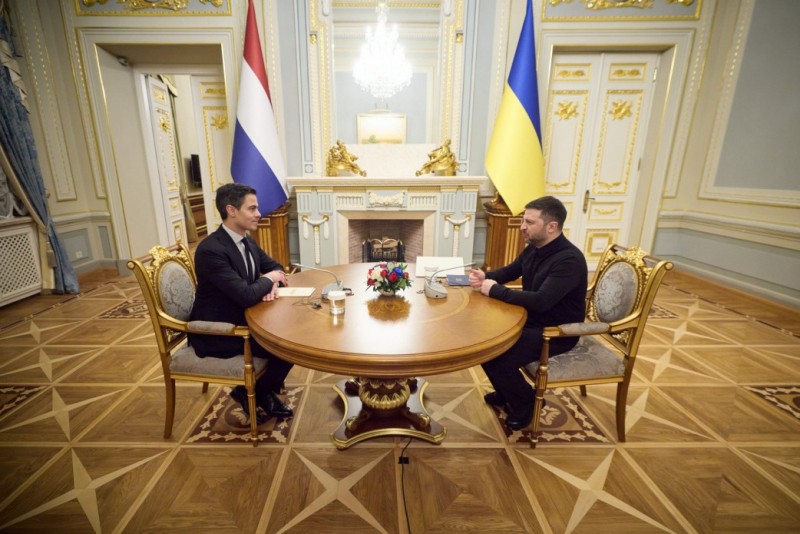 In Kyiv, the President met with Prime Minister of the Netherlands Rob Jetten, Prime Minister of Bulgaria Andrey Gurov, President of the Bundestag Julia Klöckner, Minister of Defense of Latvia Andris Sprūds, High Representative of the European Union for Foreign Affairs and Security Policy Kaja Kallas, Vice President of the Council of Ministers and Minister of Foreign Affairs of Italy Antonio Tajani, Minister of Foreign Affairs of Germany Johann Wadephul, and heads of parliamentary delegations from European countries. During the meeting with the Prime Minister of Bulgaria, the leaders signed a Security Cooperation Agreement.
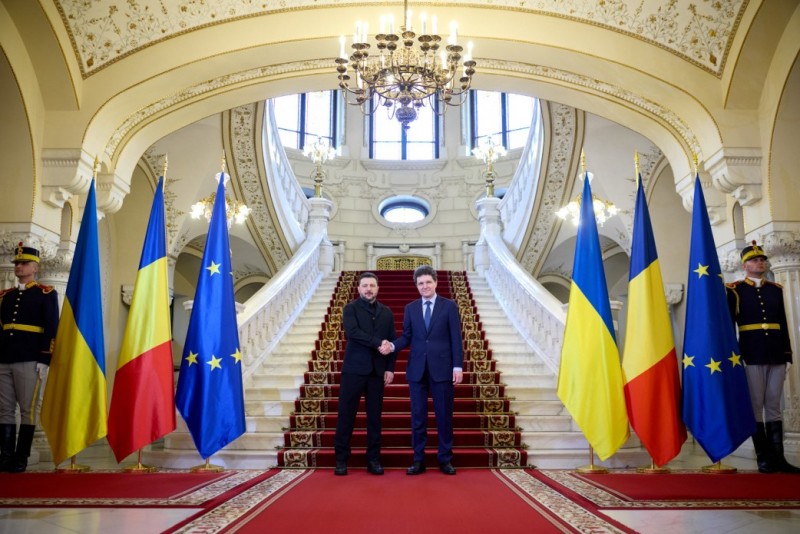 In March, the President made eight visits: to Romania, France, the United Kingdom, Spain, Saudi Arabia, the United Arab Emirates, Qatar, and Jordan.
In Bucharest, the Presidents of Ukraine and Romania agreed to deepen economic, energy, and defense cooperation. The leaders signed three documents: the Joint Declaration on the Establishment of a Strategic Partnership, the Framework Arrangement on Cooperation in the Energy Sector, and the Joint Statement of Intent Concerning the Co-Production of Defense Materiel in Romania.
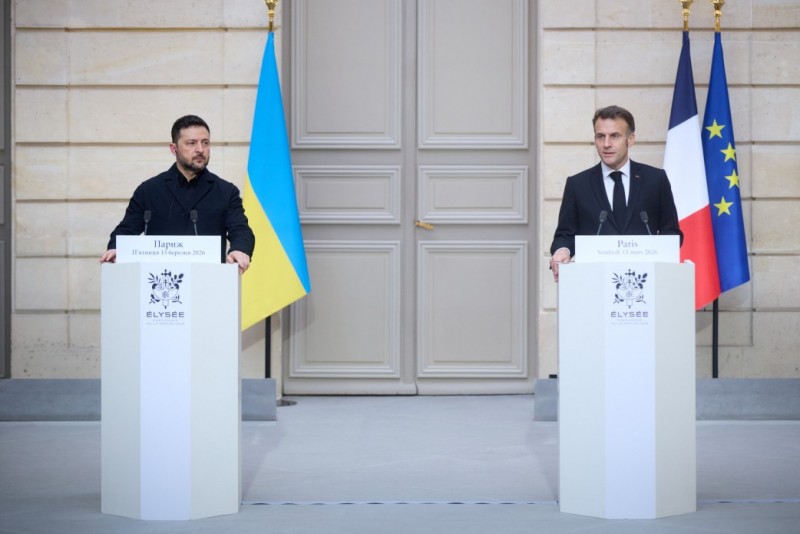 In Paris, Volodymyr Zelenskyy and Emmanuel Macron identified specific decisions that can deliver strong results in air defense and combat aviation.
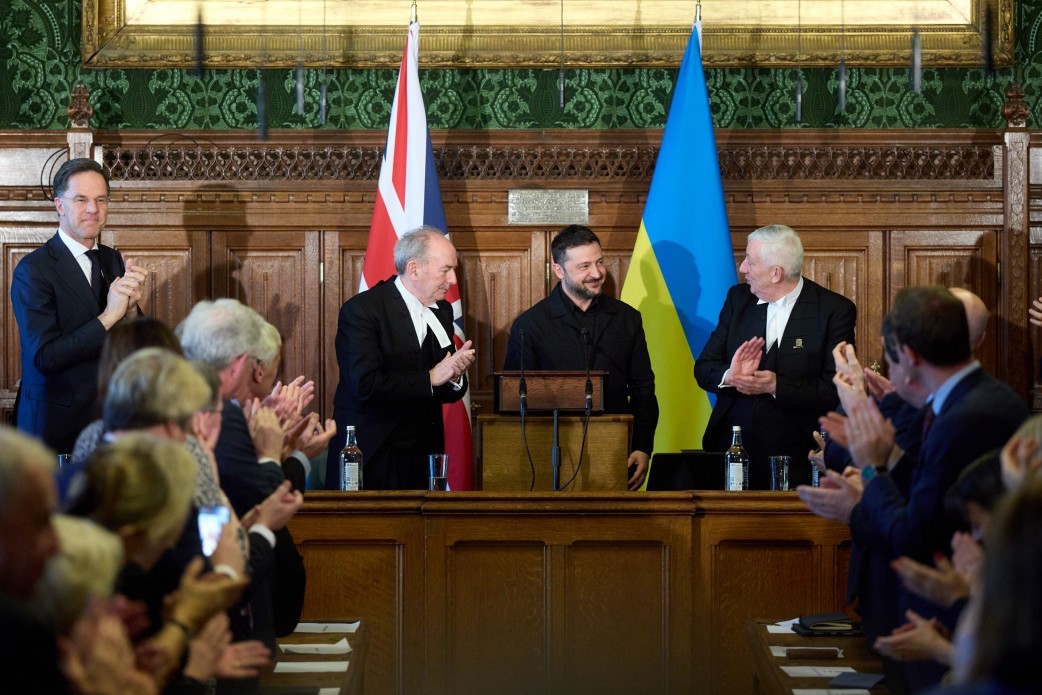
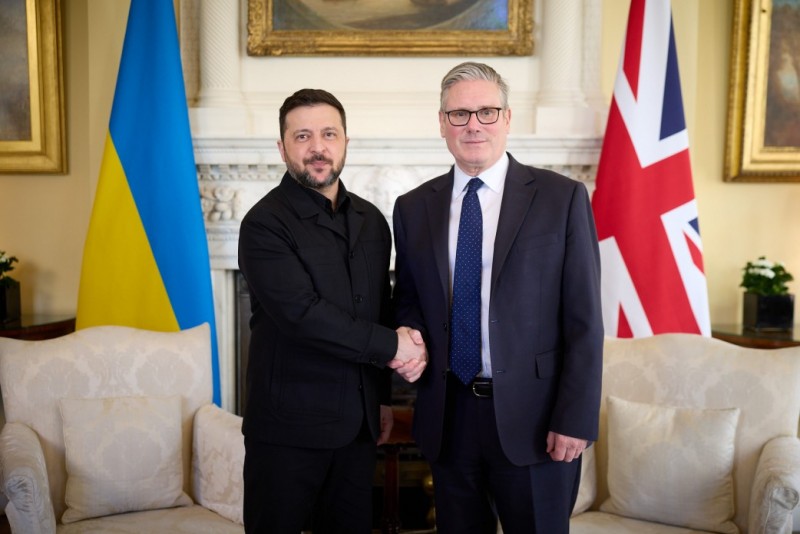
In London, the first meeting between the President of Ukraine and the Prime Minister of the United Kingdom took place in the format of a strategic dialogue. The leaders signed the Ukraine-UK Enhanced Security and Defence Industrial Collaboration Declaration. During his address in the UK Parliament, the Head of State demonstrated an iPad with software that allows real-time monitoring of the security situation.
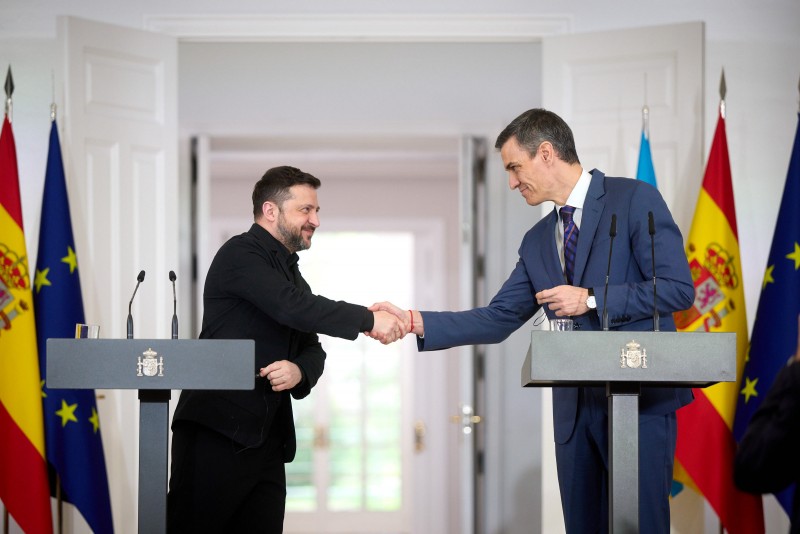 In Madrid, nine cooperation documents were signed: four between defense companies, and five covering financial cooperation, joint defense production, and railway modernization. The leaders of Ukraine and Spain agreed on a list of products to be manufactured under SAFE.
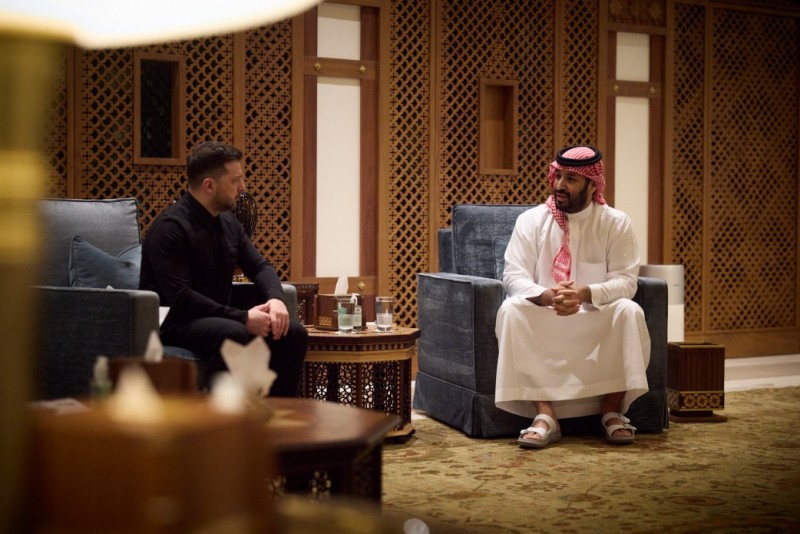
In Jeddah, the Arrangement between the Ministry of Defense of Ukraine and the Ministry of Defense of the Kingdom of Saudi Arabia on Defense Cooperation was signed. The document lays the groundwork for further contracts, technological cooperation, and investment. The President of Ukraine and the Crown Prince of Saudi Arabia agreed on further development of cooperation.
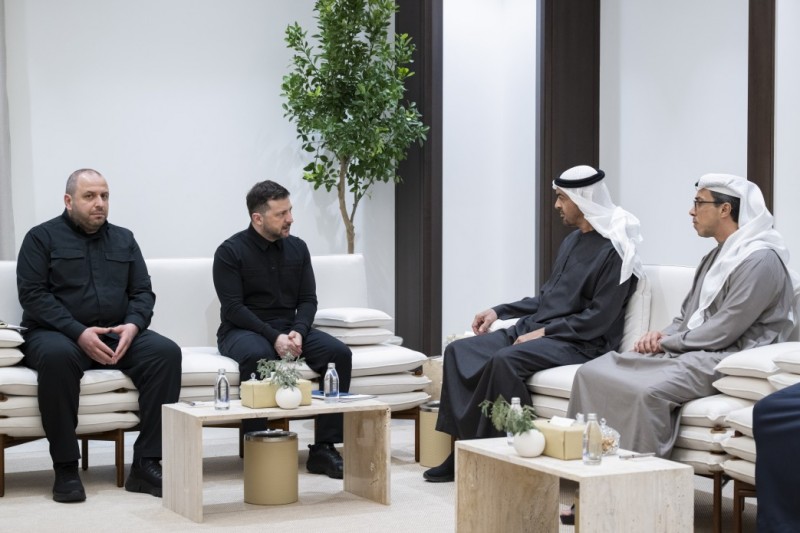 In Abu Dhabi, the Presidents of Ukraine and the UAE agreed on cooperation in the field of security and defense. The teams are finalizing the details of the agreements.
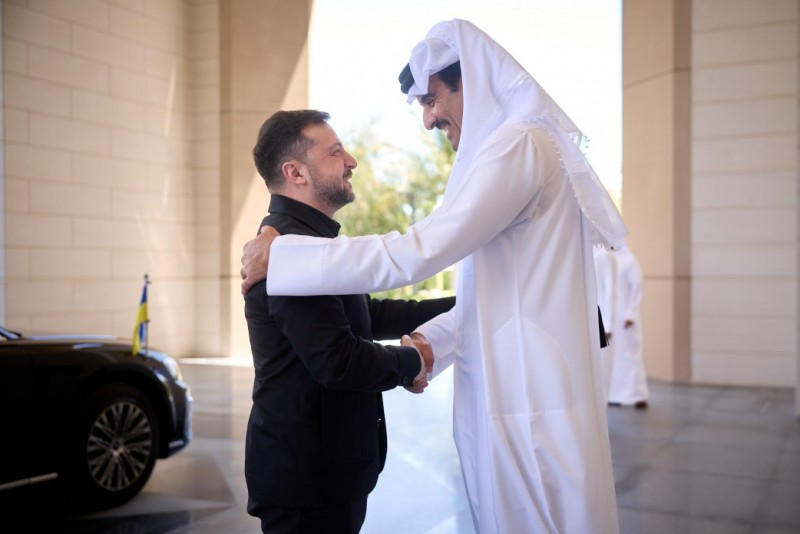
In Doha, the President of Ukraine and the Amir of Qatar agreed on a mutually beneficial partnership in the defense sector for at least 10 years. The Chiefs of the General Staff of Ukraine and Qatar signed the Agreement on Cooperation in the Defense Sector. The agreement provides, in particular, for joint projects in the defense industry, co-production, and technological partnerships between companies.
In Amman, Volodymyr Zelenskyy and King Abdullah II discussed a potential partnership in the security sphere.
 On the President’s instructions, work with Jordan is ongoing, as well as contacts with Kuwait, Iraq, and Bahrain. There is interest in Ukraine’s capabilities from Türkiye and other countries beyond the Middle East. Agreements will also be reached with Ukraine’s partners in Europe.
In March, the Head of State also held 15 phone calls: with President of France Emmanuel Macron, President of Finland Alexander Stubb, President of the UAE Mohamed bin Zayed Al Nahyan, President of Türkiye Recep Tayyip Erdoğan, President of Portugal António José Seguro, President of Mozambique Daniel Chapo, Crown Prince of Saudi Arabia Mohammed bin Salman Al Saud, Crown Prince of Kuwait Sheikh Sabah Al-Khaled Al-Hamad Al-Mubarak Al-Sabah, Amir of Qatar Sheikh Tamim bin Hamad Al Thani, King of Jordan Abdullah II, King of Bahrain Hamad bin Isa Al Khalifa, Federal Chancellor of Germany Friedrich Merz (twice), President of the Council of Ministers of Italy Giorgia Meloni, and President of the European Commission Ursula von der Leyen.
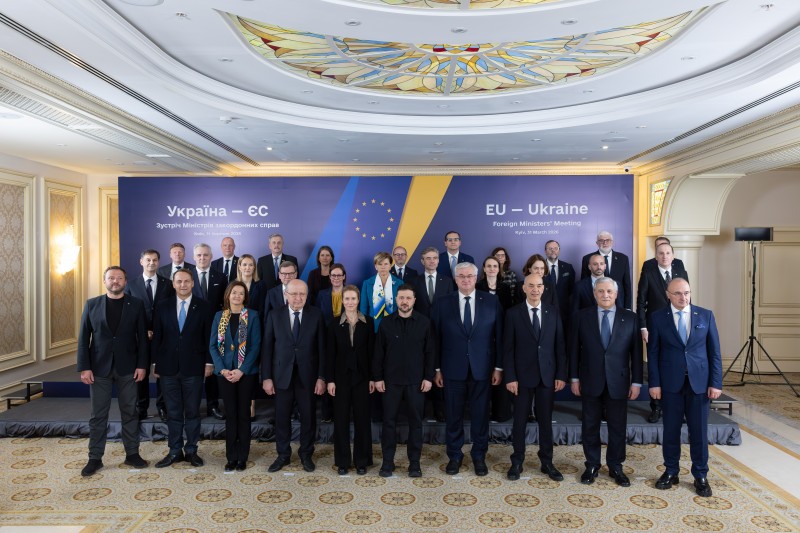 Participation in international events and meetings included: an online address to participants of the European Council meeting, an online address to the JEF Leaders’ Summit in Helsinki, the Bucha Summit – 2026, and a meeting of the EU Foreign Affairs Council held in Kyiv.
Other agreements and defense packages:
European Union: launch of a new defense industry program (EDIP) worth nearly €1.5 billion. It will increase arms production, develop air defense and anti-drone systems, and integrate the Ukrainian defense industry into the European defense sector.
 Germany: an additional €200 million for the procurement of reconnaissance drones and funding for civil protection.
United Kingdom: €115 million to strengthen Ukraine’s air defense to protect cities and critical infrastructure from Russian attacks.
Sanctions measures: Ukraine imposed sanctions against Russian judges, Russian and Iranian companies and individuals servicing Russia’s military-industrial complex, as well as Russian Paralympians. Ukraine also initiated entry bans to European Union countries and the introduction of sanctions against nearly 130 Russian commanders involved in crimes against Ukrainians. A corresponding document containing their personal data, as well as information on about 300 of their relatives, has been submitted to the European Union. Cooperation is ongoing to detain vessels of Russia’s shadow fleet.