

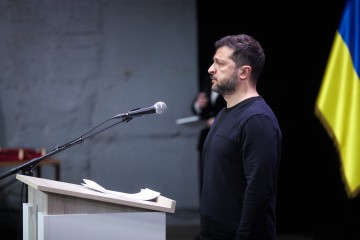
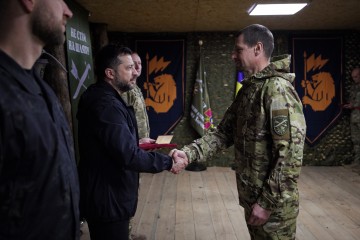
In June, President of Ukraine Volodymyr Zelenskyy’s foreign policy work focused on strengthening Ukraine’s air defense through the supply of missiles and systems, obtaining licenses for the production of anti-ballistic capabilities, securing additional contributions to the PURL program, and signing agreements in the Drone Deal format.
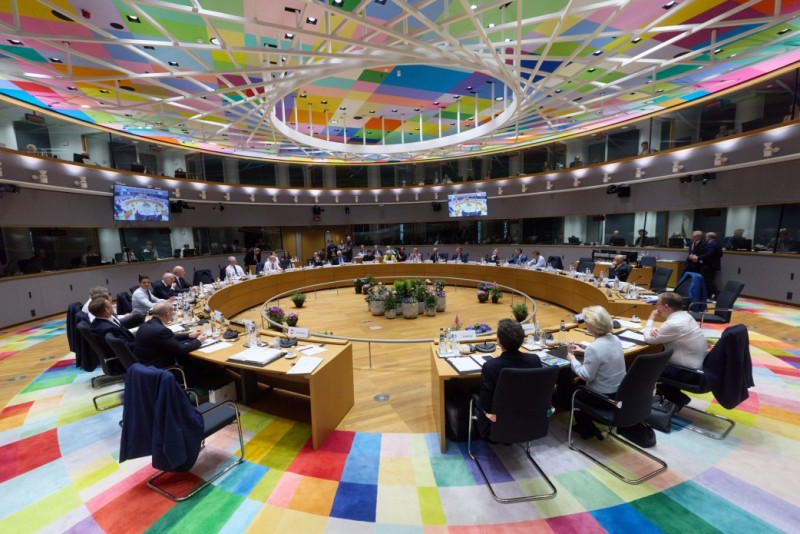
In June, the European Union opened the first negotiating cluster with Ukraine on EU accession. Ukraine is ready to open the remaining five clusters and is working to ensure that the relevant decisions are adopted as soon as possible.
The diplomatic efforts of the Head of State were also aimed at reinvigorating work to achieve peace. For the first time, the President wrote an open letter to the Russian leader with a proposal to meet and end the war.
Work continues to bring back Ukrainians held in Russian captivity. In June, two rounds of exchanges took place, resulting in the release of 342 servicemembers and 11 Ukrainian civilians.
In June, the President held 34 international meetings.
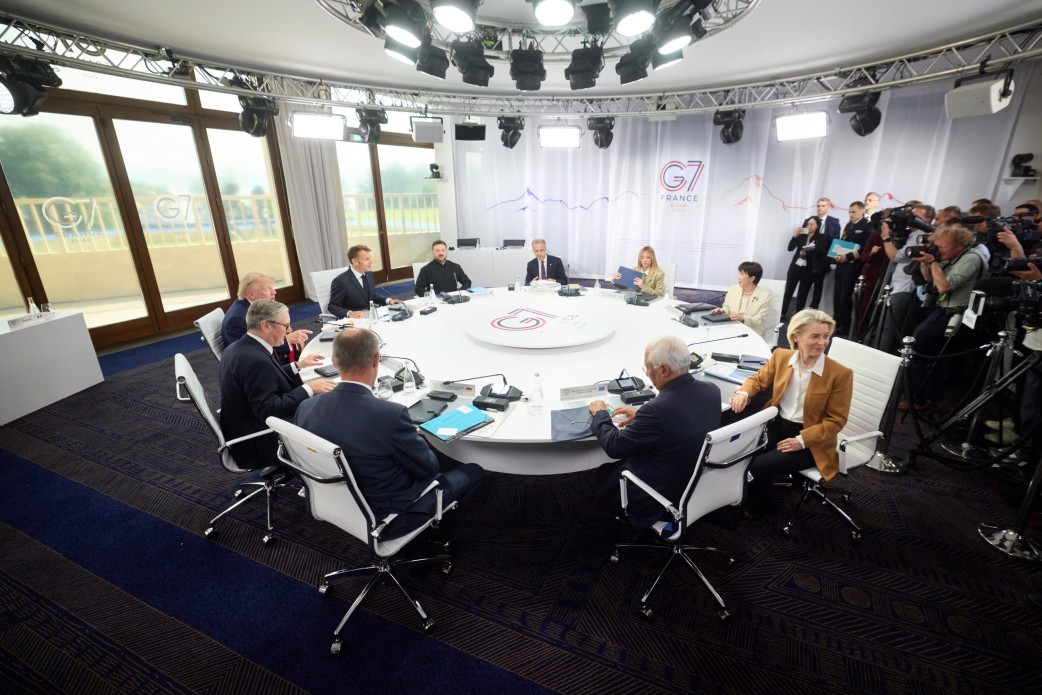
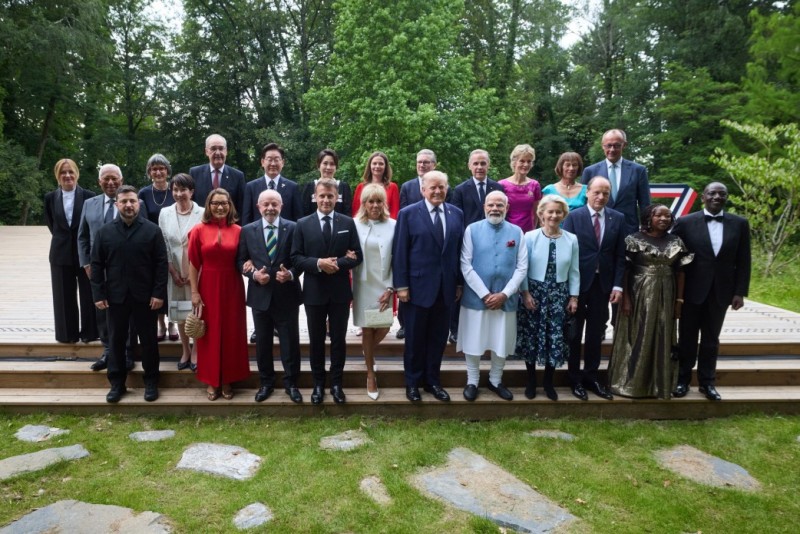
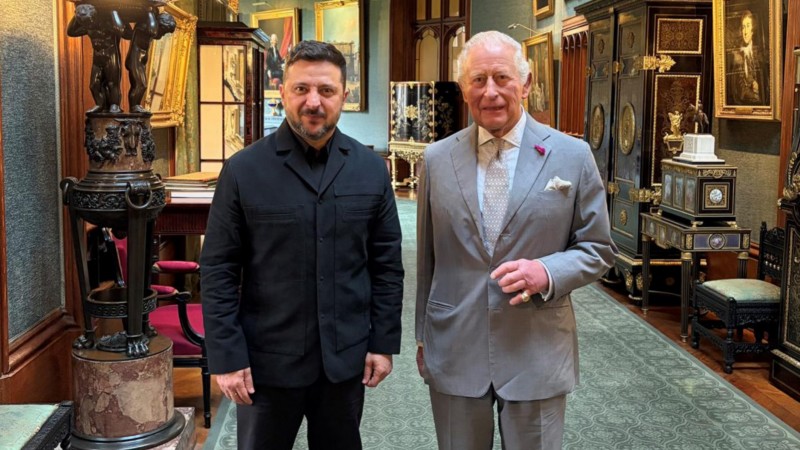
Abroad: in the E3 – Ukraine format, with the leaders of France, the United Kingdom, and Germany, and in the G7 – Ukraine format, with the leaders of the United States, France, the United Kingdom, Germany, Italy, Canada, Japan, and the European Union. Volodymyr Zelenskyy also met with U.S. President Donald Trump, President of Brazil Lula da Silva, President of Estonia Alar Karis, President of Kenya William Ruto, President of the United Arab Emirates Mohamed bin Zayed Al Nahyan, President of Finland Alexander Stubb, President of Switzerland Guy Parmelin, Prime Minister of Belgium Bart De Wever, Prime Minister of Bulgaria Rumen Radev, Prime Minister of the United Kingdom Keir Starmer, Prime Minister of Greece Kyriakos Mitsotakis, Prime Minister of India Narendra Modi, Prime Minister of Estonia Kristen Michal, Prime Minister of Canada Mark Carney, Prime Minister of Latvia Andris Kulbergs, Federal Chancellor of Germany Friedrich Merz, Prime Minister of Norway Jonas Gahr Støre, Prime Minister of Poland Donald Tusk, Prime Minister of Slovakia Robert Fico, Prime Minister of Finland Petteri Orpo, Prime Minister of Sweden Ulf Kristersson, President of the European Council António Costa, President of the European Commission Ursula von der Leyen, NATO Secretary General Mark Rutte, and Managing Director of the International Monetary Fund Kristalina Georgieva. Last month, the President of Ukraine also had audiences with His Majesty King Charles III of the United Kingdom of Great Britain and Northern Ireland and King Philippe of the Belgians.
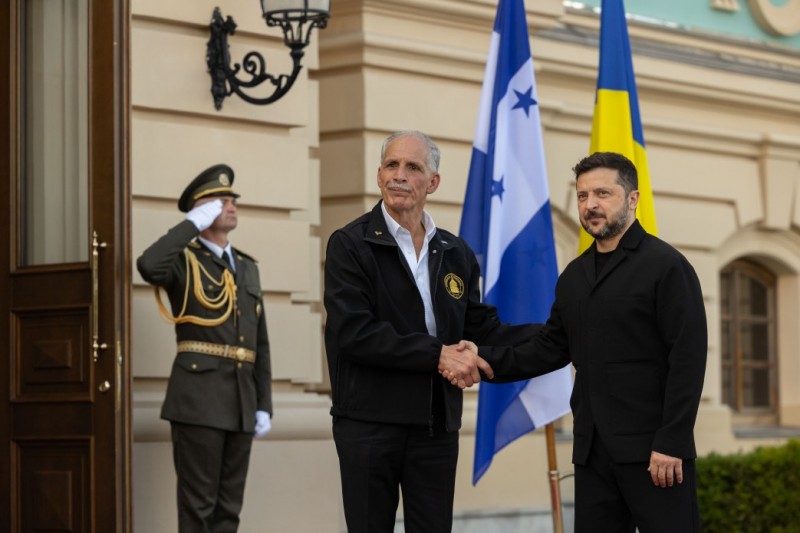
In Ukraine, the Head of State met with President of Honduras Nasry Asfura, NATO Secretary General Mark Rutte, Minister of Defense of Denmark Jeppe Bruus, Minister of Defense of Latvia Raivis Melnis, Minister of Defense of Sweden Pål Jonson, Secretary-General of the Organisation for Economic Co-operation and Development (OECD) Mathias Cormann, and National Security Advisor to the Prime Minister of the United Kingdom Jonathan Powell.
In June, the Head of State made four foreign visits: to the United Kingdom, Estonia, France, and Belgium.
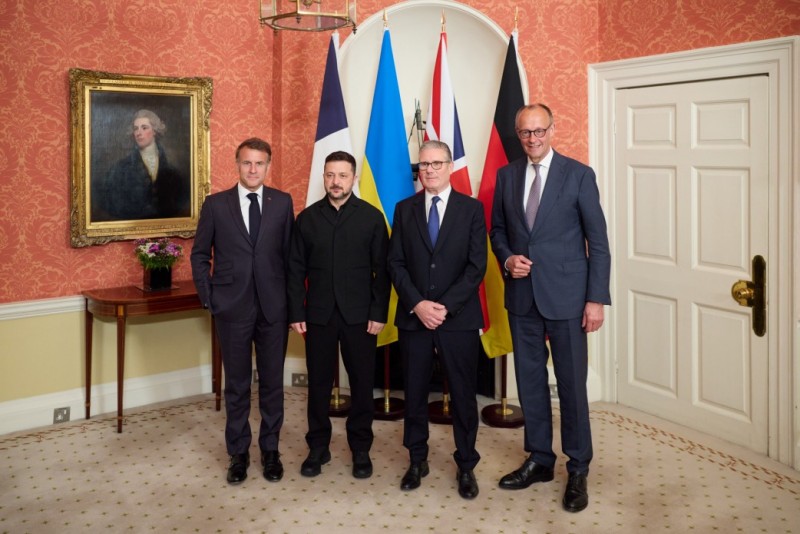
A meeting in the E3 – Ukraine format was held in London with President of France Emmanuel Macron, Chancellor of Germany Friedrich Merz, and Prime Minister of the United Kingdom Keir Starmer.
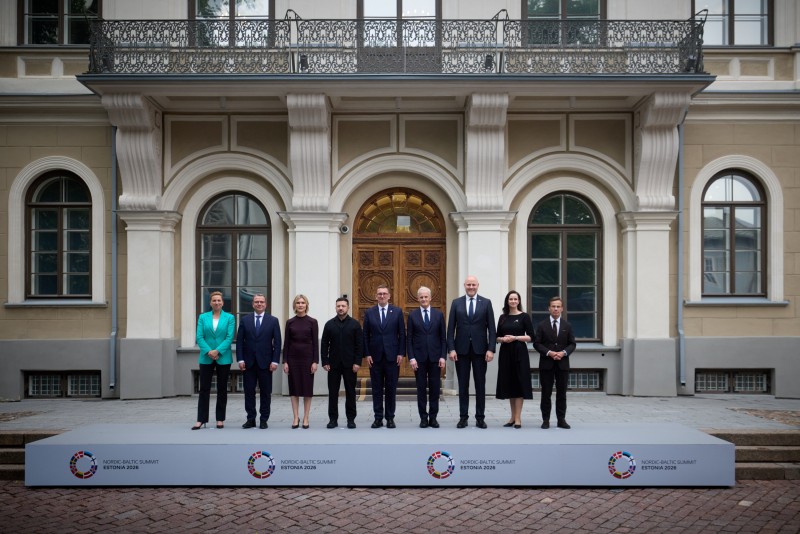
In Tallinn, Volodymyr Zelenskyy took part in the Ukraine–Nordic–Baltic Summit. Ukraine signed a joint declaration with Estonia on strengthening cooperation in security and defense, and a Drone Deal with Latvia, the sixth agreement in this format.
In Évian, the President took part in the G7 Summit and a G7 – Ukraine meeting, where, among other things, the possibility of granting Ukraine a license to produce anti-ballistic missiles and systems was discussed.
In Brussels, Volodymyr Zelenskyy took part in a European Council meeting and the 35th meeting of the Ukraine Defense Contact Group, which delivered strong results for strengthening our country.
Throughout June, the Head of State held 10 phone calls: with U.S. President Donald Trump separately, and a joint call with President of France Emmanuel Macron, as well as with President of Latvia Edgars Rinkēvičs, President of Finland Alexander Stubb, President of France Emmanuel Macron, Prime Minister of the United Kingdom Keir Starmer, Prime Minister of Norway Jonas Gahr Støre, Ecumenical Patriarch Bartholomew, President of the European Commission Ursula von der Leyen, and envoys of the U.S. President Steve Witkoff and Jared Kushner.
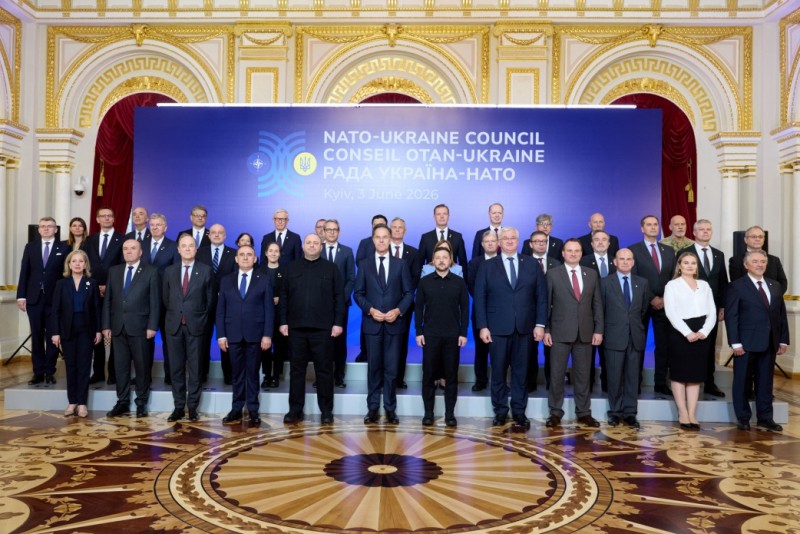
Participation in international events and meetings: the Ukraine–NATO Council meeting with the participation of Mark Rutte, permanent representatives and deputy permanent representatives of all 32 Allied member states, held in this format in our country for the first time; the Ukraine–Nordic–Baltic Summit; an online address to the participants of the European Union Intergovernmental Conference; a G7 – Ukraine meeting; the 35th meeting of the Ukraine Defense Contact Group; and a meeting of the European Council.
As of the end of June, the total amount of financial commitments from the 28 countries participating in the PURL initiative stood at about $6.3 billion.
Defense packages and other assistance:
Australia: $70 million for PURL.
Belgium announced the transfer of 7 F-16 fighter jets this year, three of them for combat operations and four for spare parts.
Denmark began work on its 30th assistance package, worth €590 million.
Iceland: $6.5 million for PURL.
Latvia: $8 million for PURL.
Lithuania: $23 million for PURL.
Luxembourg: $30 million for PURL, €11 million for the Czech initiative, and €2 million for the development of Ukrainian training centers through EUMAM.
The Netherlands: €500 million in assistance, including €250 million for PURL and €250 million for the purchase of drones for Ukraine from Dutch companies.
Germany: €300 million for the Czech initiative to supply ammunition to Ukraine, as well as $200 million each for PURL and the JUMPSTART project. Implementing arrangements were also signed on the development of anti-ballistic capabilities, including interceptor missiles, and the joint production of TerMIT UGVs in Germany.
Norway: €109 million for the development and procurement of naval drones for Ukraine, $300 million for PURL, $190 million for artillery ammunition, $120 million for naval drones, and $25 million in support of Ukraine’s F-16 capability.
Finland: $45 million for PURL.
Sweden: $108 million for PURL and the signing of an agreement to purchase 16 JAS-39 Gripen E/F fighter jets.
The European Union: the first tranche of defense support, amounting to €3.9 billion under the Ukraine Support Loan. These funds are being directed toward the purchase of drones for Ukraine.
Sanctions:
The President signed decrees enacting decisions of the National Security and Defense Council of Ukraine to impose sanctions against Russian propaganda media outlets and judges who issued unlawful rulings against Ukrainians, Russian mobile operators and internet providers, traitors and collaborators, and to extend restrictions on a number of companies serving Russia’s military-industrial complex.