

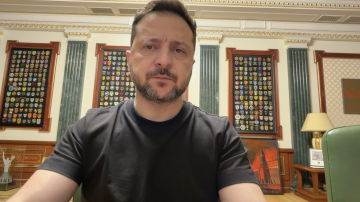
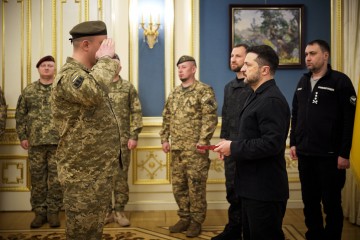
In October, the foreign policy work of President of Ukraine Volodymyr Zelenskyy focused on strengthening Ukraine’s air defense and supporting the Ukrainian energy sector amid intensified Russian strikes, unblocking deliveries of missiles for Patriot systems, diplomatic efforts to achieve peace, advancing our country toward membership in the European Union, and securing the release of Ukrainians from Russian captivity.
On October 23, a prisoner exchange took place, bringing 270 warriors and 9 civilians back to Ukraine. Most of the Ukrainians released had been in captivity since 2022, and many had been illegally convicted in Russia.
In October, people were also rescued from temporarily occupied Oleshky in the Kherson region. The humanitarian operation was carried out with the mediation of the American side and U.S. First Lady Melania Trump. Ukraine counts on further steps toward de-escalation and real progress toward peace. Preparations are underway for a trilateral meeting at the level of technical teams from Ukraine, the United States, and Russia, scheduled for the first half of November.
The President’s work also focused on contacts with American partners regarding the shortage of air defense systems, Starlink/Starshield operations, and intelligence sharing with the United States of America. On October 24, Starlink/Starshield operations were fully restored to the speed available before all the restrictions. Early warning of Russian ballistic missile strikes is also functioning. There has also been progress regarding missiles for Patriot systems.
Another key topic in discussions with partners was the preparation of winter support packages for Ukraine, with a significant focus on energy assistance. Daily Russian strikes on energy facilities have caused extensive damage.
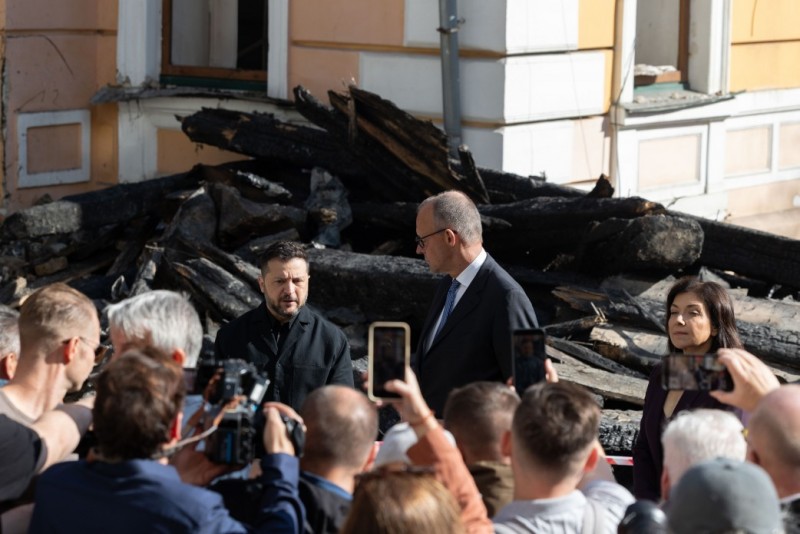 Throughout October, the Head of State held 37 international meetings.
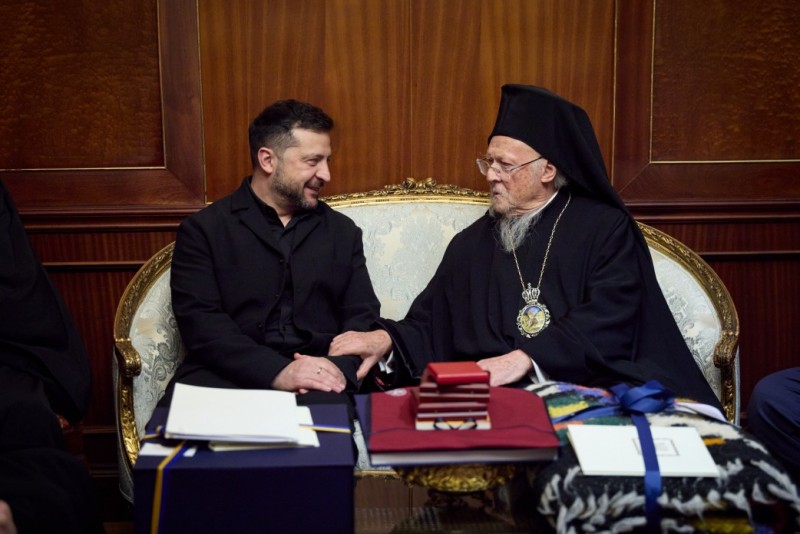
Abroad, the President of Ukraine met with President of Türkiye Recep Tayyip Erdoğan, President of Finland Alexander Stubb, President of France Emmanuel Macron, Prime Minister of Belgium Bart De Wever, Prime Minister of the United Kingdom Andy Burnham, Prime Minister of Denmark Mette Frederiksen, Prime Minister of the Netherlands Rob Jetten, Prime Minister of Norway Jonas Gahr Støre, Prime Minister of Poland Donald Tusk, Prime Minister of Hungary Péter Magyar, Prime Minister of Finland Petteri Orpo, Prime Minister of Sweden Ulf Kristersson, Ecumenical Patriarch Bartholomew, President of the European Council António Costa, President of the European Commission Ursula von der Leyen, NATO Secretary General Mark Rutte, Norwegian Minister of Defense Tore Sandvik and CEO of the Norwegian defense company Kongsberg Eirik Lie, President of the Norwegian Storting Masud Gharahkhani and the leaders of all political parties in the Norwegian parliament, as well as the U.S. President’s envoys, Steven Witkoff and Jared Kushner.
The Head of State had audiences with King Charles III of the United Kingdom of Great Britain and Northern Ireland, King Philippe of the Belgians, King Willem-Alexander of the Netherlands, and King Haakon VIII of Norway.
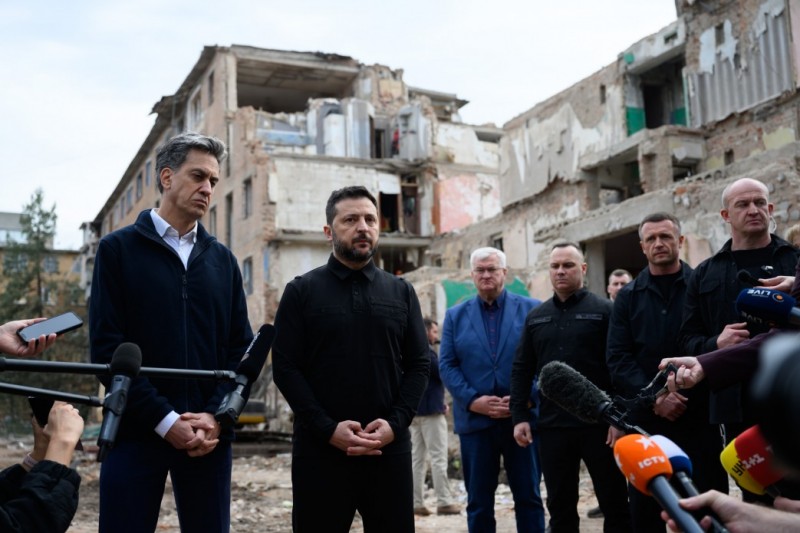
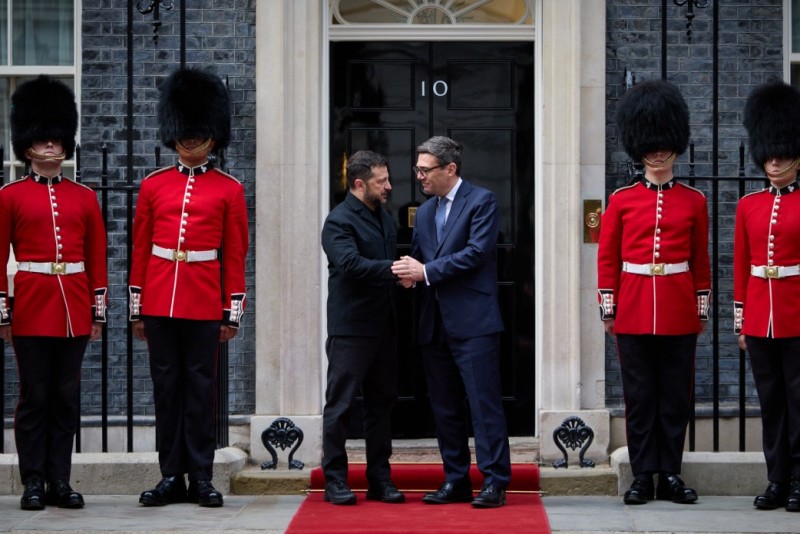 In Ukraine, Volodymyr Zelenskyy met with Federal Chancellor of Germany Friedrich Merz and representatives of German businesses, Prime Minister of Finland Petteri Orpo and representatives of Finnish businesses, Prime Minister of Moldova Vasile Tofan, Speaker of the Lithuanian Seimas Juozas Olekas, UK Foreign Secretary Ed Miliband, Estonian Minister of Defense Martin Herem, Additional Minister in the Ministry of Finance of Israel Zeev Elkin, a U.S. congressional delegation, members of the House of Representatives of Japan’s National Diet, heads of diplomatic missions of EU member states in Ukraine, and a team from the American defense company Lockheed Martin. The President also held an online meeting with a bipartisan delegation from the U.S. Senate and House of Representatives.
In October, Volodymyr Zelenskyy visited the United Kingdom, Belgium, Norway, the Netherlands, and Türkiye.
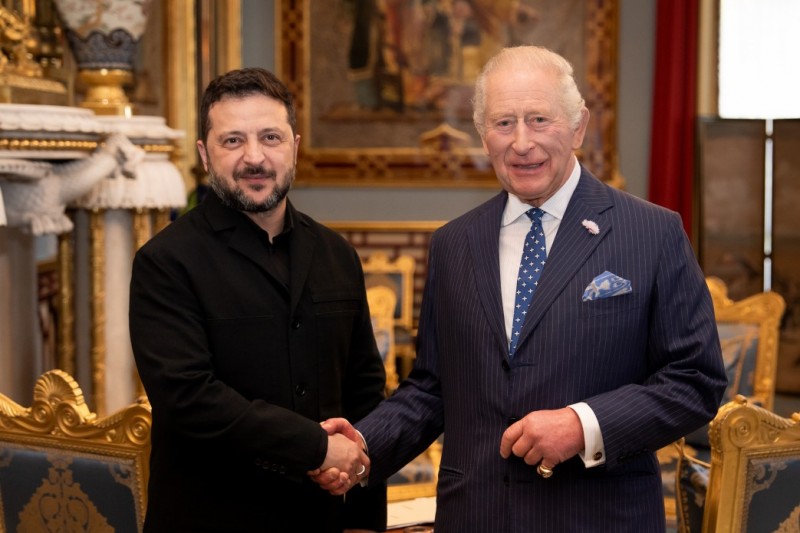 In London, the Head of State discussed financial and defense support for Ukraine, strengthening defense cooperation, and responding to existing challenges with UK Prime Minister Andy Burnham. The Prime Minister later announced a decision to provide Ukraine with an additional £10 billion in financial support: £7 billion in economic support over the next three years and another £3 billion in British export support, primarily for the supply of necessary weapons that will strengthen the protection of lives.
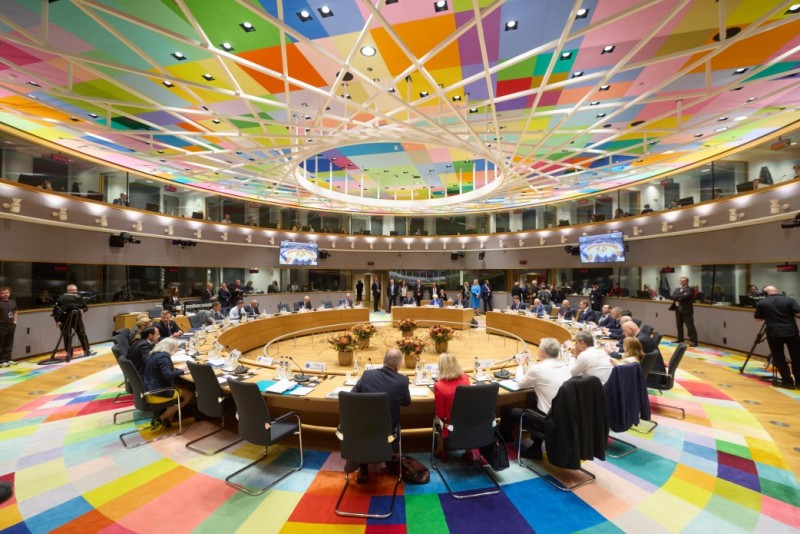
In Brussels, the President participated in a European Council meeting and discussed assistance to protect Ukraine with European leaders. Earlier, the European Union opened the second and third negotiating clusters with Ukraine for accession. The first and sixth clusters had been opened in the summer. Ukraine counts on opening the remaining two clusters by the end of this year.
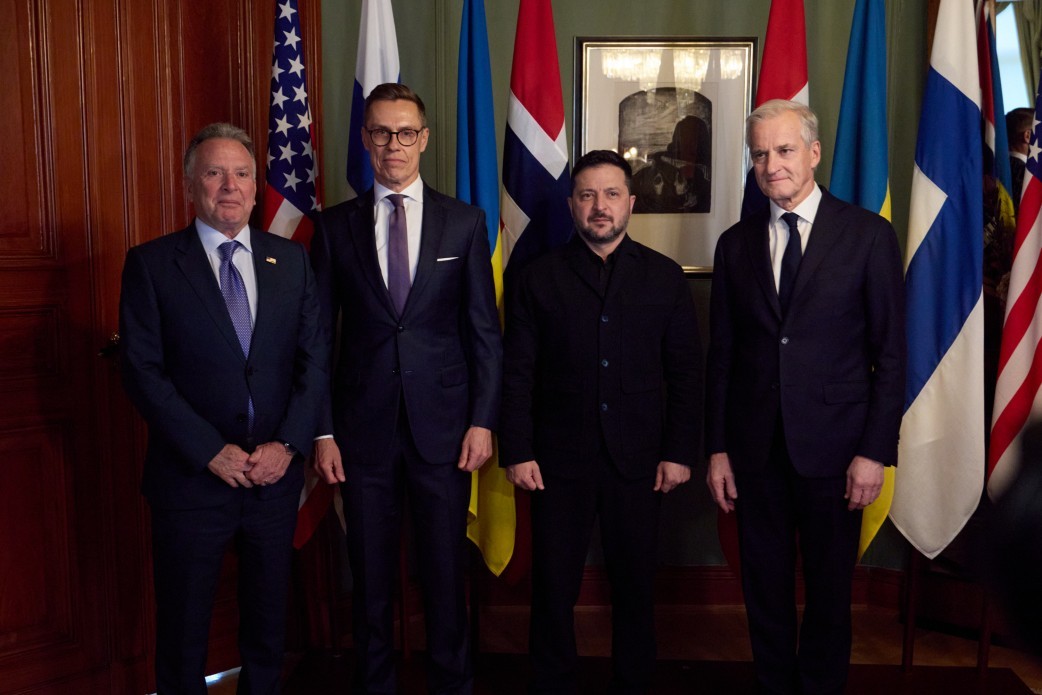
In Oslo, Volodymyr Zelenskyy met with the U.S. President’s envoys, Steven Witkoff and Jared Kushner, who joined the conversation online, with the participation of President of Finland Alexander Stubb and Prime Minister of Norway Jonas Gahr Støre. During the meeting, they discussed ways to achieve a diplomatic end to the war. With Norwegian partners, the Head of State discussed cooperation on NASAMS air defense systems, additional defense support packages for Ukraine, and work on new satellite communications capabilities for Ukrainian warriors.
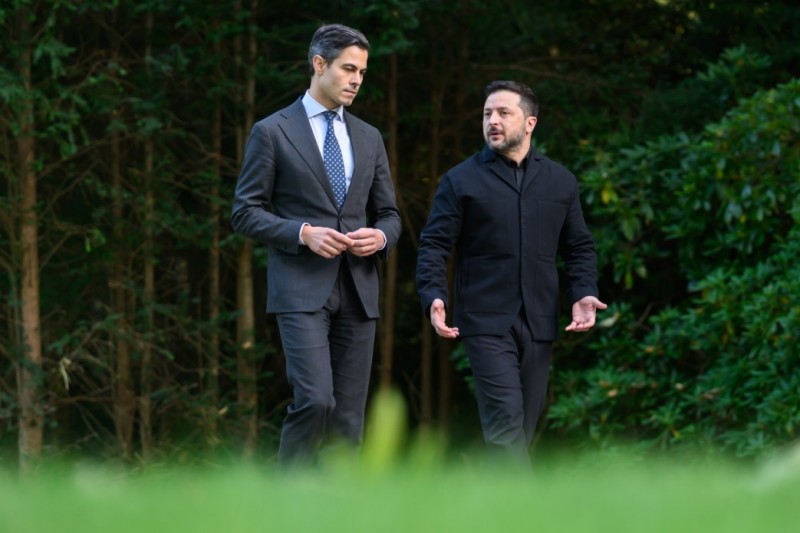 In The Hague, Volodymyr Zelenskyy discussed further assistance to Ukraine with Prime Minister of the Netherlands Rob Jetten. The Netherlands announced an additional €500 million military support package and a €1.2 billion nonlethal assistance package for Ukraine. The main topics of the meeting with Dutch businesses were defense production, joint technological and energy projects, the development of satellite technologies, and air defense.
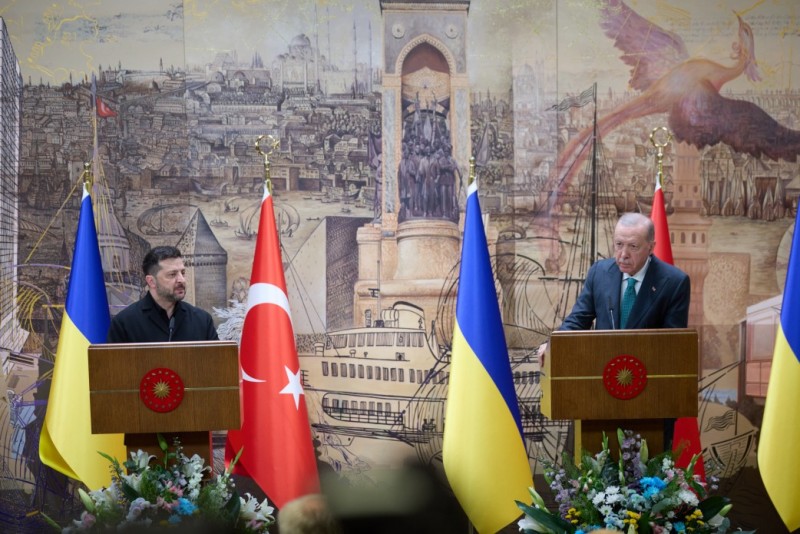
In Istanbul, the Presidents of Ukraine and Türkiye discussed preparations for a trilateral meeting in the Ukraine–United States–Russia format and security in the Black Sea region. Türkiye will provide additional generators and other energy equipment.
In October, Volodymyr Zelenskyy held 21 phone calls: with President of Estonia Ülle Madise, President of Finland Alexander Stubb, President of France Emmanuel Macron, Prime Minister of the United Kingdom Andy Burnham, Prime Minister of Canada Mark Carney, Prime Minister of the Netherlands Rob Jetten, Federal Chancellor of Germany Friedrich Merz, Prime Minister of Norway Jonas Gahr Støre, Prime Minister of Poland Donald Tusk, U.S. Secretary of State Marco Rubio, President of the European Council António Costa, President of the European Commission Ursula von der Leyen, NATO Secretary General Mark Rutte, Pope Leo XIV, and the U.S. President’s envoys, Steven Witkoff and Jared Kushner.
 The Head of State participated in the opening of the Helsinki Security Forum and in the Warsaw Security Forum. The President also held an online meeting at the Hudson Institute.
Defense packages and other assistance:
The European Commission disbursed €1.24 billion for Ukrainian UAVs, interceptor drones, drone munitions, and missiles, as well as €2.86 billion for drones, air defense systems, missiles, radars, electronic warfare equipment, and munitions. The European Commission also allocated €2.9 billion in budget support for Ukraine under the Ukraine Facility.
Belgium announced plans to deliver additional F-16s to Ukraine by the end of 2026 and to assist with supplies of 20 mm ammunition.
The United Kingdom announced a £45 million surface-to-air missile package and £500 million in additional military assistance for Ukrainian air defense during the winter.
 Estonia announced an additional €10 million contribution to PURL.
Latvia approved another military assistance package – the free transfer of state-owned movable property to Ukraine.
Germany announced a package worth more than €1.3 billion in military assistance and energy support. In particular, the package provides for funding the production of interceptor drones, long-range weapons, combat drones, and satellite equipment.
France announced preparations for a new defense package and the start of training Ukrainian pilots on Rafale fighter jets.
Finland approved its 35th military assistance package, worth around €1 million. Documents on defense-industrial cooperation were signed, including an intention to establish a joint venture with Patria for unmanned systems, cooperation between the Ministry of Defense and Nokia Defense and ICEYE, and the production of heavy drones with Insta.
The United States approved the sale to Ukraine of 500 PAC-3 MSE interceptor missiles for Patriot systems, along with related equipment and services, at an estimated cost of $2.1 billion.
 As of the end of October, the total financial commitments made by partners under the PURL program amounted to around $9 billion.
Energy support:
Nearly €250 million was received from Germany. Sweden will provide another €45 million and the Netherlands €40 million. Norway announced additional energy support for Ukraine worth around €48 million. Malta also contributed funds.
The World Bank: $116.2 million in investments for Ukraine under the Renewable Energy Integration (REI) program.
In October, Ukraine also received 98 humanitarian shipments of energy equipment, with a total weight of around 1,387 tons. This assistance was provided by nine countries: Austria, Azerbaijan, the Netherlands, Germany, Norway, Finland, Czechia, Sweden, and Switzerland. In particular, the shipments included generators of various capacities, power transformers, and cable products.
 Sanctions measures:
The President signed decrees enacting decisions of the National Security and Defense Council of Ukraine to impose sanctions on Russian entities and individuals involved in the production of ballistic missiles, facilitating sanctions circumvention in the financial sector, acting in Russia’s interests in Ukraine’s temporarily occupied territories, supplying Russia’s military-industrial complex with equipment and components for military aircraft, armored vehicles, missile weapons, and drones, and developing the Rassvet satellite communications system, as well as on 39 vessels of Russia’s shadow fleet.
Sanctions measures taken by partner countries:
In October, the European Union, the United Kingdom, and Japan significantly increased sanctions pressure on Russia.
The European Union imposed its largest sanctions package targeting Russian enterprises that produce ballistic missiles, communications equipment, electronics, radio navigation equipment, and specialized equipment, as well as those involved in machinery manufacturing and shipbuilding, along with their executives. The package included 826 legal entities, 743 individuals, including executives of enterprises serving Russia’s military-industrial complex, and 77 individuals who participated in the illegal “elections” to the Russian State Duma in Ukraine’s temporarily occupied territories, as well as members of Russia’s Central Election Commission. On October 15, three individuals and nine organizations were added to the sanctions list for circumventing sanctions.
The United Kingdom approved two sanctions packages. The October 1 package covered 23 sanctioned legal entities and individuals and 8 vessels. This package targeted the LNG fleet, those involved in the deportation of Ukrainian children, and those spreading disinformation. The second package, adopted on October 8, covered 26 companies and individuals and 12 shadow fleet tankers.
On October 1, the United States imposed new sanctions on the Russian payment network A7 Network, linked to Russia’s Promsvyazbank. The network was designated a significant transnational criminal organization, and U.S. financial institutions were advised to prohibit certain transfers involving A7 subagents.
Japan froze the assets of 33 organizations, including Garantex, and 9 individuals. For the first time, Japan imposed restrictions on 35 shadow fleet vessels and banned exports to 4 companies in Türkiye and the UAE. Japan also expanded its ban on exports of industrial goods to the Russian Federation based on HS codes.